
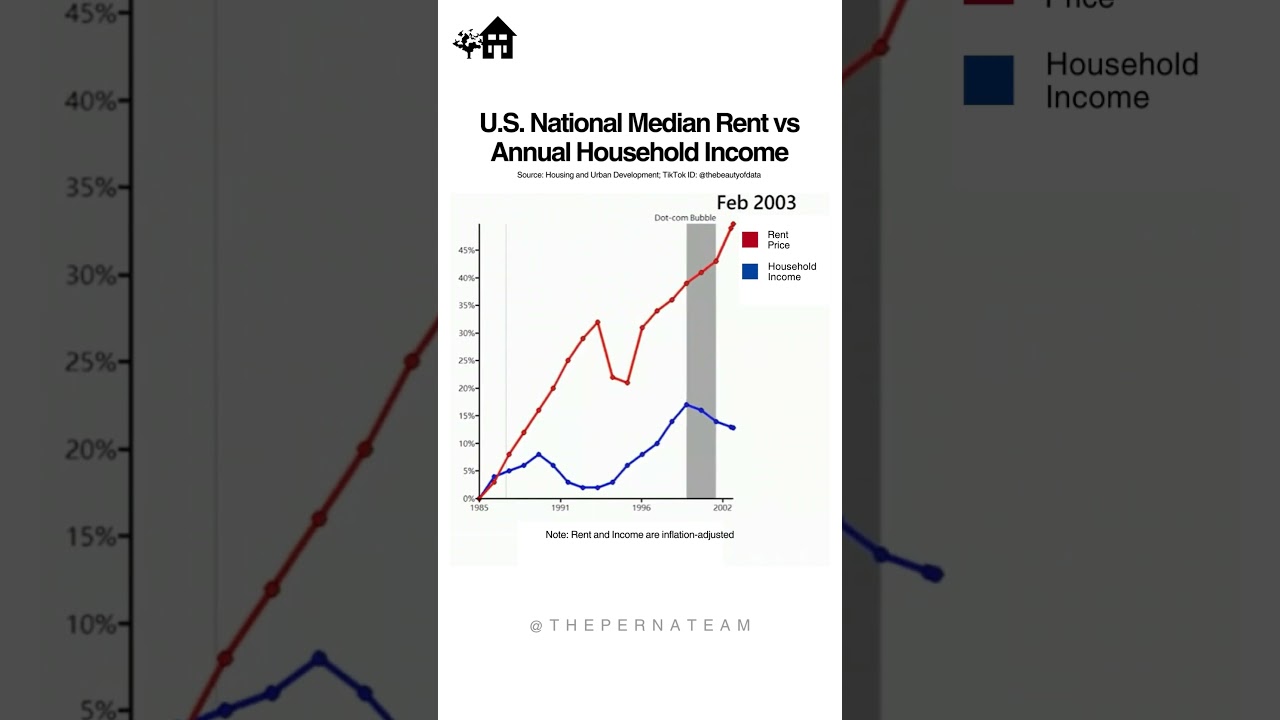

40 Years of Rent vs. Household Income: A Brief Overview
In recent decades, the dynamics of rent and household income have undergone significant shifts, profoundly shaping the lives of millions. As we traverse through 40 years of economic change, it’s essential to examine the trends and implications of rising rents relative to household incomes.
The Rising Cost of Rent
Over the past four decades, rent prices have soared in many urban areas, often outpacing wage growth. According to various studies, average rent for apartments has nearly doubled since the 1980s. For instance, the National Multifamily Housing Council reported that in some cities, rent prices increased by over 50% from the early 2000s to today. This escalation can be attributed to factors such as:
- Urbanization: More people are moving to cities, leading to higher demand for housing.
- Investment Trends: Real estate has become an attractive investment, pushing prices higher.
- Limited Housing Supply: Regulatory barriers and difficulties in obtaining building permits have stifled supply, exacerbating the issue.
Stagnant Household Incomes
In contrast, median household incomes have not kept pace with these rising rental costs. Adjusting for inflation, many households have experienced stagnation in real earnings, leaving a gap between income growth and rental prices. While some sectors have seen gains, for the average worker, the increase has been modest over the past few decades.
The Impact on Families
This rent-income imbalance has serious implications for families and individuals. Higher rent consumes a more significant portion of household budgets, leading to financial strain. Many renters allocate over 30% of their income to housing — a figure considered the threshold for affordability. The repercussions include:
- Increased Financial Stress: Families may struggle to cover basic necessities like food and healthcare.
- Rise in Homelessness: Many are pushed to the brink, with some ultimately facing eviction.
- Delayed Life Milestones: Young adults are postponing homeownership, marriage, and starting families due to financial uncertainty.
Conclusion
As we look ahead, bridging the gap between rent and income will require concerted efforts from policymakers, communities, and individuals. Solutions such as affordable housing initiatives, rent control measures, and economic reform are essential in addressing this growing crisis. As we reflect on the past 40 years, awareness and proactive steps are critical in ensuring that the American dream of homeownership and secure living conditions remains attainable for future generations.
LEARN ABOUT: Investing During Inflation
REVEALED: Best Investment During Inflation
HOW TO INVEST IN GOLD: Gold IRA Investing
HOW TO INVEST IN SILVER: Silver IRA Investing




0 Comments