
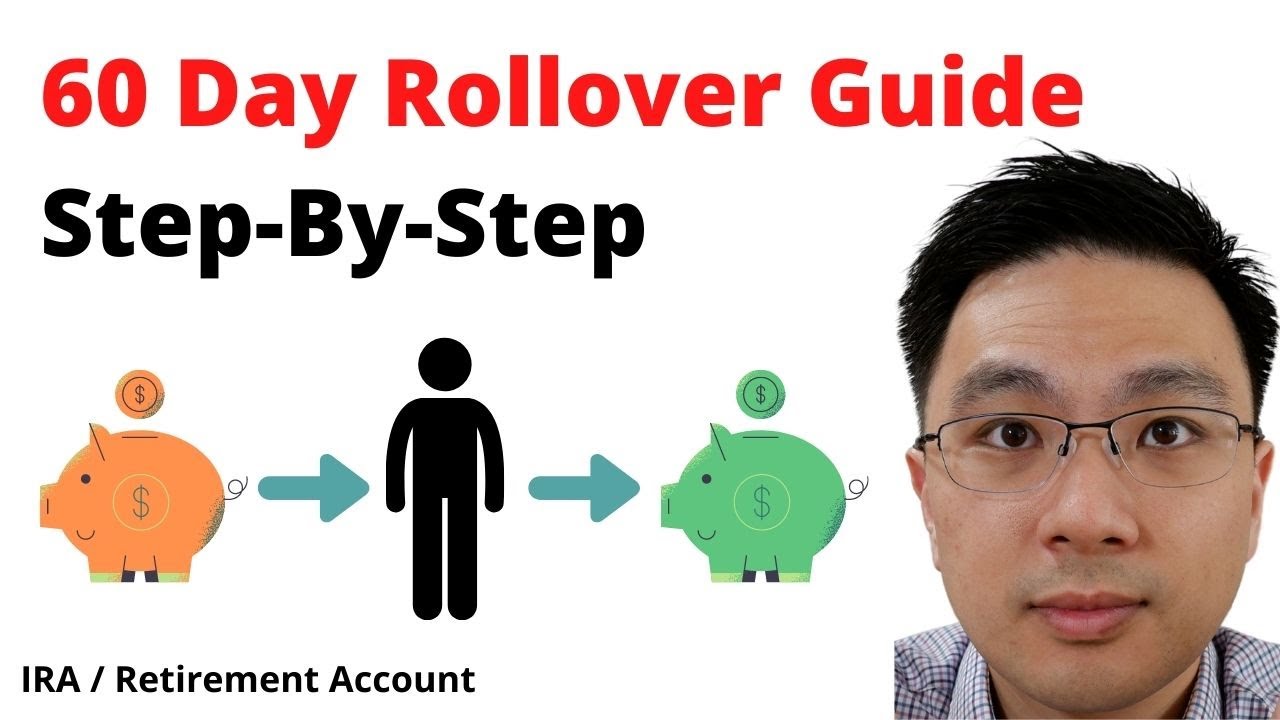

60-Day Indirect Rollover Guide: Navigating Your Retirement Funds
When it comes to managing retirement accounts, it’s essential to understand the rules and regulations that govern how you can access and transfer funds. One common method employed by individuals looking to move their retirement savings is the indirect rollover. This article will guide you through the process of a 60-day indirect rollover, helping you to navigate the potential pitfalls and benefits effectively.
What is an Indirect Rollover?
An indirect rollover occurs when you withdraw money from a retirement account, such as a 401(k) or IRA, and then deposit that money into another retirement account within a specified time frame—typically 60 days. During this period, you effectively control the funds, allowing for flexibility in investment opportunities or simply to consolidate accounts.
The 60-Day Rule
The primary rule to remember when executing an indirect rollover is the 60-day limit. Here are the key points:
-
Timeline: From the moment you receive the funds after the withdrawal, you have 60 days to deposit the entire amount into another qualified retirement account to avoid taxes and penalties.
-
One-Rollover-Per-Year Rule: The IRS allows only one indirect rollover per 12-month period per individual. This rule applies across all your IRAs. Violating this rule can result in penalties.
-
Tax Implications: If you fail to deposit the funds within the 60-day window, the IRS considers the withdrawal a distribution, subjecting it to income tax and potential early withdrawal penalties if you’re under age 59½.
- Withholding Tax: Typically, when you take a distribution from a qualified plan like a 401(k), the plan may withhold 20% for federal taxes. To avoid being taxed on that amount, you must roll over the gross distribution, not just the amount you receive after withholding.
Steps for a Successful Indirect Rollover
Here’s a step-by-step guide to completing an indirect rollover:
Step 1: Assess Your Current Accounts
Evaluate your current retirement accounts to decide which ones you want to roll over. Decide on the receiving account and ensure it’s eligible to accept rollover funds.
Step 2: Initiate a Withdrawal
Contact your retirement account provider and request a withdrawal. Specify that you’d like to execute an indirect rollover. Make sure to inquire about any withholding taxes that may apply.
Step 3: Receive Your Funds
Upon processing your request, you will receive a check or direct deposit for the amount withdrawn. Remember, if they withhold taxes, you’ll need to deposit the full amount to avoid tax implications.
Step 4: Deposit Funds into the New Account
Within 60 days, deposit the entire amount (including any withheld taxes that you personally paid) into your new retirement account. If you want to avoid unnecessary tax implications, consider writing a check for the total amount, including withheld funds, to ensure the rollover is complete.
Step 5: Keep Documentation
Retain all documentation regarding the transaction, including withdrawal notices and deposit confirmations. This will be crucial if you face any inquiries from the IRS regarding your rollover.
Common Challenges
1. Timing Issues
Failing to meet the 60-day deadline is a primary reason many individuals face tax penalties. Set reminders and stay organized.
2. Withholding Taxes
As stated, if your distribution has withholding, you must replace that amount to get a tax-free rollover. Many individuals overlook this aspect, leading to unexpected tax liabilities.
3. Misunderstanding IRS Rules
The one-rollover-per-year rule can be easily misunderstood. Familiarize yourself with these regulations to avoid costly mistakes.
Conclusion
The 60-day indirect rollover process can be an effective way to manage your retirement funds, provided you follow the IRS guidelines closely. By understanding the rules, planning your transaction carefully, and keeping organized records, you can secure your retirement savings and potentially enhance your financial future. Always consider consulting with a tax professional or financial advisor to optimize your strategy and ensure compliance with all IRS regulations. Remember, the rules can change, and personalized advice can be valuable in planning your retirement effectively.
LEARN MORE ABOUT: IRA Accounts
TRANSFER IRA TO GOLD: Gold IRA Account
TRANSFER IRA TO SILVER: Silver IRA Account
REVEALED: Best Gold Backed IRA




what if I miss the 60 days to deposit the roth IRA check to the new institution? do i need pay 10% penalty?
Great content
Great presentation, very informative. In 2023 I withdrew $7,500 from my IRA with 20% withholding. In 2024, please let me know if I can withdraw $7,500 with zero withholding and re-deposit those funds before April 15th as contributions for 2023, to avoid the tax liability for last year.
Extremely helpful. Thanks!
What happens when i withdraw and use it for emergency bills and dont put the money back.
Very useful! Keep up the good work!
so what happen if you receive the check and then you spend the money and don't deposit what will happen. ??
You’re amazing, thank you
Does this have to be distributed by paper check? Or can it be transferred electronically? Thank you so much. 🙂
Hello. I was considering doing a 401k rollover to an IRA but I took out loans on the 401K account. Could I rollover to an IRA take a withdrawal on the IRA to pay back the loans and then rollover what I paid back to the IRA?
Also what would be the best company to do a roll over?
How does the automatic waiver on the 60 days work for this line item on the IRS website: The funds are deposited into a plan or IRA within 1 year from the beginning of the 60-day rollover period. That makes it sounds like you actually have 1 year without penalty? I must be misunderstanding that Automatic Waiver Condition?
Hi. Thanks for this. Not many people know about this. I received a surprise check from a premature redemption of a roth IRA because the fund decided to liquidate. They did not advise me of what was happening. 3weeks later, I deposited the check into a different roth account, but like you pointed out, I got a 1099-r with the J code on box7 that looks like a reg redemption. I am using the free version of turbo tax and I can't find where or how to input this. The version you showed asked you some questions. Not mine. Is it because it's the free version, or is there something I'm missing? Can you help ? Any other software you recommend?
Thankyou! this was a very helpful video!
Awesome video!! I'm considering pulling $10k from my IRA as a 'loan' to use as a down payment for a house. From what I understand I wont be subject to taxes or a 10% penalty if I pay back within the 60d window. That said, are there any special forms I need to fill for the IRS?