

A Loophole for Roth IRAs: How High Earners Can Still Contribute
Roth Individual Retirement Accounts (IRAs) are a popular retirement savings vehicle due to their unique tax advantages. Contributions to a Roth IRA are made with after-tax dollars, which means that qualified withdrawals in retirement are tax-free. However, many high-income earners face income limits that prevent them from directly contributing to a Roth IRA. For 2023, eligibility begins to phase out for single filers with modified adjusted gross income (MAGI) over $138,000 and completely phases out at $153,000. For married couples filing jointly, the limits are between $218,000 and $228,000. Fortunately, there is a lesser-known loophole that allows high earners to bypass these restrictions: the backdoor Roth IRA.
Understanding the Backdoor Roth IRA
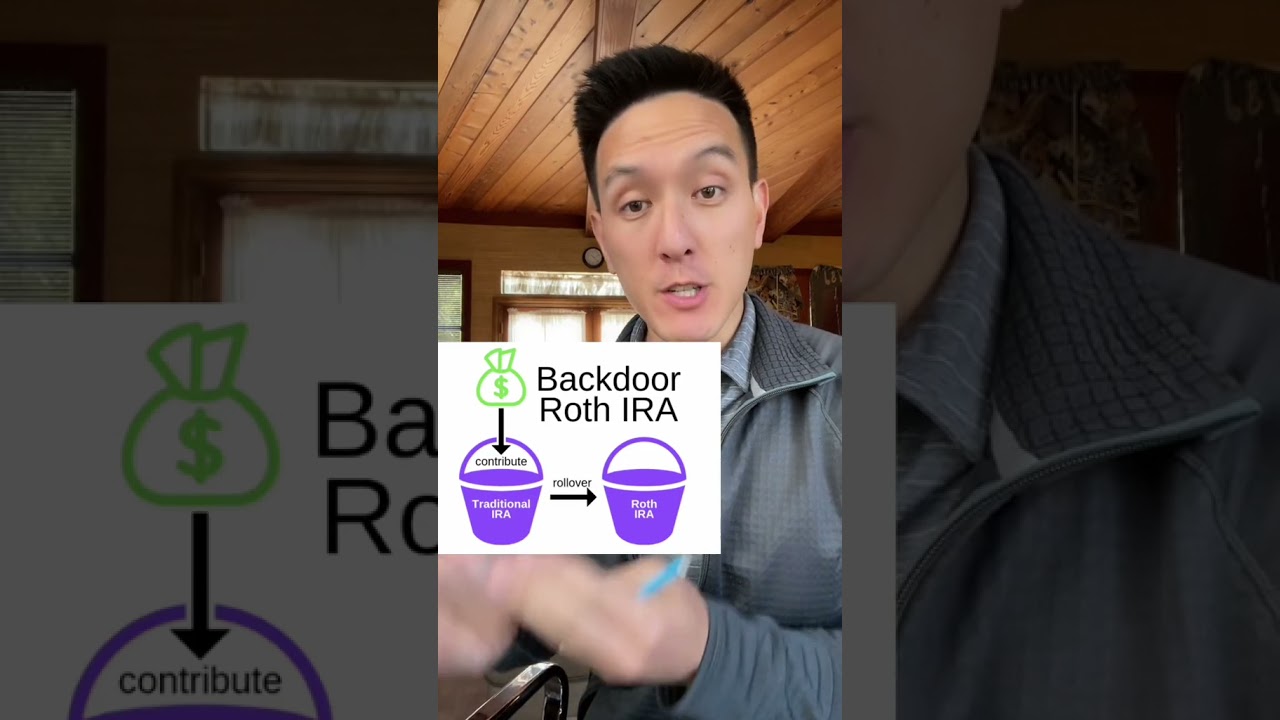
The backdoor Roth IRA is a strategy that allows individuals with high incomes to still take advantage of the benefits of a Roth IRA by converting traditional IRA funds into a Roth account. Here’s how the process works:
-
Contribute to a Traditional IRA: High earners can start by contributing to a Traditional IRA. Unlike Roth IRAs, traditional IRAs do not have an upper income limit for contributions, meaning anyone can contribute regardless of their income. For the 2023 tax year, the contribution limit is $6,500 (or $7,500 if you’re age 50 or older).
-
Convert to a Roth IRA: Once you’ve made your contribution to the Traditional IRA, you can then convert those funds to a Roth IRA. This conversion does not have an income limit, meaning you can effectively convert your traditional contributions into a Roth account.
- Pay Taxes on the Conversion: It’s important to note that when you convert money from a Traditional IRA to a Roth IRA, you may owe taxes on any pre-tax contributions and earnings in the Traditional IRA. If you made only non-deductible contributions to the Traditional IRA (after-tax money), then your tax liability will be minimal.
Key Considerations
-
Pro-Rata Rule: One significant factor to be aware of is the IRS’s pro-rata rule. If you have other Traditional, SEP, or SIMPLE IRAs with pre-tax contributions, the taxable portion of your conversion will be determined based on the ratio of your after-tax contributions to the total balance across all of your IRAs. To minimize taxes, some individuals choose to execute a roll-over of their existing IRAs to an employer’s 401(k) plan if allowed, which can help isolate non-deductible contributions for a smoother conversion process.
-
Timing: It’s ideal to perform the contribution and conversion process within the same tax year to alleviate issues with market fluctuations. Additionally, performing the conversion immediately after the contribution can minimize any taxable earnings that might accrue.
- Potential Legislative Changes: Tax laws are subject to change. While the backdoor Roth IRA currently offers a pathway for high-income earners, future legislation could alter this strategy. Keep an eye on policy discussions that could affect retirement savings.
Conclusion
The backdoor Roth IRA offers a viable solution for high-income earners who wish to take advantage of the tax-free growth and withdrawals provided by a Roth account, even in light of income restrictions. By understanding and utilizing this strategy, individuals can enjoy the benefits of a Roth IRA and enhance their retirement savings. Always consider consulting with a financial advisor or tax professional before executing this strategy to ensure it aligns with your financial situation and to navigate any potential tax implications effectively. With appropriate planning, a backdoor Roth IRA can be an excellent tool in your retirement savings arsenal.
LEARN MORE ABOUT: IRA Accounts
TRANSFER IRA TO GOLD: Gold IRA Account
TRANSFER IRA TO SILVER: Silver IRA Account
REVEALED: Best Gold Backed IRA



What if you still make too much and the backdoor option would still tax you at a very high bracket?
Pay tax on rollover. Not a back door
If build back better passes this loophole might get closed. Make sure to do this for 2021 if you are eligible