
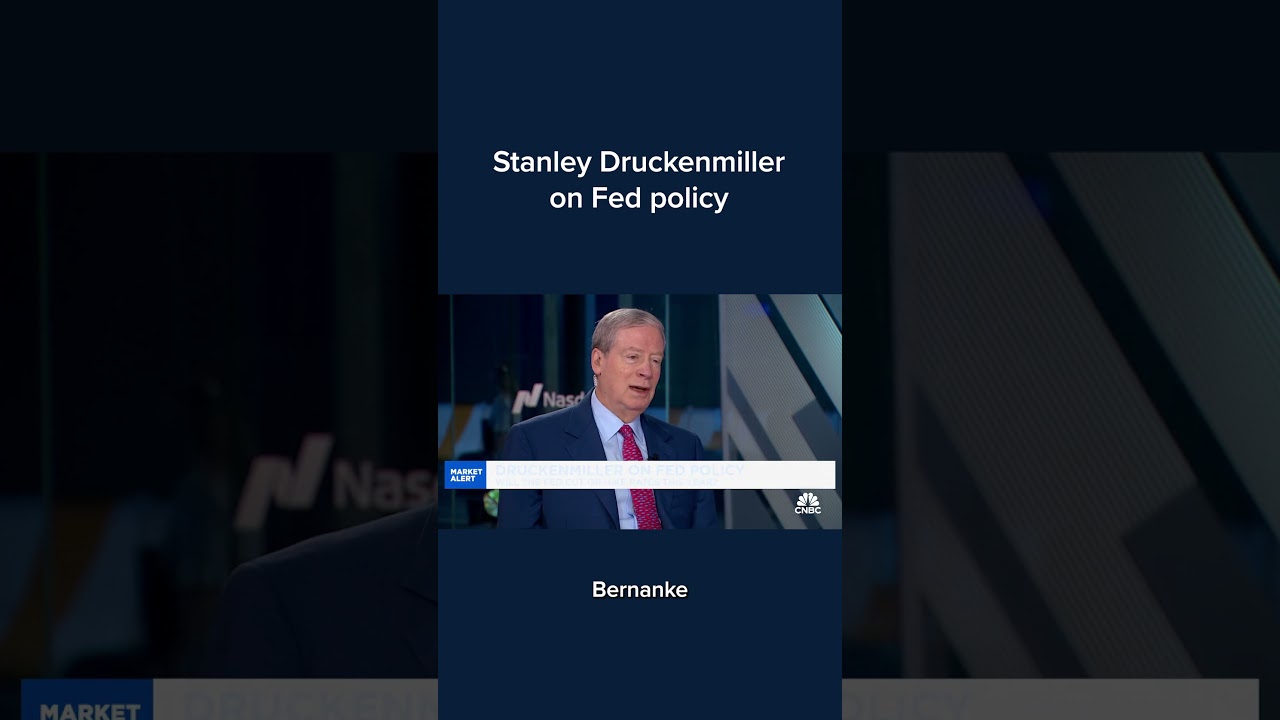

Stanley Druckenmiller: Insights on Federal Reserve Policy
Introduction
Stanley Druckenmiller, a renowned billionaire investor and hedge fund manager, has long been a significant figure in global finance. With a career spanning several decades, Druckenmiller is best known for his macroeconomic investing style and his ability to anticipate market trends. One of the key areas where his insights shine is in Federal Reserve (Fed) policy, which has profound implications for investors and the economy.
Background on Druckenmiller
Born in 1953, Druckenmiller graduated from Bowdoin College and began his investment career in the 1970s. After working for the legendary investor George Soros, he founded his own firm, Duquesne Capital Management, which returned over 30% annualized returns for more than 30 years before closing in 2010. Druckenmiller has consistently emphasized the importance of understanding macroeconomic conditions, which he considers essential in making informed investment decisions.
Druckenmiller’s Views on Fed Policy
Druckenmiller’s observations on Federal Reserve policy are multifaceted. He is critical of low interest rates and quantitative easing, arguing that such measures distort market signals and can lead to asset bubbles. According to him, prolonged easy monetary policy can create a false sense of security that encourages excessive risk-taking.
-
Interest Rates and Economic Distortion: Druckenmiller has pointed out that artificially low interest rates can misallocate resources. When the cost of borrowing is too low, companies may invest in projects that are not genuinely viable, leading to inefficiencies in the economy. He believes that the Fed’s attempts to stimulate growth through rate cuts can ultimately hinder long-term productivity and innovation.
-
Inflation Concerns: In recent years, Druckenmiller has voiced increasing concern about inflation, especially given the Fed’s expansive monetary policy during and after the COVID-19 pandemic. He argues that persistent inflation could erode consumer purchasing power and destabilize the economy. His perspective has been shaped by historical precedents where excessive money supply led to hyperinflation.
-
Market Bubbles and Volatility: Druckenmiller has warned that the Fed’s policies can lead to the creation of asset bubbles. For instance, he has expressed concerns about the soaring real estate and stock markets, speculating that a sharp correction could follow if interest rates rise abruptly. He believes that market participants may become overly complacent, underestimating the risks associated with such bubbles.
- Policy Communication: Another aspect of Druckenmiller’s critique is the Fed’s communication strategy. He advocates for more transparent and consistent messaging to help investors navigate potential changes in monetary policy. Clear communication can help prevent abrupt market reactions and promote stability.
Conclusion
As a leading voice in the investment community, Stanley Druckenmiller’s insights on Federal Reserve policy underscore the importance of understanding macroeconomic dynamics. His concerns about low interest rates, inflation, and market distortions serve as crucial reminders for investors navigating an increasingly complex economic landscape. While the Fed aims to foster stable growth, Druckenmiller’s cautionary perspective encourages a more nuanced approach to monetary policy—one that balances growth with the potential for long-term stability.
For investors, keeping an eye on Druckenmiller’s viewpoints could provide valuable guidance in an environment where Fed policy continues to play a pivotal role in shaping market dynamics.
LEARN ABOUT: Investing During Inflation
REVEALED: Best Investment During Inflation
HOW TO INVEST IN GOLD: Gold IRA Investing
HOW TO INVEST IN SILVER: Silver IRA Investing




Bro's just yapping
The stock market is more volatile than ever. recently went "all in" and bought up $80k worth of ETF's & individual stocks, my aim is to take advantage of this S&P 500 downtrend, what could be accurate predictions moving forward? Open to chat.
the Dow posted its longest winning streak of the year, the wish to buy a home survey hit a record low. And making a bad situation worse, apartment renters expect rents to increase by 9.7 percent over the next year… as their earnings can’t even keep up with inflation.
I remember people trying to read into Alan Greenspan’s facial and body language to kind of get a whiff of what’s he got in mind but his dead pan, poker faced non-reaction put to rest all the speculators. He also chose his words carefully.
Dinosaurs need to go
O my bad you cant borrow money for free anymore.
Whole of BS. What these hedge fund managers want is global recessions that drive rates once again to zero, so they can roll over their maturing debt in free.
How about you change your whole monetary system to a system that benefits everyone instead of the people running the Fed behind close doors!! (Current system never benefited the people)
J Powell showing up at a 220k per head campaign fundraising dinner is not making a good case for Fed independence. Does anyone believe nobody talked policy with him during the entire event? Dude is selling himself to save his legacy
Elect Republicans, lower the debt, and Fed Chairman can get back to being the way it used to be.
True I had a architectural teacher in high school that told me "I ve never been hurt by something I didn't say." Use that mental filter.
Agree. Forward guidance has destructive unintended consequences. We need completely objective analysis and decisions.