
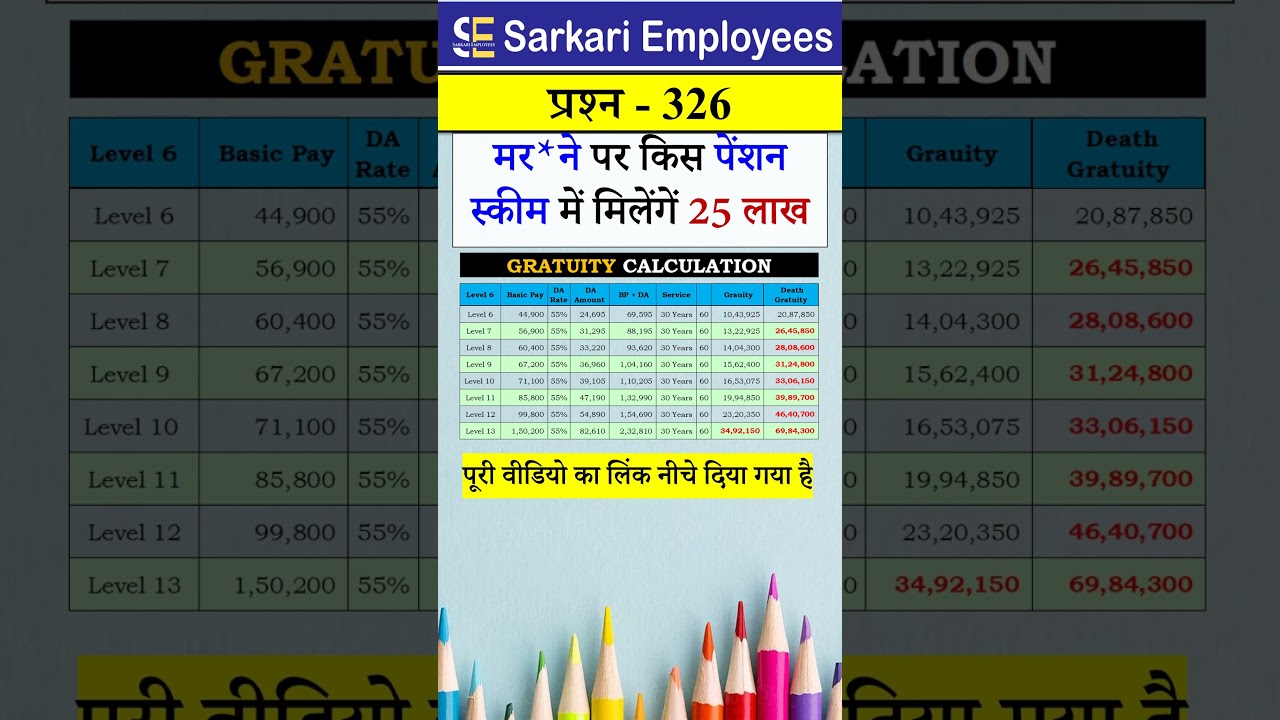

Death Gratuity: Understanding the Financial Safety Net for Government Employees in India
Death Gratuity is a lump-sum payment granted to the nominee(s) or legal heirs of a government employee who dies while in service. It serves as a vital financial safety net, providing support to the bereaved family during a difficult time. This article delves into the calculation and eligibility for Death Gratuity under the three primary pension schemes governing government employees in India: Old Pension Scheme (OPS), National Pension System (NPS), and Universal Pension Scheme (UPS) – which is essentially a broader term often used to encompass NPS and similar initiatives.
Understanding the Eligibility and Purpose
Death Gratuity is payable irrespective of whether the employee was in permanent, quasi-permanent, temporary, or probationary service, provided they had completed a minimum qualifying service. The purpose is to offer immediate financial assistance to the family in the event of the employee’s untimely demise, acknowledging their contribution to the government service.
Death Gratuity Calculation: A Comparison Across Schemes
The calculation method differs slightly depending on the scheme under which the deceased employee was covered. Let’s break down the calculation for each:
1. Old Pension Scheme (OPS):
Under the OPS, the Death Gratuity calculation is based on the employee’s “Emoluments” and “Length of Qualifying Service.”
- Emoluments: Typically refers to the last basic pay drawn by the employee plus Dearness Allowance (DA). Other allowances are generally not included.
- Qualifying Service: This is the total length of service rendered by the employee, including periods of leave with allowances.
The Calculation Formula:
Death Gratuity = (Emoluments x Number of completed six-monthly periods of qualifying service) / 4
Important Considerations under OPS:
- Minimum Death Gratuity: The minimum Death Gratuity payable is typically twice the emoluments.
- Maximum Death Gratuity: The maximum Death Gratuity payable is usually capped at a certain amount (e.g., INR 20 Lakhs, but this figure can vary based on government notifications).
- Service Thresholds: The amount of Death Gratuity is linked to the length of qualifying service. For example, a person with less than one year of service might receive twice the emoluments, while someone with over 20 years of service might receive a higher multiple. Refer to the specific government rules for accurate thresholds.
Example (OPS):
Let’s assume an employee drawing a last basic pay of INR 50,000 with a DA of INR 20,000 (Emoluments = INR 70,000) and had completed 25 years of qualifying service (50 six-monthly periods).
Death Gratuity = (70,000 x 50) / 4 = INR 875,000
Since the amount is less than the maximum cap (e.g., INR 20 Lakhs), the nominee would receive INR 875,000.
2. National Pension System (NPS):
The NPS operates differently from the OPS. The Death Gratuity component within the NPS framework focuses on the accumulated corpus in the employee’s individual pension account.
-
Upon Death, the Nominee/Legal Heir has Options:
- Lump-Sum Withdrawal: The nominee or legal heir can choose to withdraw the entire accumulated pension wealth as a lump sum.
- Annuity Purchase: The nominee can use the accumulated wealth to purchase an annuity plan, providing a regular income stream. This is often mandatory for a certain portion of the corpus, depending on the rules in place.
- Combination of Both: They can opt for a combination of lump-sum withdrawal and annuity purchase.
-
Death Gratuity Specific to Government NPS: In addition to the accumulated pension wealth, government employees covered under NPS may also be eligible for a separate Death Gratuity component, similar to what is provided under OPS. This is typically defined by the government’s specific rules and regulations for NPS subscribers. The calculation would usually follow the same principles outlined in the OPS section, based on emoluments and qualifying service. This component acts as an additional benefit on top of the NPS corpus.
Important Considerations under NPS:
- Accumulated Corpus: The primary benefit under NPS is the accumulated pension wealth, which directly depends on the contributions made by the employee and the government, as well as the investment returns earned over time.
- Tax Implications: The tax implications of lump-sum withdrawals and annuity income should be carefully considered.
- Government Regulations: Refer to the specific government orders and circulars regarding Death Gratuity for NPS subscribers.
Example (NPS):
Let’s assume the deceased employee had an accumulated corpus of INR 15 Lakhs in their NPS account and was also eligible for a Death Gratuity of INR 5 Lakhs based on OPS principles.
The nominee could choose to withdraw the INR 15 Lakhs corpus (subject to applicable tax rules) and receive the INR 5 Lakhs Death Gratuity separately, bringing the total financial benefit to INR 20 Lakhs. Alternatively, they could use a portion of the INR 15 Lakhs to purchase an annuity.
3. Universal Pension Scheme (UPS):
The term “Universal Pension Scheme” is often used to describe initiatives aimed at extending pension coverage to a broader section of the population, including those in the unorganized sector. While a specific “UPS” might not exist with a standardized definition, the principles generally align with those of the NPS, emphasizing individual contributions and investment-linked returns.
- Death Benefits under UPS (Generic): Typically, in such schemes, the nominee or legal heir receives the accumulated contributions along with any investment returns earned. There might not be a separate “Death Gratuity” component as defined in the OPS. The focus is on providing access to the accumulated pension wealth.
Key Considerations for all Schemes:
- Nomination: Ensuring a valid nomination is in place is crucial for the smooth and timely disbursement of Death Gratuity.
- Documentation: The nominee must submit the necessary documents, including the death certificate, service records of the deceased employee, and nomination details.
- Government Orders: The specific rules and regulations regarding Death Gratuity are subject to change based on government orders and notifications. It is essential to refer to the latest guidelines for accurate information.
- Claiming Process: The process for claiming Death Gratuity typically involves submitting an application to the relevant government department.
Conclusion
Death Gratuity is a significant financial benefit designed to provide support to the families of deceased government employees. Understanding the calculation methods and eligibility criteria under different pension schemes (OPS, NPS, and schemes generally referred to as “UPS”) is vital for ensuring that the nominee or legal heirs receive their rightful dues. It is crucial to stay updated on the latest government guidelines and seek clarification from the concerned authorities when necessary. Proactive planning and awareness regarding these benefits can significantly ease the financial burden during a difficult time. Remember to always refer to the latest official circulars and government guidelines for the most accurate and up-to-date information.
LEARN MORE ABOUT: Retirement Pension Plans
REVEALED: Best Investment During Inflation
HOW TO INVEST IN GOLD: Gold IRA Investing
HOW TO INVEST IN SILVER: Silver IRA Investing




0 Comments