
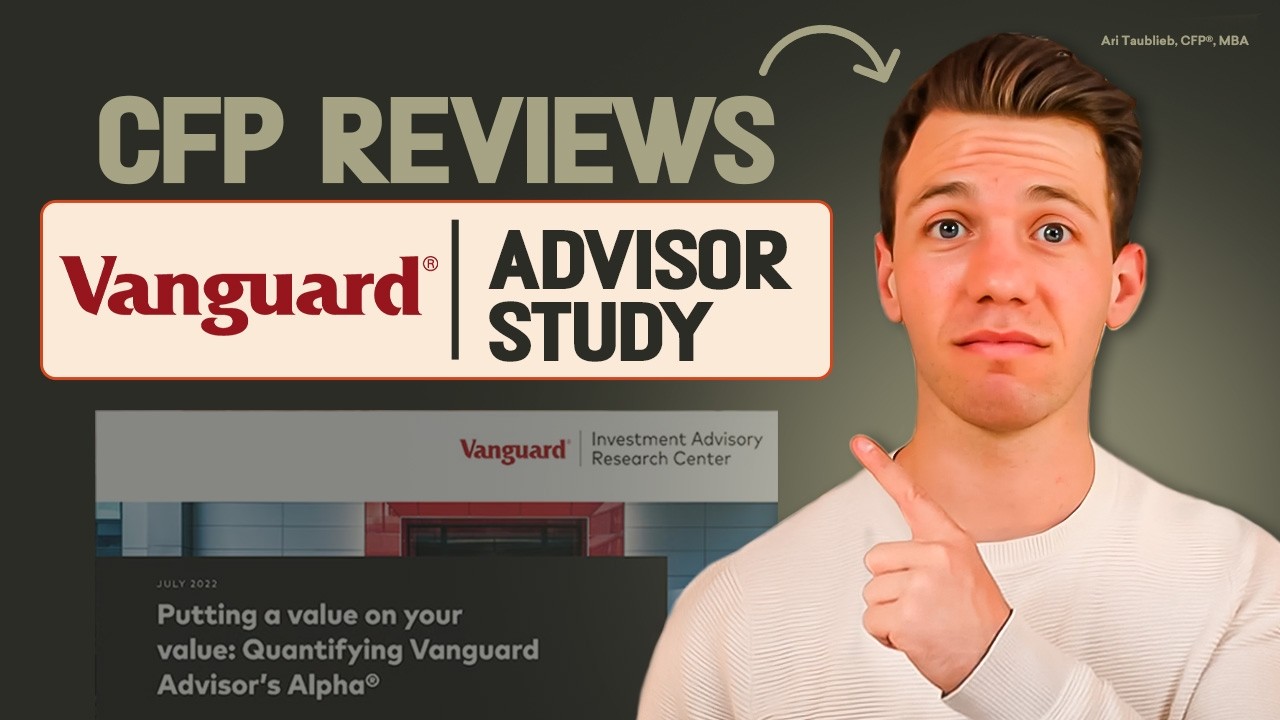

CFP® Reviews Vanguard’s Advisor Study: When Should You Get an Advisor?
In a world increasingly dominated by digital investment platforms, the role of financial advisors has come under scrutiny. Vanguard, a leader in investment management, conducted a comprehensive study examining when and why individuals should consider employing a financial advisor. As a Certified Financial Planner (CFP®), it’s critical to review these findings and help potential investors understand their options.
Understanding Vanguard’s Findings
Vanguard’s advisor study revealed several key insights that can guide individuals in determining whether and when to seek professional financial advice. The study highlighted the importance of recognizing personal financial circumstances and investment goals, which can vary widely from person to person.
Key Insights from the Study
-
Complexity of Financial Situations: One of the driving factors in determining the need for an advisor is the complexity of one’s financial situation. Individuals with intricate financial needs—such as navigating taxes, estate planning, or significant investments—are more likely to benefit from a financial advisor. Those in simpler circumstances may find do-it-yourself investing sufficient.
-
Behavioral Finance Considerations: The study also pointed out that emotional and behavioral biases can significantly impact investment decisions. Many investors make impulsive choices based on market fluctuations, which can lead to unfavorable outcomes. A financial advisor can help mitigate these tendencies, providing a more disciplined approach to investing.
-
Value of Comprehensive Planning: Vanguard emphasizes that financial planning is not solely about investment management; it encompasses goals such as retirement planning, savings strategies, and risk management. An advisor can offer a holistic view of an individual’s financial landscape, ensuring that all aspects work together cohesively.
- Cost vs. Value: While some hesitate to hire an advisor due to perceived costs, the study suggests that the value provided by a good advisor often far outweighs the fees involved. Vanguard’s research indicated that clients who work with advisors tend to achieve better long-term financial outcomes compared to those who go solo.
When Should You Get an Advisor?
The study also provides a practical framework for determining when it might be appropriate to seek the assistance of a financial advisor:
-
Major Life Changes: Significant life events—such as marriage, divorce, inheritance, or a career change—often necessitate a reevaluation of one’s financial strategy. Engaging an advisor can provide clarity during these transitional times.
-
retirement planning: Approaching retirement or transitioning into retirement is one of the most common reasons individuals seek financial advice. An advisor can help navigate the complexities of retirement savings, investment withdrawals, and tax implications.
-
Investment Complexity: If your investment portfolio includes a wide array of assets such as stocks, bonds, real estate, or business interests, the need for professional guidance increases. Advisors can offer strategies for asset allocation and risk management.
- Lack of Time or Expertise: If you find that you lack the time or confidence to manage your investments effectively, consulting an advisor may be worthwhile. Professional planners bring expertise and can save clients significant time.
Making the Decision
Before deciding whether to enlist a financial advisor, individuals should assess their specific situations and needs. Here are some steps to consider:
-
Evaluate Your Financial Goals: What are your long-term objectives? Understanding your goals can guide whether professional advice is necessary.
-
Assess Financial Complexity: Consider how complex your financial life is. More complexity often justifies hiring an expert.
-
Research Potential Advisors: Not all advisors are created equal. Look for someone with the appropriate certifications, a good reputation, and a fee structure that aligns with your budget.
- Consider Pro-Bono Services: If cost is a major concern, explore pro-bono financial advice through nonprofit organizations. Many offer free resources and consultations.
Conclusion
Vanguard’s advisor study provides valuable insights for individuals pondering the question: "When should I get a financial advisor?" Ultimately, the decision to engage professional help depends on your unique financial circumstances, goals, and complexity. As a CFP®, it is imperative to understand these factors to help clients make informed decisions that will pave the way for a secure financial future. Whether you choose to go it alone or enlist the help of a financial advisor, being aware of the significance of sound financial planning is essential for achieving long-term success.
LEARN MORE ABOUT: IRA Accounts
INVESTING IN A GOLD IRA: Gold IRA Account
INVESTING IN A SILVER IRA: Silver IRA Account
REVEALED: Best Gold Backed IRA



I used an advisor with them. First conversation with him I want money sent to my checking account, also turn my existing accounts into low fee Vangaurd funds. He said yes I can do that. The next time we talked he said he wanted me to live off my savings account. Soonly he was fired.
I think one of the great thing with dividend investing is you can "see" what you will have to live on. No complicated formulas etc. (not saying this is right or wrong, just saying it is easy to see how much money you would get)
LOVE the rice analogy!
You mentioned recommending some clients pay an hourly advisor. I've looked for someone who does this for many hours, and I've been unable to find reliable hourly financial advisors.
Do you have any recommendations?
Another video packed with great information. Thanks, Ari!
If one was to enroll “the early retirement academy” how long to I have access course and software. I am one of those 40 year olds looking to educate myself and see if I am on track for retirement.
Very helpful, thank you Ari!
Dividend investing in a fund such as Vanguard Dividend Appreciation Fund (VIG, VDADX) is an indirect way to get access to the quality factor in equities. All investing should be total return along with max draw downs (mitigate sequence of return risk).
Thought I'd facetiously comment that I'm eating cauliflower at the moment. Literally. I don't like vegetables, but cauliflower I don't mind at all. In your videos when you say "eating cauliflower" (negative connotation), I have to insert a different undesirable vegetable like kale. Thanks for your videos!
Great vid Ari!