
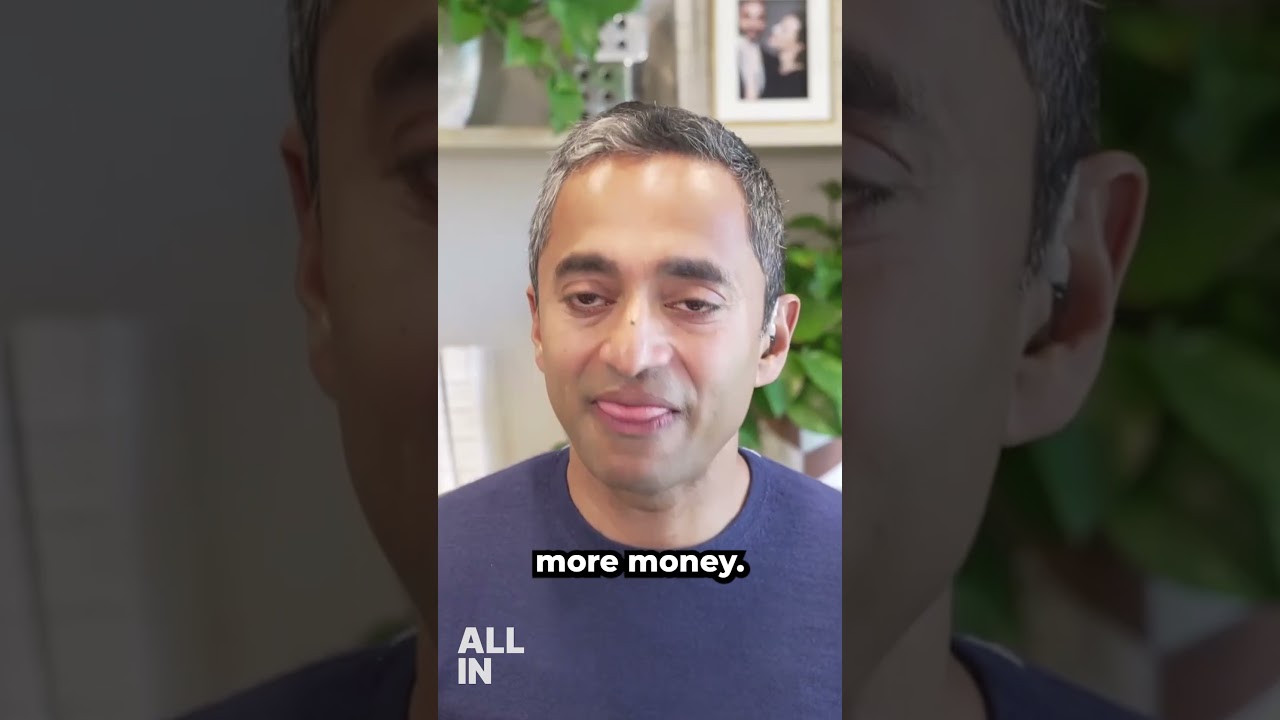

Chamath Palihapitiya: The Fed’s Rate Cut Delay? It’s Not About the Economy, It’s Political
Chamath Palihapitiya, the outspoken venture capitalist and host of the “All-In” podcast, has reignited the debate surrounding the Federal Reserve’s potential rate cuts, arguing that the prolonged delay isn’t primarily driven by economic data but rather by political considerations.
While the Fed has signaled the possibility of rate cuts throughout 2024, the timing and magnitude remain uncertain. Inflation, while cooling from its peak, remains stubbornly above the Fed’s 2% target. Traditional economic analysis suggests the Fed is weighing the risk of premature cuts that could reignite inflation against the potential economic slowdown caused by maintaining higher rates.
However, Palihapitiya argues that this narrative is incomplete. He posits that the current political climate and the impending presidential election are significantly influencing the Fed’s decision-making process.
Why Politics? Palihapitiya’s Argument:
Palihapitiya’s argument centers on the perceived impact of potential rate cuts on the economy and public sentiment, particularly as it relates to the incumbent administration. He suggests the following:
- Perception of Success: Cutting rates too early and then having inflation reignite would be a political disaster for the Biden administration. It would be perceived as a failure of their economic policies and could significantly damage their re-election chances.
- Controlled Narrative: Keeping rates higher for longer, even if it slows economic growth, allows the Fed to maintain a narrative of fighting inflation and protecting the long-term economic stability, a narrative that can be politically advantageous.
- Fear of Blame: Any significant economic downturn leading up to the election could be directly attributed to the Fed’s actions. The fear of being blamed for a recession could be influencing the Fed’s cautious approach.
The Counterarguments:
While Palihapitiya’s argument is compelling, it’s important to consider the counterarguments:
- Fed Independence: The Fed is designed to be an independent body, insulated from political pressure. Its mandate is to maintain price stability and maximum employment, not to influence elections.
- Data-Driven Decisions: The Fed insists its decisions are based solely on economic data. They carefully analyze inflation figures, employment numbers, and other indicators to determine the appropriate course of action.
- Economic Risks: Delaying rate cuts for too long could stifle economic growth, increase unemployment, and potentially trigger a recession. These are significant economic risks that the Fed must carefully consider.
The Bottom Line:
Whether political considerations are a dominant factor or simply a subtle influence on the Fed’s decision-making remains a point of contention. However, Palihapitiya’s perspective forces us to consider the broader context in which the Fed operates.
The implications are clear:
- Increased Scrutiny: The Fed’s actions will be under intense scrutiny in the coming months, particularly leading up to the election.
- Market Volatility: Uncertainty surrounding the timing of rate cuts could lead to increased volatility in the stock market and other asset classes.
- Divergent Opinions: Investors and economists will continue to debate the Fed’s motivations and the potential consequences of its actions.
Ultimately, the Fed’s next moves will be crucial in shaping the economic landscape and influencing the outcome of the upcoming election. Whether driven by purely economic data or influenced by political considerations, the impact will be felt across the country. Palihapitiya’s bold assertion serves as a reminder that even seemingly independent institutions operate within a complex and often politically charged environment.
HOW TO: Hedge Against Inflation
REVEALED: Best Investment During Inflation
HOW TO INVEST IN GOLD: Gold IRA Investing
HOW TO INVEST IN SILVER: Silver IRA Investing




Chamath is getting worse and worse.
These guys are such con artists
U.S. is cooked these guys Reagan supply sided the last little bit of the middle class. Exit the U.S. market. You’re all toast!
2005 called, it wants its economics back.
Chamath’s simplistic math. Armchair quarterback with self interest at heart. Lol.
Such BS from Trump's mouth to Chamath. We were on the path to 2% for Powell to drop interest rates except for Trump's tariffs that has made inflation sticky. Blame Trump not Powell for this mess. Powell has been the ONLY neutral anchor. I'm sure Chamath also liked the budget bill that is saving him $M in taxes too.
Powel is part of deep state. Why did he cut ratesb50 bps when infflatkon was hiher than today in September 2024 a month before election. After the cur 10 uield went up almost 100 bps
The Debt Train is unstoppable, cutting interest rates would at least save > 300B this year in intereest payments. Powell is off his rocker at this point. I guess Powell wants a demolition event to seize more power for the FED and gov. Itr's my only conclusion because hhe contradicting his own previous statements now..
It's not political. It's a prudent measured approach once the data comes in post tariff world
All-In Podcast = Propaganda machine