

Roth IRA Disasters to Avoid: Protect Your Retirement Savings
A Roth Individual retirement account (Roth IRA) is a powerful tool for retirement savings, allowing individuals to save money on a tax-advantaged basis. While they can provide valuable benefits, mistakes can turn the advantages of a Roth IRA into potential disasters. Below are some common missteps to avoid to ensure that your retirement savings remain intact and grow as planned.
1. Overcontributing
One of the most frequent pitfalls of Roth IRAs is overcontributing. Each year, the IRS sets a limit on how much you can contribute to your account. For 2023, for example, the limit is $6,500 for individuals under 50, and $7,500 for those aged 50 or older. Exceeding these limits can lead to a 6% excise tax on the excess contribution. It’s crucial to monitor your contributions throughout the year and adjust accordingly to avoid penalties.
Solution:
Stay informed about your contribution limits and track your contributions consistently. If you find you’ve overcontributed, take action to withdraw the excess amount before the tax deadline to avoid penalties.
2. Misunderstanding Withdrawal Rules
While Roth IRAs offer flexibility when it comes to withdrawals, misunderstanding the rules can lead to costly mistakes. Contributions to a Roth IRA can be withdrawn tax-free at any time. However, the earnings on those contributions have different rules. If you take out earnings before the account has been open for five years, and before turning 59½, you may face taxes and penalties.
Solution:
Familiarize yourself with the difference between contributions and earnings, as well as the five-year rule. Carefully plan any withdrawals to avoid unexpected tax burdens.
3. Ignoring Income Limits
Roth IRAs have income limits that determine eligibility for contributions. As of 2023, single filers with a modified adjusted gross income (MAGI) above $153,000 and married couples filing jointly with a MAGI over $228,000 are phased out of their ability to contribute directly to a Roth IRA. Ignoring these limits can lead to overcontribution issues and potential penalties.
Solution:
Check your income against the IRS guidelines before making contributions. If you exceed the threshold, consider options like a Backdoor Roth IRA strategy, which can allow higher earners to benefit from a Roth’s advantages without direct contributions.
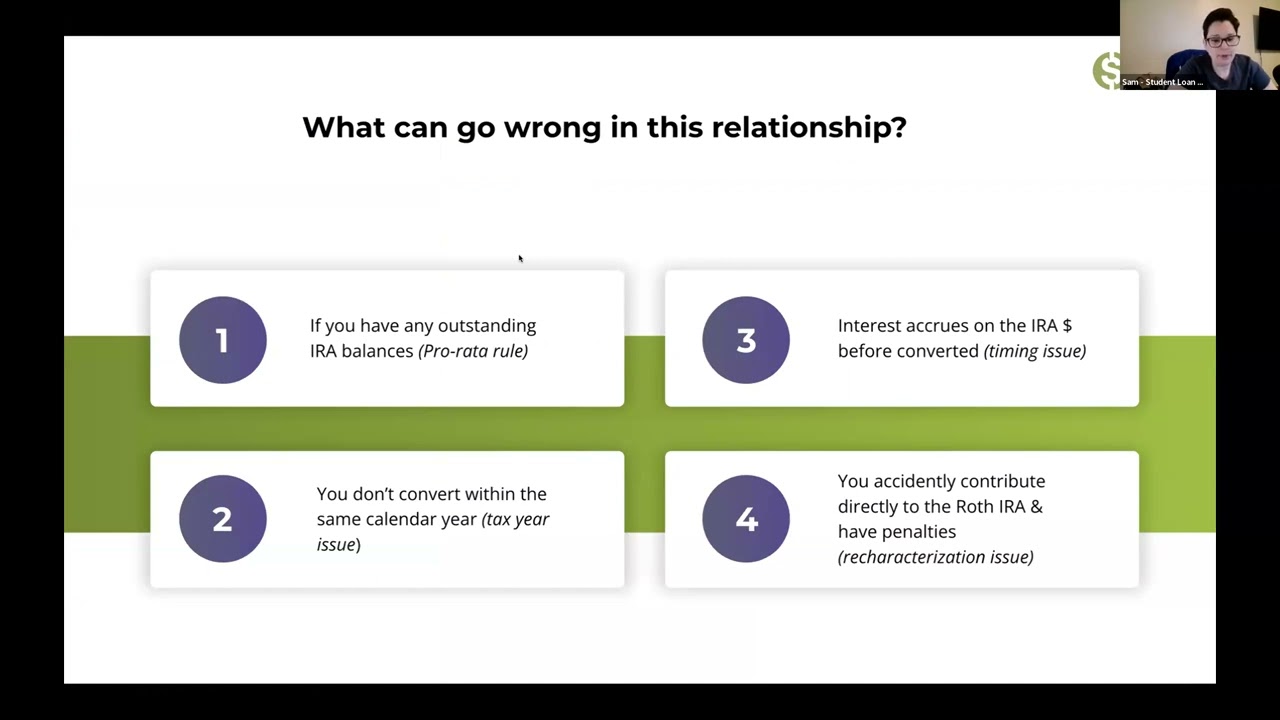
4. Failing to Convert Timely
Converting a traditional IRA to a Roth IRA can be an effective strategy for tax planning, especially if you anticipate being in a higher tax bracket during retirement. However, users often delay this conversion, missing opportunities for tax-free growth. Additionally, waiting too long can push you into a higher tax bracket when it comes time to pay taxes on the converted amount.
Solution:
Evaluate your financial situation and tax implications proactively and consider making conversions during years of lower income or when tax rates are favorable.
5. Choosing the Wrong Investments
A Roth IRA is not simply a savings account; it is an investment vehicle that allows for a variety of assets, including stocks, bonds, and mutual funds. Choosing overly aggressive or overly conservative investments can derail your retirement goals. Poor investment decisions lead to insufficient growth or unnecessary risk during critical savings years.
Solution:
Diversify your investments according to your risk tolerance, and regularly review your asset allocation. Consider consulting with a financial advisor to develop a balanced strategy that aligns with your retirement goals.
6. Neglecting to Update Beneficiary Designations
Life changes—marriage, divorce, or the birth of children—can necessitate changes to your beneficiary designations. Failing to update these can lead to unintended consequences like assets going to an ex-spouse or through probate instead of directly to your intended heirs.
Solution:
Regularly review and update your beneficiary designations, especially after major life events. Keep a record of these changes with your account statements to ensure that your wishes are clear.
Conclusion
Maximizing the benefits of a Roth IRA requires careful planning and awareness of the rules and regulations governing these accounts. By avoiding common disasters—such as overcontributing, misunderstanding withdrawal rules, ignoring income limits, delaying conversions, making poor investment choices, and neglecting beneficiary designations—you can protect your retirement savings and work towards a secure financial future. Stay informed, stay diligent, and consider enlisting the help of a financial professional to navigate the complexities of your Roth IRA effectively.
LEARN MORE ABOUT: IRA Accounts
CONVERTING IRA TO GOLD: Gold IRA Account
CONVERTING IRA TO SILVER: Silver IRA Account
REVEALED: Best Gold Backed IRA




As always, SLP bringing the 5 star service. Thanks for the entertaining, informative, and insightful video.
Omg. Im about to crap my pants. You have saved me. I have a old 401k i rolled into an FIA, just found out its shitty cap. The more i learn the more changes i make. I was in a tsp and roth at 5% each, i paused the roth d/t financiall issues and school. I just now transfered to a roth totally. Low and below i got your email and signed up for this webinar and found out i cant do roth. Omg. Im married filed separate d/ t student loans. I need a diff tool. Thanks for all you and your team is doing for us, mind blowing
Great timing, I've just been having this conversation with my tax preparer. Can you go into more detail on the role and importance of form 8606? My tax preparer gets a 1099-R showing I had a penalty free distribution but she was making a point that she doesn't know where that money has come from and if it needs to be taxed. I feel this is where 8606 comes in but haven't been able to join the dots yet.
Also, some clarification on the years you do things would be helpful. e.g. If i pay in to traditional IRA in 2024 and convert to Roth IRA immediately, but I do it before I file my taxes for 2023, I can backdoor into 2023's allowance, even though all the tax forms will show distributions etc in 2024?