
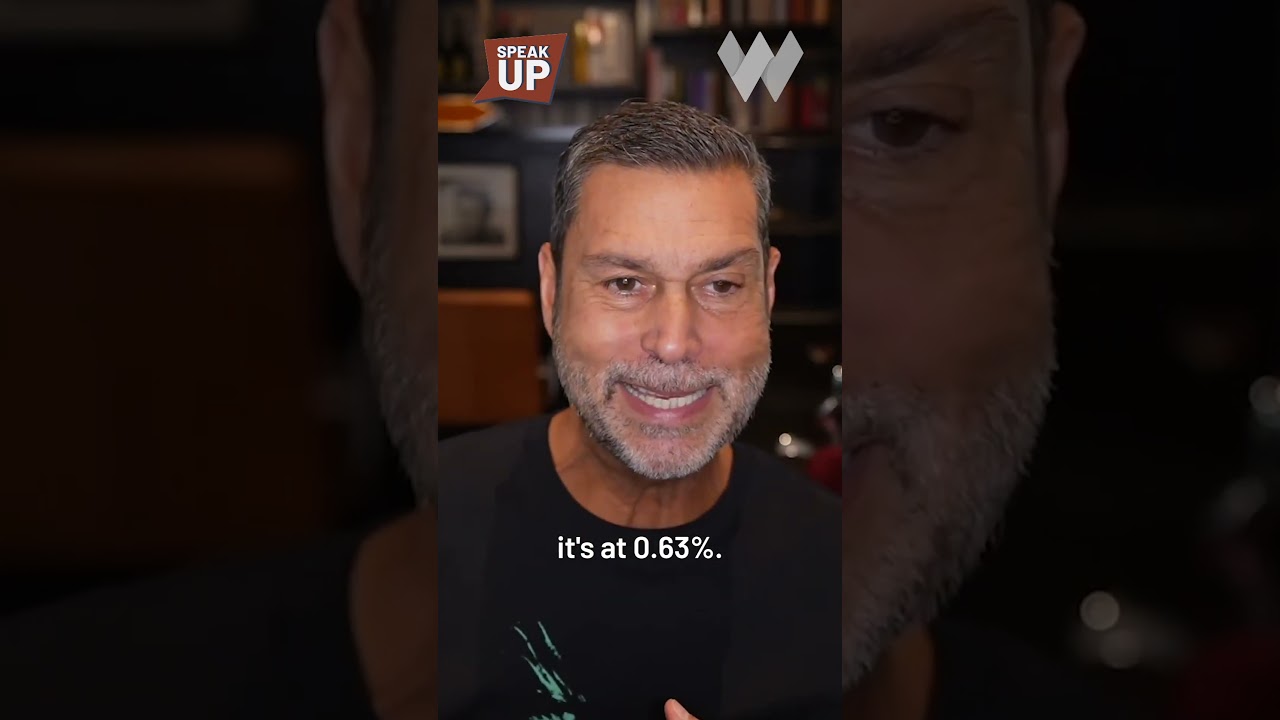

Understanding Inflation Break Evens: Insights from Raoul Pal
Inflation has long been a subject of concern for economists, policymakers, and investors alike. As prices rise, understanding how to safeguard against its impacts becomes increasingly essential. One of the key concepts in this discussion is "inflation break evens," a term frequently referenced by financial experts, including the renowned macro investor Raoul Pal.
What Are Inflation Break Evens?
Inflation break evens refer to the inflation rate at which the returns on nominal bonds (bonds that pay a fixed interest rate) will equal the returns on inflation-protected bonds, such as Treasury Inflation-Protected Securities (TIPS) in the United States. Essentially, it represents the market’s expectations for future inflation.
Calculation: The break-even inflation rate can be calculated by subtracting the yield of TIPS from the yield of nominal Treasury bonds of the same maturity. For example, if a 10-year Treasury bond yields 3% and a 10-year TIPS yields 1%, the break-even inflation rate is 2%. This means that if inflation averages more than 2% over the next 10 years, TIPS would outperform nominal bonds.
Raoul Pal’s Perspective
Raoul Pal, the co-founder of Global Macro Investor and an influential voice in the financial world, emphasizes the importance of understanding break evens in the current economic climate. Given the unprecedented monetary policies adopted by central banks worldwide, inflation has become a crucial topic of discussion.
Pal argues that inflation break evens provide essential insights into market sentiment regarding future price levels. A rising break-even rate might indicate increased confidence among investors that inflation will persist, while a declining rate could suggest a general expectation of waning inflation pressures.
The Implications of Rising Break Evens
When break evens rise, several implications come into play:
-
Market Sentiment: Rising break evens may signal that investors expect inflation to outpace central banks’ targets. This expectation often leads to increased volatility in financial markets as asset classes adjust.
-
Monetary Policy Adjustments: Central banks, upon observing rising break evens, may reassess their monetary policies. For instance, to combat inflation expectations, they might consider tightening monetary policy by raising interest rates.
-
Investment Strategies: For investors, understanding break evens could inform asset allocation decisions. If break evens rise significantly, investors might opt for inflation-protected assets or commodities, rather than traditional bonds, to preserve purchasing power.
- Economic Growth Projections: Rising inflation break evens can indicate growing demand and a recovering economy. This could affect various sectors differently, with cyclicals benefiting from increased spending.
The Risks of Misinterpretation
However, Pal also cautions against oversimplifying the significance of break evens. Fluctuations can occur due to various factors, including market technicalities and speculative trading, rather than genuine inflationary pressures. Therefore, it’s vital for investors to consider the broader economic context and other indicators when interpreting break evens.
Conclusion
Inflation break evens are a powerful tool for gauging market expectations regarding future inflation. By understanding and analyzing these rates, investors can navigate the complexities of the economic landscape more effectively. As Raoul Pal highlights, in an environment characterized by monetary policy changes and unpredictable inflation scenarios, a nuanced interpretation of break evens can provide invaluable insights, guiding investment strategy and decision-making.
LEARN ABOUT: Investing During Inflation
REVEALED: Best Investment During Inflation
HOW TO INVEST IN GOLD: Gold IRA Investing
HOW TO INVEST IN SILVER: Silver IRA Investing




The continuously changing economic conditions in our society have made it necessary for thousands of people to find additional sources of income. Personally, I am looking at the stock market to fuel my retirement goal of $2m, my concern is the recent market crash.
I love how an undershoot and inflation is still positive lol. How about we stop printing money and spending money we don’t have as individuals and as a government and actually drop the prices.