
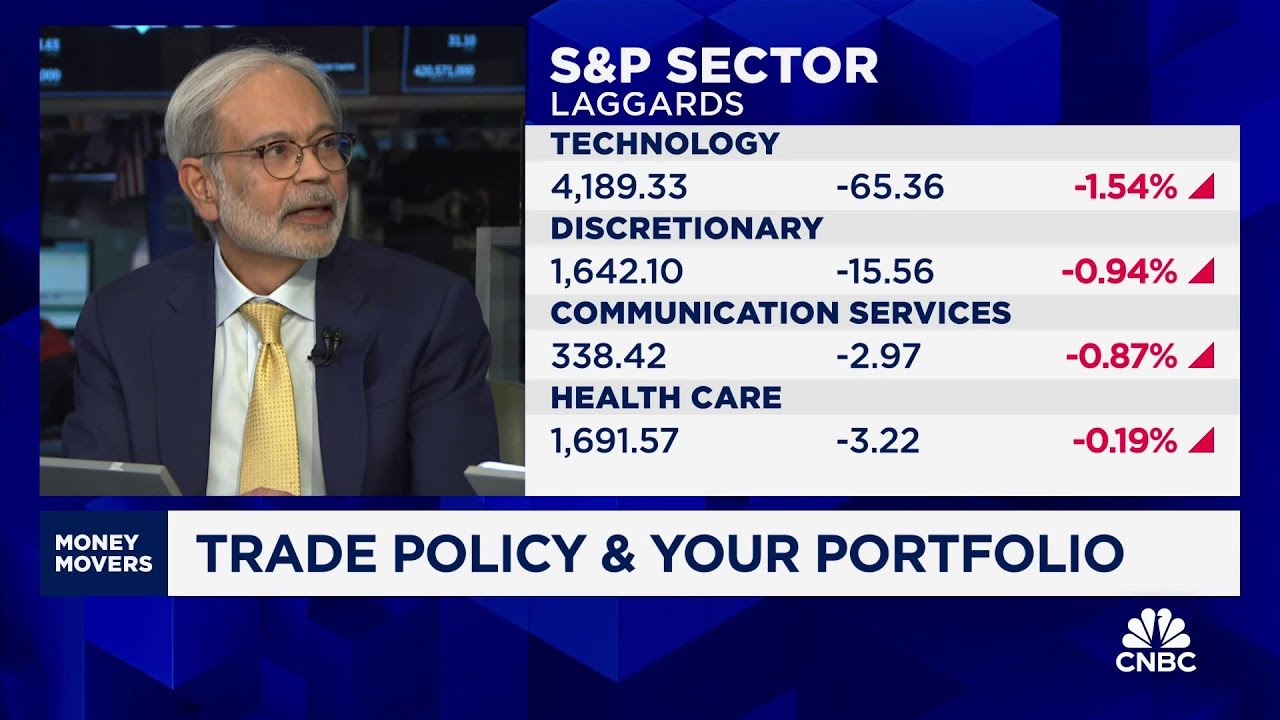

Things Need to Get Worse for Them to Get Better,’ Says Deutsche Bank’s Chadha
In a recent commentary that has sparked widespread discussion among financial analysts and market participants, Deutsche Bank’s chief economist, Sanjay Chadha, has put forth a provocative assertion: that economic conditions may need to deteriorate further before a meaningful recovery can take place. This perspective challenges conventional economic wisdom and invites a closer examination of the underlying factors shaping today’s global economy.
Understanding the Context
As many economies around the world grapple with the aftermath of the COVID-19 pandemic, inflationary pressures, and geopolitical tensions, analysts have been striving to forecast when and how recovery will occur. In this turbulent environment, Chadha’s remarks underscore a critical acknowledgment: that some economic indicators might still have room to worsen before stabilization and improvement can be realized.
Why Worsening Conditions Could Prompt Recovery
Chadha’s assertion can be understood through several key lenses:
-
Cleansing the Economic Landscape: Economic downturns often serve as a necessary "cleaning" process, allowing inefficient businesses to fail while enabling the restructuring of sectors that have been propped up for too long. This process can pave the way for innovation and more sustainable business practices.
-
Market Corrections: In cases of inflated asset prices—whether in real estate, stocks, or commodities—a significant correction may be required to reset valuations. By allowing markets to realign with fundamental economic realities, stakeholders can then engage in more informed investment decisions, leading to healthier growth paths.
-
Policy Adjustments: For policymakers, a recognition that conditions need to worsen may create a sense of urgency to intervene with more aggressive fiscal and monetary policies. This could entail increased government spending, tax adjustments, or changes to interest rates, aiming to stimulate demand once markets reach a lower baseline.
- Consumer Behavior: Economically distressed environments often shift consumer confidence and spending habits. When individuals and businesses adjust their expectations in response to harder times, there can be a rebound effect as they readjust strategies and prepare for future growth opportunities.
Risks and Cautions
While Chadha’s perspective may offer a roadmap for understanding potential recovery, it is not without its risks. Economic pain can lead to social unrest, political instability, and long-term damage to consumer confidence. Thus, while acknowledging the need for problems to be fully addressed, it is crucial to consider the human and societal impacts that can arise from worsening conditions.
Moreover, uncertainties stemming from geopolitical tensions, supply chain issues, and climate change further complicate this landscape. Thus, an iterative approach to policy responses may be necessary to mitigate the risks associated with economic downturns.
Conclusion
Sanjay Chadha’s statement, “things need to get worse for them to get better,” serves as a compelling call to reassess our expectations surrounding economic recovery. It highlights the often paradoxical nature of economic cycles and emphasizes the role of systematic corrections in paving the way for future resilience.
As policymakers, businesses, and communities navigate the complex dynamics of recovery, a commitment to adaptive strategies, innovative solutions, and robust safety nets will be essential to guide economies through the stormy seas of recession toward a more stable and prosperous future. It is a reminder that, in the world of economics, the path to improvement is rarely linear and that sometimes, it is through hardship that the foundations for sustainable development are laid.
LEARN ABOUT: Investing During Inflation
REVEALED: Best Investment During Inflation
HOW TO INVEST IN GOLD: Gold IRA Investing
HOW TO INVEST IN SILVER: Silver IRA Investing




CNBC trying to sell a recession as actually a good thing.
weird voice
Expect two kitchen sink quarters — companies accruing up the wazoo and expensing their prepaids/deferreds.
Wall St brokers got a 30% increase in Bonuses last year. Average bonus was a 1/4 million bucks. The largest increase on record. Anybody else see one of those in their checks.
Trump and his sicophants are slow walking our economy off a cliff. There are no winners in a trade WAR and its not going to snap back in the 4th quarter. We have lost all credibility,
No Fed cuts this year. Inflation is really going to get ugly in the second half.
He's right. Watch for FED cutting in the Fall……at least once!!!! Things happen verrry fast today!!!!!
Counterargument: things need to get worse before they can get worst
Valley Girl Accent?