
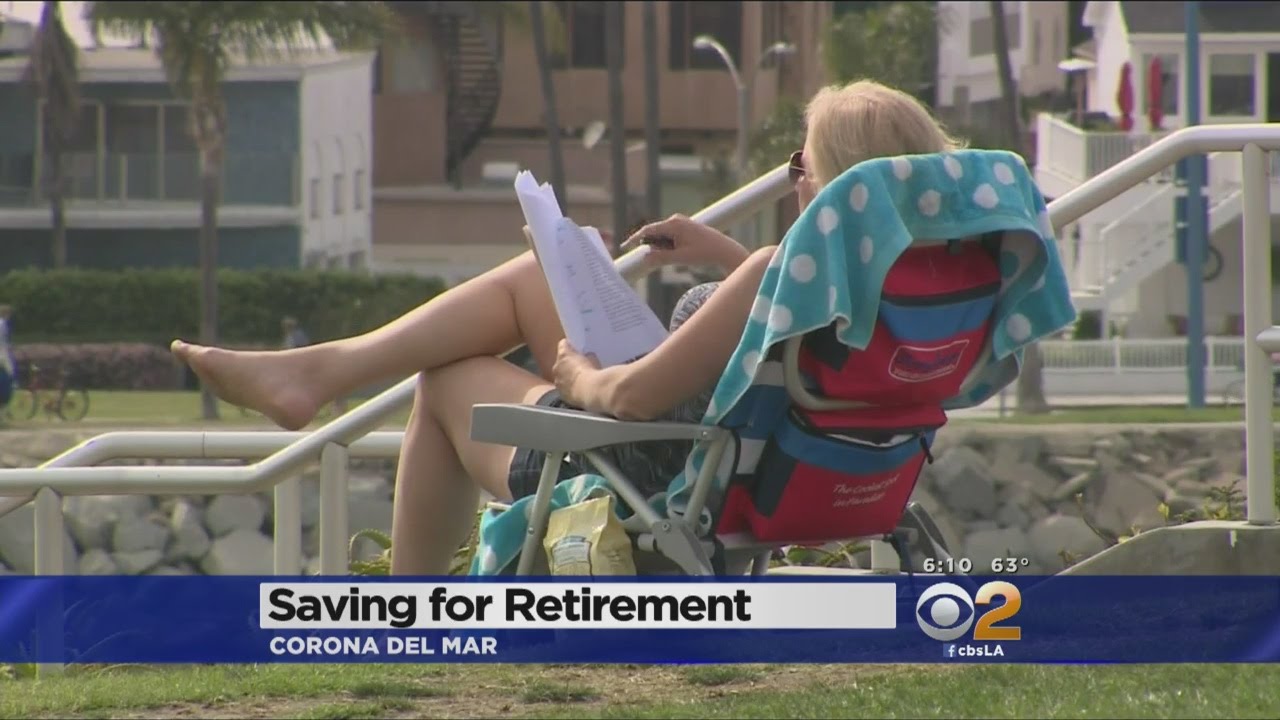

Not As Many Americans Saving Up For Retirement, Study Finds
In a time when financial security is more crucial than ever, a troubling trend has emerged: fewer Americans are setting aside money for retirement. A recent study conducted by the Employee Benefit Research Institute (EBRI) reveals that an increasing number of individuals are not making the necessary preparations for their golden years, raising alarms about the potential consequences for both individuals and the economy as a whole.
The Findings of the Study
The EBRI study, which surveyed thousands of individuals across various demographics, found that the percentage of working adults actively saving for retirement has declined significantly over the past decade. While traditionally, financial literacy and planning for retirement have been emphasized as key components of personal finance, many Americans are now falling short of these essential practices.
According to the survey, only about 53% of respondents reported that they are currently saving for retirement, a noticeable drop from 60% just a few years ago. This decrease spans a wide range of age groups, including millennials, Gen Xers, and even baby boomers, suggesting that the problem is not limited to younger generations who may still be building their careers.
Contributing Factors
Several factors contribute to this worrisome trend. One significant aspect is the rising cost of living, which has been exacerbated by inflation, particularly in major urban areas. With housing prices soaring and everyday expenses increasing, many individuals are finding it increasingly challenging to allocate funds for long-term savings.
Additionally, the economic uncertainty brought about by the COVID-19 pandemic has had a lasting impact on financial behaviors. Job losses, reduced work hours, and overall financial instability have forced many Americans to prioritize immediate needs over future savings.
Moreover, a lack of financial literacy plays a crucial role in this trend. Many individuals report feeling overwhelmed by the complexities of retirement planning, resulting in inaction. Without proper guidance, many choose to ignore the issue altogether rather than seek help or educate themselves on effective savings strategies.
The Importance of Retirement Savings
The implications of this trend are alarming. The decline in retirement savings can lead to a host of financial problems for individuals as they age. Without adequate savings, many Americans may face a stark reality in their later years: reliance on social security benefits, which are often not enough to cover basic living expenses.
Furthermore, the broader economic impacts could be significant. A population without sufficient retirement savings may mean increased pressure on social programs that support retirees, straining public resources and potentially leading to increased taxes for younger generations.
Solutions and Moving Forward
Addressing this issue requires a multi-faceted approach. Financial education must be prioritized at all levels, helping individuals to understand the importance of retirement savings and the various strategies and tools available to them. Employers also have a crucial role to play; companies can facilitate retirement savings by offering better retirement plans, providing matching contributions, and ensuring that employees are aware of their options.
Additionally, policymakers could consider implementing incentives for saving, such as tax breaks or matching contributions for middle- and low-income earners. Such measures could encourage individuals to prioritize retirement savings, ultimately fostering a culture of financial responsibility.
Conclusion
The findings from the EBRI study serve as a wake-up call for Americans and policymakers alike. With many people failing to save adequately for retirement, the need for education, resources, and proactive measures has never been more urgent. By prioritizing retirement savings today, individuals can help secure not only their financial futures but also contribute to a more stable economy for generations to come.
LEARN MORE ABOUT: 401k Plans
REVEALED: Best Investment During Inflation
HOW TO INVEST IN GOLD: Gold IRA Investing
HOW TO INVEST IN SILVER: Silver IRA Investing




Try not to get a divorce. You will lose your retirement savings I know that because it happened to me. After 17 years she wanted out.
I agree with the one guy don't rack up debt live within your means have a paid-off mortgage save whatever you can in a 401k and Roth IRA good job with a pension would be nice but my job offered no pension but I'm able to live off just my Social Security
As someone who retired 5 years ago at age 62 I can tell you this. These videos that are talking about how much you should save are pretty much worthless. Everybody's situation is different. What's more important, and what they hardly ever talk about is "How Much You Owe". You need to plan your finances so you are debt free by the time you plan on retiring. Like I said I retired 5 years ago and my wife retired 2 years later. We have yet to use any of our retirement money. Being debt free we are having no issues living on nothing but our Social Security. Just remember it's the debt that holds you back, not the savings. You're welcome.
You can't when you don't have it.
If you live in SoCal two people will need $2.5M to retire.
This video's target of saving a multiple of your income is stupid and misleading. It is not important to save a certain amount relative to your annual income, as this video suggests. If a person lives well below their means, focusing on saving a multiple of their income is nonsense. It is more important to save a multiple of your expected annual expenses in retirement. At age 65, to be very comfortable that your savings won't run out during retirement, you should have about 25X your annual expenses saved (retirement accounts, taxable accounts, and checking/savings). Do not include home equity. With a Social Security payment (delay this until age 70 in order to get an automatic 8% increase in your payment for every year you delay), you have a high probability of not running out of funds during retirement.
If you don't save then don't complain when you wake up at age 60 and realize you can't retire.
People in S. California might say places like Oklahoma is third world but for me that's a compliment.
I take around 8 weeks off without pay each year on top of 5 weeks paid vacation,travel and spend time in 57 countries pay off upper middle class home in 10 years,a place on Marco Island and in Rome,etc..
Still remain completely debt free,max my retirement savings,fund regular savings,and invest no problem.
And retire early.