
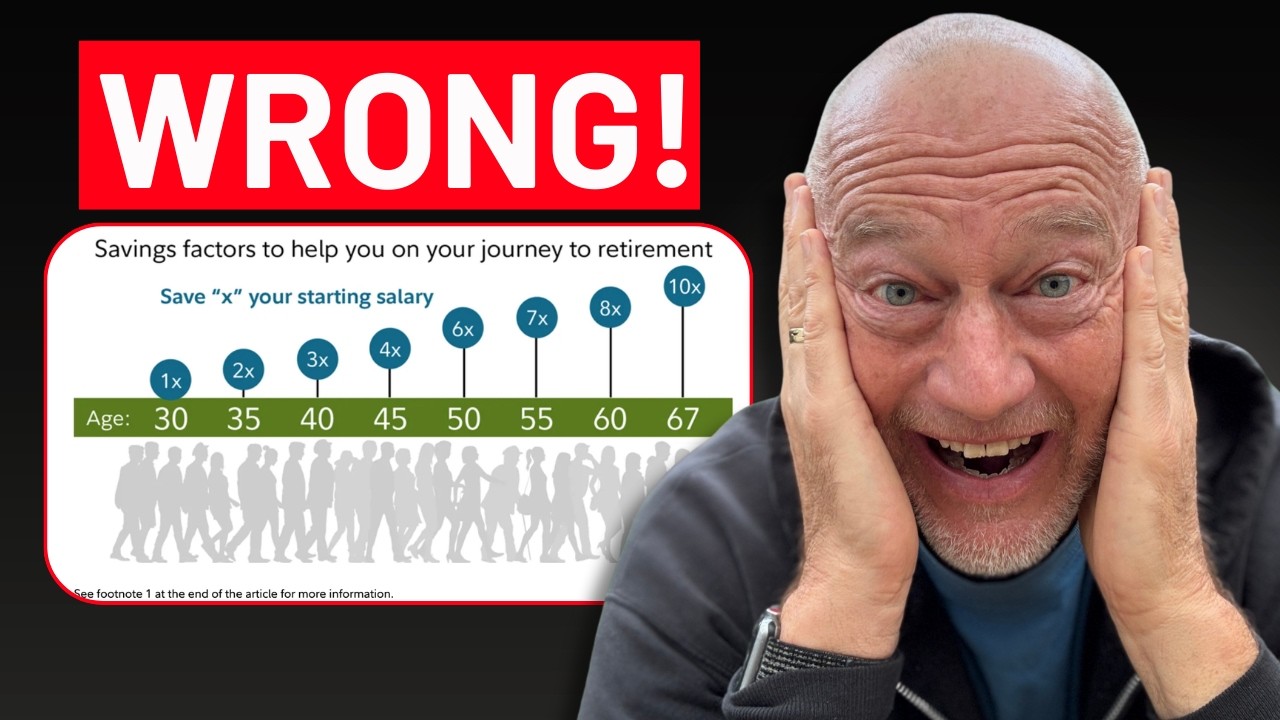

Fidelity is Wrong! Use This Savings Rule Instead
When it comes to personal finance, investment strategies often make headlines. Recently, Fidelity Investment’s saving recommendations have inspired debate among financial experts. Their traditional guidelines, while well-intentioned, may not be as relevant in today’s dynamic economic landscape. Instead, many experts suggest adopting a new savings rule tailored to modern financial challenges and opportunities.
The Traditional Fidelity Approach
Fidelity Investments has long advocated for a savings benchmark of 15% of your income—split between retirement accounts and other savings avenues. This approach underscores the importance of consistent saving for retirement, emphasizing that early and frequent contributions can compound significantly over time. However, while this guideline was once sound, the financial landscape has undergone substantial changes.
Why Fidelity’s Rule May Fall Short
-
Changing Economic Environment: With rising inflation rates and a shifting job market, many individuals find it increasingly challenging to set aside 15%. The pressures of student loans, housing costs, and other living expenses can make this savings target unrealistic for many, especially younger generations.
-
Diverse Financial Goals: Not everyone prioritizes retirement savings as the foremost goal. Some may be saving for a down payment on a home, a child’s education, or to build an emergency fund. Fidelity’s one-size-fits-all approach does not accommodate these varied financial priorities.
- Investment Trends: The stock market is no longer the only viable investment avenue. With the growing popularity of alternative investments (think real estate, cryptocurrencies, etc.), a rigid savings rule may limit individuals from diversifying their financial portfolios effectively.
A Better Savings Rule: The 50/30/20 Rule
A more adaptable framework that financial advisors recommend is the 50/30/20 rule. This rule divides your after-tax income into three categories:
-
Needs (50%): This portion is for essential expenses, including housing, food, utilities, and healthcare. By capping this category at 50%, you ensure that your basic needs are met without being overwhelmed by financial obligations.
-
Wants (30%): This segment allows for discretionary spending on things you enjoy—dining out, travel, hobbies, or entertainment. This flexibility helps maintain a balanced and fulfilling lifestyle while prioritizing financial health.
- Savings (20%): Here, you allocate 20% of your income towards savings, encompassing retirement accounts, emergency funds, and other investment opportunities. This percentage may vary depending on individual goals and circumstances, allowing for greater personalization.
Benefits of the 50/30/20 Rule
-
Flexibility: This rule allows you to adjust allocations based on personal situations, making it adaptable to fluctuations in income or unexpected expenses.
-
Holistic Financial Management: By addressing both savings and lifestyle spending, it encourages a balanced approach to financial management—one that can lead to lower stress and better overall wellbeing.
- Fostering Financial Literacy: The simplicity of the 50/30/20 rule promotes financial literacy, helping individuals feel more empowered and knowledgeable about their finances.
Implementing the 50/30/20 Rule
To adopt this savings strategy, follow these steps:
-
Track Your Spending: Assess your current income and expenditures to understand where your money goes. This awareness is crucial for reallocation.
-
Create a Budget: Build a budget that aligns with the 50/30/20 framework. Adjust allocations as necessary to reflect changing financial situations.
- Review Regularly: Periodically reassess your budget and savings goals. Life circumstances change, and your budget should be flexible enough to adapt.
Conclusion
While Fidelity’s recommendation of saving 15% of your income is commendable, the 50/30/20 rule reflects a more nuanced understanding of today’s unique financial environment. By embracing a more flexible approach to budgeting and savings, individuals can take control of their finances holistically—balancing immediate needs with long-term goals. Remember, the key to financial success is not just how much you save, but how well you manage your money to achieve a fulfilling and secure future.
LEARN MORE ABOUT: IRA Accounts
CONVERT IRA TO GOLD: Gold IRA Account
CONVERT IRA TO SILVER: Silver IRA Account
REVEALED: Best Gold Backed IRA




My pension is said to be VERY good. I haven't gotten exact figures, but that's what they say. But if I live to be 80 – 90, and we have 3 more cycles like this recent bout of inflation, that really eats at the purchasing power of that fixed income pension paycheck. So I would advise those reading this, multiple types of retirement savings are advised.
At least our medical is very good, or I'd be really concerned.
I'm 45 years old and just started a 401k last year. Let me tell you, I'm ramping that up FAST! lol
I see these numbers on how many have so little save for retirement and I know that is going to have a significant impact on the tax rate of retirees that do. I fully expect my entire tax-advantaged retirement (not social security) to be socialized by the time I retire in 20 years.
Am 58 retiring next year but the thought of retirement gives me weakness. My apologies to everyone who have retired and filing social security during this time after putting in all those years of work just to lose everything to a problem you never imagined to happen. It’s so difficult for people who are retired and have no savings or loved ones to fall back on.
I am a Fidelity customer and active trader. What is frustrating with Schwab is they don’t automatically move money from their money market to cash available to trade and if you sell it will not take effect until the next day. What compounds the frustration is that I place limit orders which may take several days to execute and in some cases won’t execute at all therefore losing interest on that money. Fidelity on the other hand allows you to place a trade and will automatically move the funds from their money market therefore you get interest up until the trade settles.
I am currently in my 60s and This is no time to tamper retirement savings. I want to max out my retirement contributions and I also have another $380k in a savings account that i want to invest in a non-retirement account. Where should I invest it now?
While Fidelity's products are good, their retirement planning is terrible, and they don't want to know. They once asked me for feedback on their prognostic software, which I gave them. They decided that I was abusive (I wasn't) and they cancelled my brokerage account. They blocked me forever, with no possibility of appeal. Moral of this story: Fidelity is thin-skinned and has no problem throwing people out because of mild criticism. Caveat emptor.
Fidelity just uses that as a rule of thumb. If you are a client they do run analysis based on your expenses plus other contingencies. There’s nothing wrong with setting the bar high. Get Jim Otar’s Excel file. It’s excellent.
Maybe make video addressing the elephant in the room, like how the tariffs will affect people’s retirement plans!!! instead of recycled contents over and over….. since you think tariffs are good in your recent past videos.
There is whole bunch of union and government labor in the mix that may not have much savings but do have a great unending pension. What percentage of those with little savings have a very nice pension? That number would give us a more accurate picture.
I'm 51yrs old. $40,000 weekly and I'm retired, this video have inspired me greatly in many ways that I remember my past of how I struggled with many things in life to be where I am today!!!!❤️
If folks don't see the difference btwn salary & living expenses, we really have a finance education issue.
10X $100,000 is $1 million. Check the begining of your video again.
YOu cited a person making $100K per year and reviewed the Fidenity salaryX chart. However when you got to the end of the chart, instead of stating 10X that $100K salary – which is $1M, you stated $100K.
WRONG!!!
You made a pretty big misstatement at 0:58
This is exactly the trap I kept falling into waiting for the "perfect moment" to invest, then getting paralyzed when stocks actually dropped. I ended up missing out on solid opportunities and losing money by hesitating. It wasn’t until I started working with Lynne Diane Burgraff that I learned how to make smart, strategic moves instead of emotional ones. She helped me build confidence in my investments, and for the first time, I feel like I’m actually growing my wealth instead of just hoping for the best.
I wonder how many of those surveyed also have a pension? 401ks were created in 1978; IRAs in 1974.
The problem with including the value of your house is that it is illiquid – you can't spend your house value unless you sell your house or borrow against it (at high interest rates).
Conflict of interest. Fidelity wants as much money in your account as possible and as long as possible.
It is entirely possible to be living OK in retirement — until you aren't. If you have to move into a nursing home and blow through your savings in less than a year life can be pretty grim.