

Navigating Your Pension: A Step-by-Step Guide to Filing EPFO Form 10-D
Retirement is a significant milestone, and accessing your hard-earned pension is a crucial part of ensuring a secure future. For members of the Employees’ Provident Fund Organisation (EPFO), Form 10-D is the key document for claiming pension benefits. This guide will walk you through the process of filling and submitting Form 10-D, making it easier to navigate the complexities involved.
What is Form 10-D?
Form 10-D, officially titled “Application for claiming pension under the Employees’ Pension Scheme 1995,” is the application form required to claim monthly pension benefits under the EPS ’95 scheme managed by the EPFO. This form is used by individuals who have contributed to the EPS scheme and have met the eligibility criteria for pension benefits.
Who is Eligible to Claim Pension through Form 10-D?
You are eligible to claim pension through Form 10-D if you meet the following criteria:
- Membership: You are a member of the Employees’ Pension Scheme (EPS) 1995.
- Service: You have completed at least 10 years of service.
- Age: You have reached the age of 50 years (for reduced pension) or 58 years (for full pension). You can defer your pension up to the age of 60 for enhanced pension benefits.
- Leaving Service: You have left service and are not currently employed in an establishment covered under the EPF & MP Act, 1952.
- Widow/Widower, Children, and Nominee/Legal Heir (in case of death of the member): These individuals can claim pension benefits in the event of the member’s death.
Understanding the Form 10-D:
The form is divided into various sections, each requiring specific information. Let’s break down each section:
-
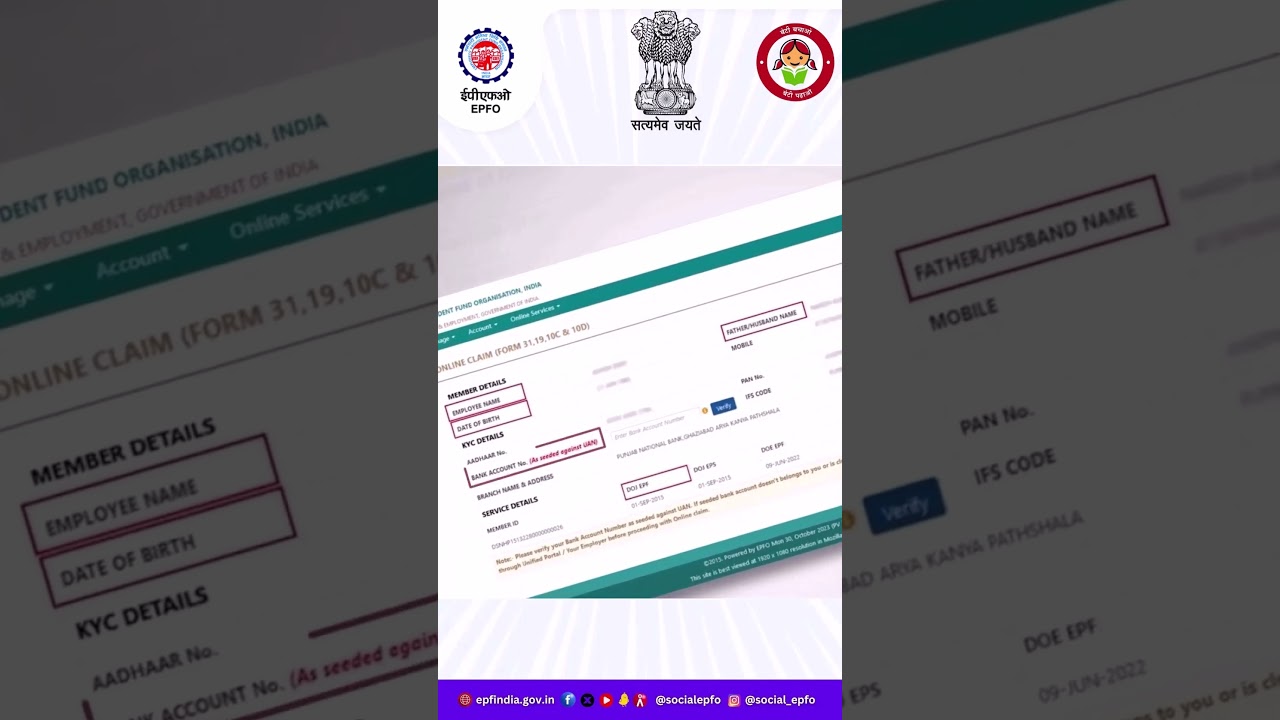
(A) Details of the Applicant:
- EPFO Member ID: This is your unique identification number assigned by the EPFO. You can find it on your salary slip, EPF passbook, or UAN card.
- Name of the Member: Your full name as it appears in the EPFO records.
- Date of Birth: As per your official records.
- Father’s/Husband’s Name: Depending on your marital status.
- Address for Communication: Your current and complete address for receiving official correspondence.
- Mobile Number and Email ID: Provide active contact details for easy communication.
- Marital Status: Indicate whether you are married, unmarried, widowed, or divorced.
-
(B) Details of the Establishment (Employer):
- Name and Address of the Establishment: The official name and address of the company where you last worked and contributed to the EPS scheme.
- Establishment Code Number: This is your employer’s unique code assigned by the EPFO.
-
(C) Details of Service:
- Date of Joining the Establishment: The date you commenced employment with the establishment.
- Date of Leaving Service: The date you ceased employment with the establishment.
- Total Length of Service (in years and months): Calculate the total period you worked for the establishment.
- Reason for Leaving Service: Specify the reason for leaving the job (e.g., retirement, resignation, termination).
-
(D) Details of Bank Account:
- Bank Name and Branch: The name of your bank and the branch where you hold an account.
- Bank Account Number: Your complete and accurate bank account number.
- IFSC Code: The 11-character alphanumeric code that identifies your bank branch.
- PAN Number: Your Permanent Account Number.
-
(E) Nomination Details (if applicable): This section is relevant if you are nominating someone to receive pension benefits in the event of your death.
-
(F) Declaration:
- Read the declaration carefully and sign it.
Required Documents:
Along with the completed Form 10-D, you will need to submit the following documents:
- Identity Proof: PAN card, Aadhaar card, Passport, or any other government-issued identity proof.
- Address Proof: Aadhaar card, Passport, Voter ID card, Ration card, or any other government-issued address proof.
- Date of Birth Proof: Birth certificate, School leaving certificate, Passport, or any other document accepted by the EPFO.
- Bank Passbook/Statement: Showing your name, account number, IFSC code, and branch details.
- Cancelled Cheque: With your name printed on it.
- Discharge Certificate/Service Certificate: Obtained from your previous employer.
How to File Form 10-D:
You can file Form 10-D through two primary methods:
- Online: The EPFO has streamlined the process through its online portal. You can access the portal using your UAN and Aadhaar details. Ensure your KYC (Know Your Customer) details are updated and verified on the EPFO portal. This is generally a faster and more efficient option.
- Offline: Download the Form 10-D from the EPFO website (https://www.epfindia.gov.in/). Fill it out accurately and submit it along with the required documents to the EPFO office that covers your last employer’s location.
Step-by-Step Guide for Offline Filing:
- Download the Form: Download the Form 10-D from the EPFO website.
- Fill the Form: Carefully fill in all the required details in the form. Ensure accuracy and completeness to avoid delays.
- Attach Documents: Attach all the necessary documents as mentioned above.
- Submit the Form: Submit the completed form and documents to the EPFO office covering your last employer’s location. You can find the address of the relevant EPFO office on their website.
- Acknowledgement: Obtain an acknowledgment receipt from the EPFO office as proof of submission.
Step-by-Step Guide for Online Filing (Using UAN and Aadhaar):
- Activate UAN: If you haven’t already, activate your UAN (Universal Account Number) on the EPFO portal.
- Login to the Member Portal: Visit the EPFO member portal (https://unifiedportal-mem.epfindia.gov.in/memberinterface/) and log in using your UAN and password.
- Verify KYC: Ensure your KYC details (Aadhaar, PAN, Bank Account) are updated and verified.
- Go to Online Services: Navigate to the “Online Services” section and select “Claim (Form 10C, 19 & 10D).”
- Verify Details: Verify your member details and bank account details.
- Select “Apply for Pension”: Choose the option to apply for pension through Form 10-D.
- Fill the Form: Follow the instructions on the screen and fill in the required information.
- Upload Documents (if required): You may be required to upload scanned copies of certain documents.
- Submit the Application: Submit the application online.
- Download Acknowledgement: Download the acknowledgement receipt for your records.
Important Considerations:
- Accuracy is Key: Ensure all the information provided in the form is accurate and matches the EPFO records. Any discrepancies can lead to delays in processing your claim.
- KYC Verification: Verify your KYC details on the EPFO portal to ensure smooth processing of your claim.
- Employer Attestation: In some cases, the EPFO may require attestation from your previous employer. Contact your employer for assistance if needed.
- Keep Records: Keep copies of the filled-in form, submitted documents, and acknowledgement receipts for your reference.
- Track Your Application: You can track the status of your application online through the EPFO portal or by contacting the EPFO office.
Conclusion:
Filing Form 10-D is a crucial step in securing your pension benefits. By understanding the eligibility criteria, carefully completing the form, and providing the necessary documents, you can navigate the process effectively. Whether you choose to file online or offline, remember to be meticulous and patient. Your retirement security is worth the effort! If you encounter any difficulties, don’t hesitate to contact the EPFO for assistance. Good luck!
LEARN MORE ABOUT: Retirement Pension Plans
REVEALED: Best Investment During Inflation
HOW TO INVEST IN GOLD: Gold IRA Investing
HOW TO INVEST IN SILVER: Silver IRA Investing




0 Comments