
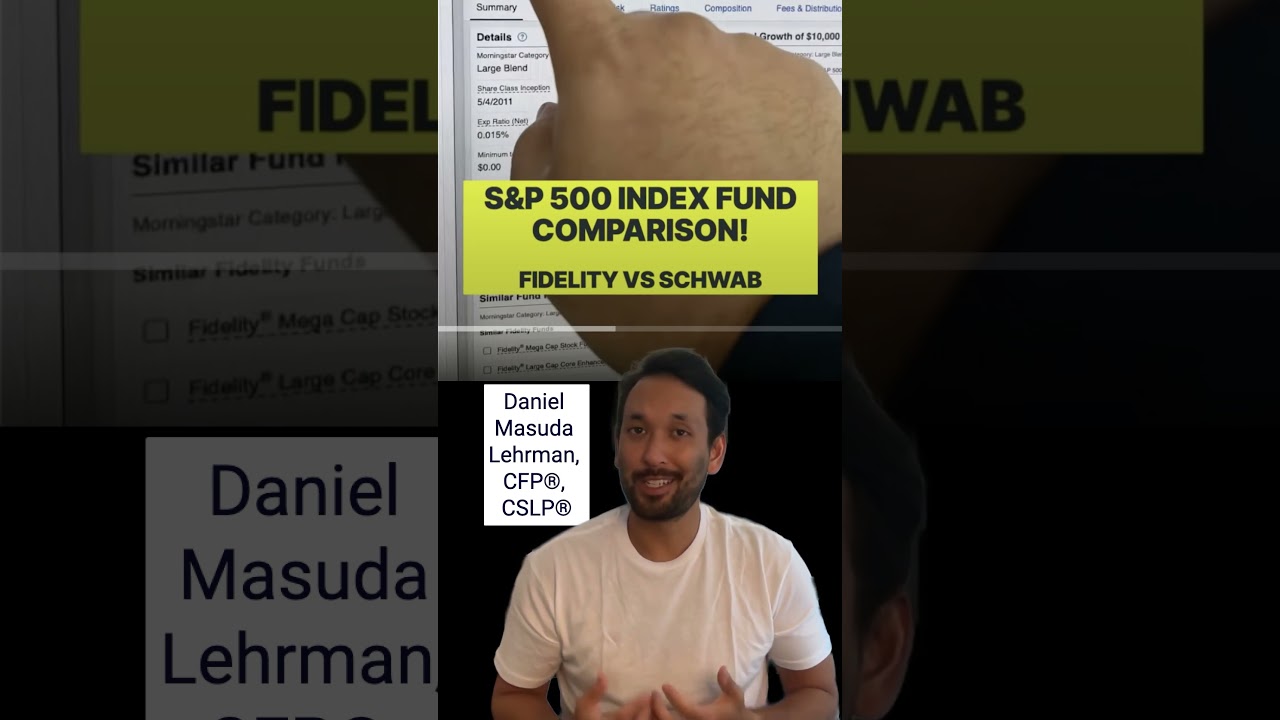

Which S&P 500 Index Fund Is ACTUALLY The Best Choice For You?
The S&P 500 index is a cornerstone of many investment portfolios. Tracking the performance of the 500 largest publicly traded companies in the U.S., it offers broad diversification and a relatively low-cost way to participate in the market’s overall growth. But with a plethora of S&P 500 index funds and ETFs to choose from, picking the right one can feel overwhelming.
The good news is that most S&P 500 index funds are remarkably similar in their holdings. The key differences lie in factors like expense ratios, tracking error, liquidity, and accessibility. Let’s break down these factors to help you determine which fund is the best fit for your individual needs.
Understanding the Key Differences:
-
Expense Ratio: This is the annual fee charged to manage the fund, expressed as a percentage of your investment. It’s crucial because it directly impacts your returns. A lower expense ratio means more of your gains stay in your pocket. Look for funds with expense ratios below 0.10%, with some even dipping below 0.05%.
-
Tracking Error: This measures how closely the fund’s performance mirrors the S&P 500 index. A smaller tracking error indicates a tighter alignment with the index. While all S&P 500 funds aim to replicate the index, slight differences in methodology and fees can cause tracking error.
-
Liquidity: This refers to how easily you can buy or sell shares of the fund. Generally, larger and more popular funds boast higher trading volumes and tighter bid-ask spreads, making them more liquid.
-
Tax Efficiency: ETFs tend to be more tax-efficient than mutual funds, especially within taxable accounts. This is because ETFs use an “in-kind” redemption process, which allows them to minimize capital gains distributions.
-
Accessibility: This depends on your investment platform and investment style. Some platforms offer commission-free trading for specific ETFs or mutual funds, while others may have minimum investment requirements.
Popular S&P 500 Index Fund Contenders:
Here are some of the most popular S&P 500 index funds and ETFs, each with its own strengths:
-
Vanguard S&P 500 ETF (VOO): Known for its ultra-low expense ratio (currently around 0.03%), VOO is a favorite among cost-conscious investors. It offers excellent tracking and high liquidity.
-
SPDR S&P 500 ETF Trust (SPY): The oldest and most widely traded ETF tracking the S&P 500, SPY boasts unparalleled liquidity. Its expense ratio (around 0.0945%) is slightly higher than VOO but remains competitive.
-
iShares CORE S&P 500 ETF (IVV): Another popular option with a low expense ratio (around 0.03%), IVV provides a solid balance of cost-effectiveness, tracking, and liquidity.
-
Fidelity ZERO Large Cap Index Fund (FNILX): This fund stands out with its zero expense ratio. However, it’s exclusively available to Fidelity brokerage customers.
-
Schwab S&P 500 Index Fund (SWPPX): Another low-cost option (around 0.02%) that’s typically available for purchase through Schwab.
Choosing the Right Fund for You: A Practical Guide
Here’s a step-by-step approach to guide your decision:
-
Consider Your Brokerage Account: Which brokerage platform do you use? Some platforms offer commission-free trading for specific ETFs or mutual funds. Choosing a fund on their commission-free list can save you money on trading fees.
-
Prioritize Low Expense Ratios: Even small differences in expense ratios can add up over the long term. Aim for funds with expense ratios below 0.10%.
-
Assess Liquidity Based on Your Trading Style: If you’re a frequent trader, liquidity is paramount. SPY might be a better choice due to its high trading volume. If you’re a long-term investor, liquidity is less critical.
-
Consider Tax Implications: If investing in a taxable account, ETFs are generally more tax-efficient than mutual funds.
-
Don’t Overthink It: The differences between most S&P 500 index funds are relatively small. Focus on finding a low-cost, well-managed fund that aligns with your brokerage account and investment style.
In Conclusion:
Choosing the “best” S&P 500 index fund is a personal decision based on your specific needs and circumstances. While the popular options mentioned above are all solid choices, taking the time to compare their expense ratios, liquidity, and accessibility within your brokerage account will help you make an informed decision and build a strong foundation for your investment portfolio. Remember to focus on the long term and stay consistent with your investment strategy. Happy investing!
LEARN MORE ABOUT: IRA Accounts
CONVERT IRA TO GOLD: Gold IRA Account
CONVERT IRA TO SILVER: Silver IRA Account
REVEALED: Best Gold Backed IRA




0 Comments