
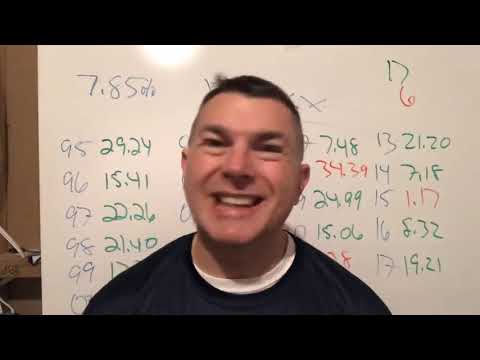

Using Vanguard Funds to Generate Retirement Income (Part 1)
As retirement approaches, one of the foremost concerns for individuals is how to effectively manage their finances to ensure a steady income stream throughout their golden years. Vanguard, one of the largest investment management companies in the world, offers a range of mutual funds and exchange-traded funds (ETFs) designed to help investors build a portfolio that not only grows their wealth but also provides sustainable income. In this article, we’ll explore the fundamentals of using Vanguard funds to generate retirement income.
Understanding Retirement Income Needs
Before diving into investment options, it’s essential to assess your retirement income needs. Factors to consider include:
-
Living Expenses: Estimate your monthly expenses during retirement, including housing, healthcare, transportation, and leisure activities.
-
Life Expectancy: Consider how long you may need your retirement income to last. With advancements in healthcare, people are living longer, making it crucial to have a plan that extends over several decades.
-
Social Security and Pensions: Factor in any expected income from Social Security or pensions. This will help determine how much additional income you will need from your investments.
- Inflation: Don’t forget to account for inflation, which can erode purchasing power over time. Your investment strategy should aim to outpace inflation to preserve your wealth.
Why Vanguard?
Vanguard is highly regarded for its low-cost investing options, transparent approach, and commitment to helping investors achieve their financial goals. Some of the key benefits of using Vanguard funds include:
-
Low Expense Ratios: Vanguard’s funds typically have lower expense ratios compared to many peers. This means more of your money stays invested, compounding over time, rather than going to management fees.
-
Diversification: Vanguard offers a wide array of funds that provide exposure to various asset classes, including equities, bonds, and real estate. Diversification can help mitigate risk and stabilize income.
- Reputation for Performance: While past performance does not guarantee future results, Vanguard funds have a history of solid performance, making them a trustworthy choice for long-term investors.
Choosing the Right Vanguard Funds for Income Generation
When constructing a portfolio to generate retirement income using Vanguard funds, consider the following fund categories:
1. Dividend Growth Funds
Dividend growth funds focus on companies that have a history of increasing their dividend payments over time. These funds can provide a steady income stream, which can be particularly appealing in retirement. Vanguard offers several options, including:
-
Vanguard Dividend Growth Fund (VDIGX): This fund invests in blue-chip companies with strong dividend growth potential, aiming for both income and capital appreciation.
- Vanguard High Dividend Yield ETF (VYM): This ETF focuses on stocks with higher-than-average dividend yields, making it a suitable option for income-conscious investors.
2. Bond Funds
Bonds can play a vital role in a retirement income strategy by providing stability and regular interest payments. Vanguard’s bond funds offer various options, including:
-
Vanguard Total Bond Market Index Fund (VBTLX): This fund seeks to track the performance of a broad, diversified bond market index, providing exposure to U.S. investment-grade bonds. It’s an excellent choice for those looking for a reliable income stream with lower volatility.
- Vanguard Intermediate-Term Investment-Grade Fund (VFICX): Focused on investment-grade corporate bonds, this fund may offer higher yields than government bonds, albeit with slightly higher risk.
3. Balanced Funds
Balanced funds invest in both stocks and bonds, providing a mix of growth and income. Vanguard offers several balanced funds that can be suitable for retirees, such as:
-
Vanguard Wellington Fund (VWELX): One of the oldest balanced funds, Wellington invests in a diversified portfolio of stocks and bonds, making it a great option for achieving both income and growth.
- Vanguard Wellesley Income Fund (VWINX): This conservative fund invests primarily in bonds with a portion allocated to dividend-paying stocks, ensuring a focus on income generation.
Conclusion
As we examine the various avenues for generating retirement income through Vanguard funds, it’s clear that a well-thought-out strategy can significantly enhance financial security in retirement. In the next installment of this series, we will delve deeper into specific strategies for managing withdrawals, tax considerations, and rebalancing your portfolio to ensure that it continues to meet your income needs as you age.
Whether you’re a decade away from retirement or already enjoying it, understanding how to leverage Vanguard funds can provide peace of mind and the financial support you need to enjoy your retirement. In Part 2 of this series, we’ll cover practical tips for effectively managing your Vanguard investment portfolio.
LEARN MORE ABOUT: IRA Accounts
INVESTING IN A GOLD IRA: Gold IRA Account
INVESTING IN A SILVER IRA: Silver IRA Account
REVEALED: Best Gold Backed IRA



Best month to visit Maine ?
Cool, I was looking for this.
On an income annuity after 5 years can’t you withdraw all of it?
I worry about the return. I will take my VITAX any day at 14.7 % per year since inception in 2004 over most any other Vanguard fund right now that's for sure.
VASGX = 80/20.
Im over 50 can I max out my Roth @7,000 then contribute 7,000 non Deductible to IRA then convert that to the Roth (backdoor Roth) as well for a Total of 14,000 every year?
I’m 62 and have a Vanguard 401k…Most of my $$$ has been in Vinix and very happy with my returns…Due to my age I decided to be less aggressive I switched over to VRIVX…I kinda regret it but I’m ok with my 9.65 return since January..Looking forward to part 2
This looks interesting.
I'm a newb, but would this be a good idea to research?
1 – In retirement withdraw 110% of what you need, and put the 10% extra into a normal savings account until your savings account equals 1 year expenses. This is stock market crash money.
2 – Revert to only 100% withdraw until there's a market crash.
3 – During stock market crashes, use money from savings instead of stocks.
4 – When stocks recover, replenish savings account.
Thanks Josh.
An oldy but a goody. I love Vanguard
Does your whiteboard/thesis include 2018-2021
I really enjoy these old whiteboard videos, from the basement. Thank for all the great information.