
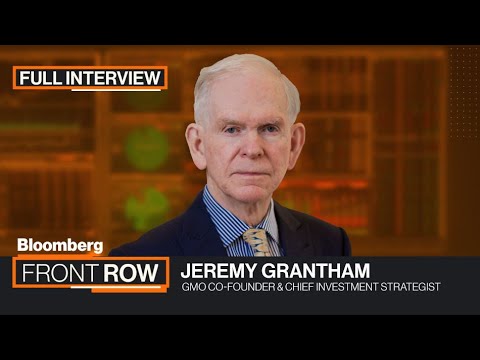

Why Grantham Says the Next Crash Will Rival 1929 and 2000
Investing titan Jeremy Grantham, co-founder of GMO, has long been recognized for his insightful market predictions and strategic macroeconomic analysis. His reputation is built on a keen ability to identify market bubbles and anticipate downturns. Recently, Grantham has made headlines again, asserting that the next financial crash will be dire, potentially rivaling the shocks of 1929 and 2000. But what underpins this stark prediction, and what can investors learn from it?
The Bubbles in the Current Market
Grantham’s thesis centers on his conviction that the current market is in the throes of multiple asset bubbles. He argues that overinflated asset prices across various sectors—including technology, real estate, and even cryptocurrencies—are reminiscent of the precursors to past market crashes. Grantham has expressed concern over the "extreme valuation levels" that the stock market has achieved, citing historical comparisons to previous market peaks.
In 1929, the stock market crash marked the beginning of the Great Depression, triggered by rampant speculation and the overleveraging of assets. Similar patterns can be observed in the late 1990s, leading to the dot-com bubble bursting, which wiped out trillions of dollars in market value. Grantham warns that we are on a comparable trajectory today—one fueled by low interest rates, easy monetary policy, and a culture that glorifies speculative trading.
The Psychological Aspect of Investing
Another critical point in Grantham’s analysis is the psychology of investors during bull markets. He notes how optimism can lead to an irrational exuberance that drives prices to unsustainable levels. The behavior of retail investors, especially during the COVID-19 pandemic, showcases a dramatic surge in speculative trading, often reflecting a lack of awareness of fundamental company valuations.
Grantham draws parallels to historical precedents where euphoria over technology—be it railroads in the late 1800s or the internet in the late 1990s—prompted massive investment with little regard for underlying economic fundamentals. He argues that similar dynamics are at play today, driven by the current wave of technological innovation and massive fiscal stimulus policies that have flooded the markets with liquidity.
Economic Fundamentals and Market Corrections
While some may point to ongoing economic recovery and low unemployment rates as signs of market strength, Grantham maintains that these indicators do not justify current valuations. He insists that the actual economic fundamentals—corporate earnings, GDP growth, and consumer spending—are not aligned with the lofty levels of market capitalization seen today.
According to Grantham, once the reality of these fundamentals begins to surface, a severe correction will likely ensue. He emphasizes the historical pattern of markets correcting themselves when investors eventually question overinflated valuations. This reckoning, he predicts, will be swift and catastrophic, with the potential to eliminate trillions in wealth.
The Role of Policy Makers
Furthermore, Grantham argues that policymakers, particularly central banks, have created a paradox. While low-interest rates and quantitative easing have provided short-term market support, they have also encouraged excessive risk-taking and reckless investment behavior. As inflationary pressures build and rate hikes loom, he envisions a scenario where the same policies that inflated the bubble will contribute to its inevitable collapse.
Grantham warns that, in times of economic strain, there is a limit to how much support governments can provide. Investors may be lulled into a false sense of security about the market’s durability, only to face a rude awakening when fundamentals and valuations realign.
Conclusion: Preparing for the Inevitable
In conclusion, Jeremy Grantham’s assertion that the next market crash could rival those of 1929 and 2000 is fueled by data-driven analysis and historical precedent. While the future is inherently uncertain, his insights serve as a crucial reminder for investors to remain vigilant and prioritize sound investment strategies grounded in fundamental analysis. As the market teeters on the edge of potential turmoil, the lessons of the past remain more relevant than ever. Grantham’s warnings call for a careful approach to investing and an acknowledgment of the cyclical nature of markets, urging investors to prepare for a future that may bring both challenges and opportunities.
LEARN ABOUT: Investing During Inflation
REVEALED: Best Investment During Inflation
HOW TO INVEST IN GOLD: Gold IRA Investing
HOW TO INVEST IN SILVER: Silver IRA Investing




Become a member for just $0.99 a month and receive access to exclusive trivia, news rundowns, charts, videos and other perks. Learn more: https://www.youtube.com/channel/UCIALMKvObZNtJ6AmdCLP7Lg/join
It’s been 4 years. Wrong!
Here is the translated response with the inclusion of global warming and ice melting factors:
Base Scenario (with global warming):
Donald Trump implements radical reforms during his second term: annexing Canada and Greenland, devaluing the dollar, writing off U.S. international debt, and introducing a new currency. These actions coincide with accelerating global warming and ice melting, leading to changes in resource access, population migration, territorial conflicts, and international cooperation.
1 Year (Immediate Consequences):
Scenario 1: Rapid Adaptation (Probability: 15%)
The U.S. begins actively exploiting Canada and Greenland's natural resources (oil, gas, minerals) due to warming and access to previously frozen territories.
Europe and China strengthen cooperation to reduce carbon emissions, while the U.S. ignores climate agreements.
Developing countries face intensified climate disasters (droughts, floods), accelerating migration flows.
Scenario 2: Climate and Economic Shock (Probability: 50%)
Melting glaciers cause rising sea levels, threatening megacities in Asia, Africa, and Latin America.
The collapse of the dollar-based system exacerbates chaos in the global economy, complicating efforts to combat climate consequences.
The Middle East and North Africa face sharp water shortages, leading to increased tensions.
Scenario 3: Geopolitical Polarization (Probability: 30%)
The U.S. embraces isolationism and exploits Arctic resources, sparking protests from China, Russia, and Europe.
Africa and Latin America become centers of migration crises driven by climate disasters.
Russia strengthens its influence in the Arctic, leveraging new trade routes.
Scenario 4: Climate Compromise (Probability: 5%)
The global community finds common ground in addressing climate change despite economic turmoil.
An international fund is created to support regions affected by warming.
5 Years (Mid-Term Consequences):
Scenario 1: Economic Adaptation and Climate Action (Probability: 25%)
The new U.S. currency dominates North America, while the yuan becomes a key currency in Asia and Africa.
Europe emerges as a leader in green technologies, helping to partially stabilize the climate situation.
Melting Arctic ice creates new sea routes, intensifying competition for Arctic access.
Scenario 2: Rising Climate Conflicts (Probability: 40%)
Devastating climate disasters (tsunamis, droughts, hurricanes) lead to mass migrations from Africa, South Asia, and Latin America.
The Middle East experiences new conflicts over dwindling water resources.
The U.S. and Canada exploit new Arctic resources, increasing tensions with Russia.
Scenario 3: Climate Collapse and Chaos (Probability: 25%)
Accelerated ice melting raises sea levels, submerging coastal cities (Mumbai, Shanghai, Miami).
The global economy struggles under the weight of agricultural losses and rising costs of disaster recovery.
Hunger and epidemics spread in the most vulnerable regions.
Scenario 4: Global Cooperation (Probability: 10%)
The international community creates unified funds and agreements to combat climate change.
New technologies, such as carbon capture, help slow global warming.
10 Years (Long-Term Consequences):
Scenario 1: Climate-Driven Multipolar World (Probability: 40%)
The U.S., China, and Europe compete for leadership in green energy and technologies.
Russia and Canada benefit from greater access to Arctic territories.
The global economy adapts to new climate conditions, but damage is irreversible for many regions.
Scenario 2: Ecological and Migration Crisis (Probability: 35%)
Millions of people from submerged regions (South Asia, Africa) migrate to more stable areas (Europe, Russia, North America).
The Arctic becomes a constant conflict zone between the U.S., Russia, China, and Europe.
The Middle East loses its role as an energy hub due to reduced demand for oil and water scarcity.
Scenario 3: Technological Solution (Probability: 20%)
Widespread adoption of green technologies (nuclear fusion, ecosystem restoration) slows climate change impacts.
Geoengineering projects reduce temperature rise, though they remain controversial.
Scenario 4: Climate Apocalypse (Probability: 5%)
Continued global warming leads to the destruction of coastal cities, freshwater shortages, and chronic hunger crises.
Global epidemics devastate vulnerable populations, and international cooperation collapses.
15 Years (Very Long-Term Consequences):
Scenario 1: Global Climate Balance (Probability: 30%)
Climate restoration technologies are successfully implemented, though damage remains irreversible for some regions.
The world becomes multipolar, with a focus on sustainable development.
Scenario 2: Breakdown of Globalization (Probability: 40%)
The world splits into regional blocs, each struggling for climate resilience and resource access.
Africa and Latin America remain chronically unstable.
Scenario 3: Green Technology Breakthrough (Probability: 25%)
The U.S., China, and Europe coordinate efforts to develop climate engineering technologies.
Arctic resources become less relevant due to a global transition to renewable energy.
Scenario 4: Ecological Catastrophe (Probability: 5%)
Global warming spirals out of control: billions lose access to freshwater, and hunger and epidemics devastate entire regions.
International collaboration disintegrates, and the planet enters a survivalist era.
These scenarios, incorporating climate factors, highlight how global warming could amplify destabilization, especially in a context of economic and political turmoil.
Spot on a dont save money this time EU sucks
still waiting after three years….
Who's ready?
Jeremy Scamtham
Well, he is wearing a suit and tie. He must be right.
So so wrong. No crash for 2 years.
This didn't age well. A broken clock is right twice a day.
not aging well
Recessions are an inherent aspect of the economic cycle, and the key is to get ready and adapt. I entered the workforce during a downturn in 2009. My initial job out of college was as an aerial acrobat on cruise ships. Presently, I hold the position of VP at a global corporation, own three rental properties, invest in stocks and businesses, operate my own company, and have grown my net worth by $500k in the past four years.
Blah blah. This dude has been wrong on the market for more than a decade. Who do people bother listening to doom-and-gloomers like Jeremy Grantham?
Hes bern crying Wolf since FDR was president.
2 years and no burst. Maybe it’s not a bubble after all!
What they don't tell you it's all being systematically done on purpose all over the world pay attention to who it is when you're starving
The most important thing that should be on everyone's mind currently should be to invest in different sources of income that doesn't depend on the government. Especially with the current economic crisis around the word. This is still a good time to invest in various stocks, Gold, silver and digital currencies.
I feel sad that even though I am investing, I don't have the brain power to dig through how each company is doing, is this a good time to buy stocks or not. my reserve of $450k is still laying waste to inflation and I don't know what to do at this point.. I need solid data on market trajectory..
Joe Biden, whose practically a political genius will never let the economy fail! There's no limits to the Democrat party, President Wilson created the FED, Biden will save it!
I’m getting squeezed so hard lol – awesome interview – watched it all