
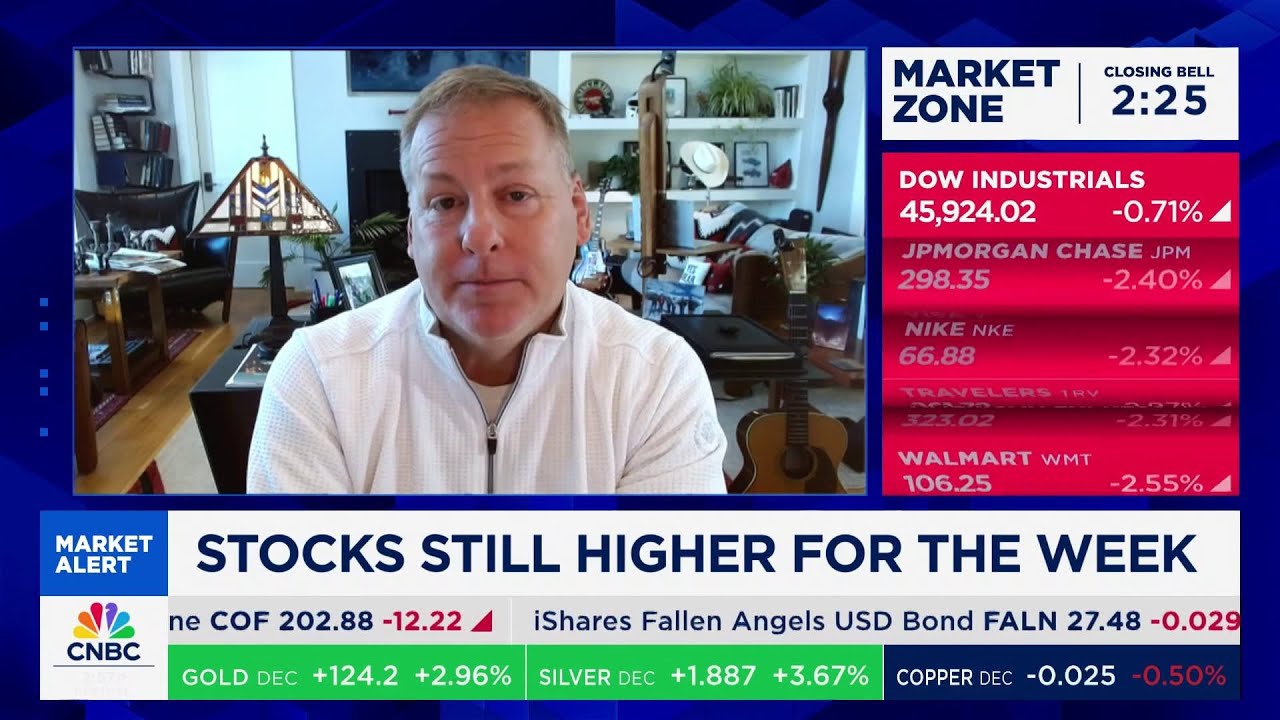

Below 4% 10-Year Yield: A Reason to Celebrate, Says Renaissance Macro’s Jeff deGraaf
For months, the relentless climb of the 10-year Treasury yield has been a source of anxiety for investors. Fears of a hawkish Federal Reserve, persistent inflation, and ballooning government debt have driven yields skyward, casting a shadow over the economic outlook. However, with the 10-year yield dipping below the psychological 4% mark, Renaissance Macro Research’s Jeff deGraaf is singing a different tune: this is good news.
DeGraaf, a well-respected market technician known for his data-driven approach, argues that a retreat in the 10-year yield signals a crucial shift in market sentiment and could pave the way for a more constructive environment for risk assets. He believes the recent decline suggests that inflation expectations are cooling and that the Fed’s tightening cycle is beginning to have its intended effect.
Why the 4% Threshold Matters
The 10-year Treasury yield serves as a benchmark for a wide range of interest rates, influencing everything from mortgage rates and corporate borrowing costs to the valuation of stocks and other investments. Crossing above 4% fueled concerns about higher borrowing costs stifling economic growth and putting downward pressure on asset prices.
DeGraaf sees breaking below this key level as a validation of the market’s growing confidence in the Fed’s ability to control inflation. “The market is telling us that the Fed is doing its job,” he stated in a recent research note. “A sub-4% 10-year suggests that the worst-case scenario for inflation and rates is likely behind us.”
Beyond the Headline: What Does it Mean for Investors?
The implications of a lower 10-year yield extend beyond just lower borrowing costs. Here’s what DeGraaf’s perspective could mean for investors:
- A boost for Equities: Lower yields typically make equities more attractive relative to bonds. As the discount rate used to value future earnings decreases, stocks become more valuable. Sectors sensitive to interest rates, such as technology and growth stocks, could be particularly well-positioned to benefit.
- Reduced Pressure on the Housing Market: Falling mortgage rates, directly tied to the 10-year yield, can provide some relief to the struggling housing market. This could lead to increased home sales and stabilize housing prices.
- Potential for Credit Spreads to Narrow: As fears of a recession subside, credit spreads (the difference between corporate bond yields and Treasury yields) could narrow, making it easier and cheaper for companies to raise capital.
- Shift in Market Leadership: DeGraaf believes the decline in yields could lead to a shift in market leadership, away from defensive sectors and towards more cyclical and growth-oriented areas.
A Word of Caution: The Devil’s in the Details
While DeGraaf’s perspective is optimistic, it’s crucial to acknowledge the potential caveats. The decline in yields could also be driven by concerns about a slowing economy, which would be a less desirable reason. Therefore, investors should carefully consider the underlying drivers behind the yield movement.
Conclusion: A Glimmer of Hope
Jeff deGraaf’s assessment that a 10-year yield below 4% is good news provides a much-needed dose of optimism in a market that has been grappling with uncertainty. While challenges remain, a lower yield suggests that inflation expectations are moderating, potentially setting the stage for a more favorable environment for risk assets. Investors should continue to monitor economic data and Fed policy closely, but DeGraaf’s perspective offers a glimmer of hope that the worst of the interest rate storm may be over.
LEARN MORE ABOUT: Investing During Inflation
REVEALED: Best Investment During Inflation
HOW TO INVEST IN GOLD: Gold IRA Investing
HOW TO INVEST IN SILVER: Silver IRA Investing




From drip to a flood. Be careful.
Low rates just lead to MEME stonks and poor capital allocation… Trump is just building a monster bubble in the economy. We're already trading at 40x in the market.
Tell ya what….you guys keep betting on trump…. But I see inflation, unemployment, manufacturing losses coupled with China eating trump's lunch… I'm outta here.
Rate cuts are not bullish. Recession will shortly be priced in.
“It’s good news that yields broke 4% because of a regional banking crisis due to the Fed being overly tight for way too long. Such great news.”