
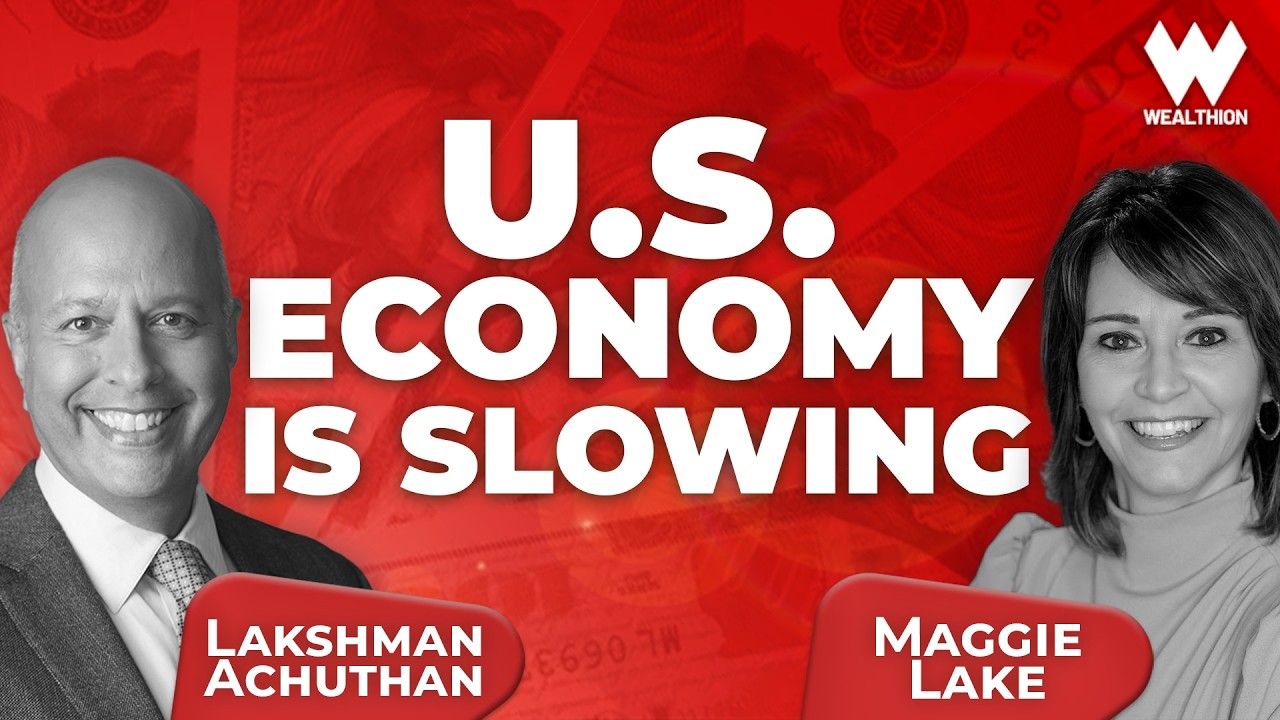

Understanding the Economic Landscape: Insights from Lakshman Achuthan on Why the U.S. Economy is Slowing, NOT Crashing
As the world grapples with the complex dynamics of economic fluctuations, Lakshman Achuthan, co-founder of the Economic Cycle Research Institute (ECRI), stands out as a vital voice in understanding the current state of the U.S. economy. With a background steeped in economic analysis and forecasting, Achuthan has consistently provided insights into the cyclical nature of economic growth and recession. In his latest assessments, he argues that the U.S. economy is experiencing a slowdown rather than a catastrophic crash, a perspective that merits closer examination.
Current Economic Landscape
In recent months, various indicators have suggested that the U.S. economy is facing challenges. Inflation rates have surged, interest rates have been adjusted, and consumer confidence has wavered. Such factors have led to widespread discussions about a potential economic crisis. However, Achuthan posits that while the economic landscape is undoubtedly cooling, the foundations are not crumbling.
Key Differentiations: Slowdown vs. Crash
One of Achuthan’s essential distinctions lies in understanding the difference between a slowdown and a crash. A slowdown is characterized by decreasing growth rates and moderated consumer spending, often influenced by external factors such as interest rates and inflationary pressures. In contrast, a crash implies a sudden and severe decline in economic activity, often resulting in widespread unemployment and business failures.
Achuthan notes several indicators pointing to a slowdown rather than a full-blown crash:
-
Job Market Resilience: Despite a deceleration in growth, the job market has shown remarkable resilience. Unemployment rates remain relatively low, indicating that businesses are still retaining workers even as they adjust to an evolving market landscape.
-
Consumer Spending Shifts: While consumer spending has moderated, it has not collapsed. Consumers are simply reallocating their spending towards essential goods and services, signifying adaptability rather than panic.
-
Monetary Policy Adjustments: The Federal Reserve has been proactive in its response to rising inflation by adjusting interest rates. Such measures, while they may slow growth, are designed to contain inflation without precipitating a crash.
- Business Investment Trends: Many businesses are scaling back on expansion plans but are not halting investments completely. This cautious approach indicates a mindset aimed at weathering economic adjustments rather than succumbing to despair.
Long-Term Growth Potential
Achuthan posits that the U.S. economy, despite its current slowdown, holds significant long-term growth potential. Factors such as technological innovation, demographic shifts, and a resilient labor force suggest that the structural elements of the economy remain strong.
Moreover, Achuthan highlights that economic cycles are inherent to market dynamics. Slowdowns can be seen as a natural part of the economic cycle, leading to corrections that ultimately create space for sustainable growth in the future.
Conclusion
In a time filled with uncertainty and fear about the economic future, Lakshman Achuthan’s insights provide a reasoned perspective that encourages a shift away from panic-driven narratives towards a more nuanced understanding of economic fluctuations. While the U.S. economy may be slowing, it is important to recognize that this does not equate to a crash. Through measured policy responses, resilient labor markets, and adaptability among consumers and businesses, the potential for recovery and sustained growth remains within reach.
As we navigate this complex economic landscape, Achuthan’s analyses serve as a reminder that economic slowdowns are a natural part of the economic lifecycle, paving the way for future resilience and prosperity. By keeping a close eye on key indicators and maintaining a balanced perspective, stakeholders can better prepare for the challenges ahead and embrace the opportunities that arise in a changing economy.
LEARN ABOUT: Investing During Inflation
REVEALED: Best Investment During Inflation
HOW TO INVEST IN GOLD: Gold IRA Investing
HOW TO INVEST IN SILVER: Silver IRA Investing




– We want to hear from you! What would you like to see more of on Wealthion? Please take our poll here: https://www.youtube.com/post/UgkxtJvEEM4j_eRy7iT—EJ_mbkp1En1P0O
– Investment Concerns? Get a free portfolio review with Wealthion’s endorsed financial advisors at https://bit.ly/4iIZz9u
The economy.has been slowing since 2023.. record high household debt, delinquencies, auto repos, inflation plus record low household savings were here long before trump. Very tough to fix a mess that big.