
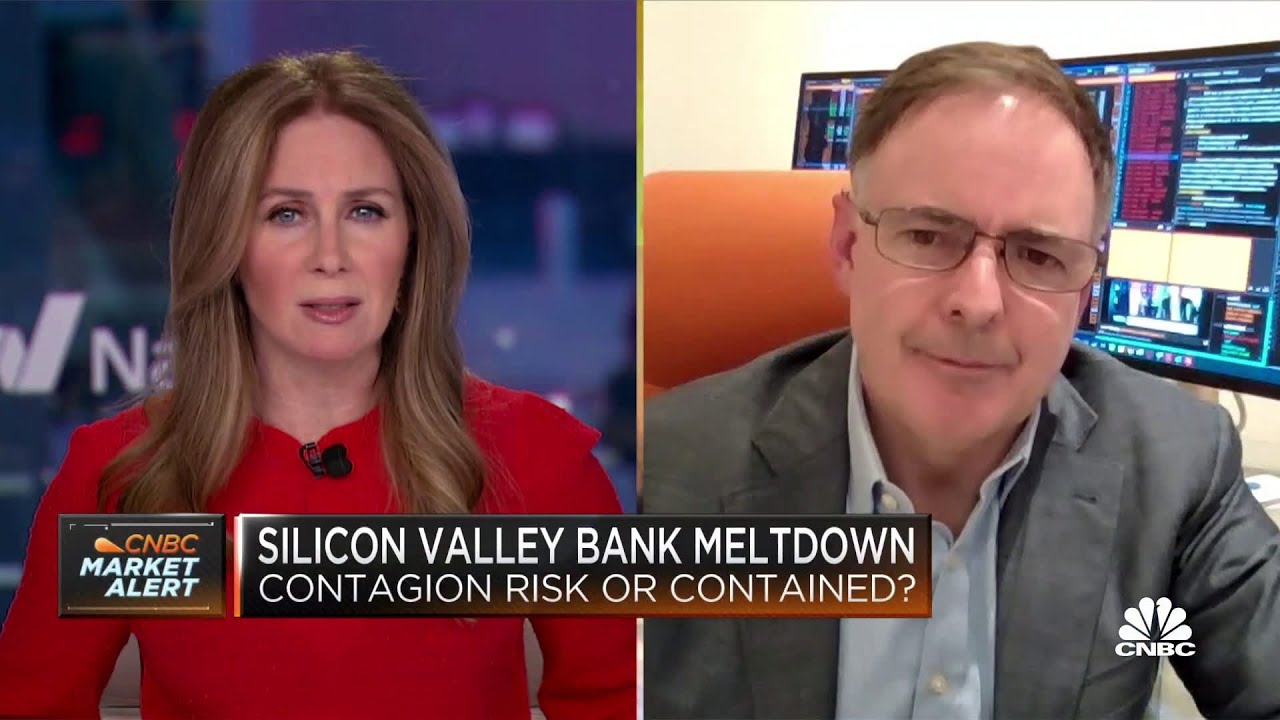

Silicon Valley Bank Troubles May Lead to Rate Cuts, Says Larry McDonald
In recent weeks, the financial landscape has been rocked by troubling developments surrounding Silicon Valley Bank (SVB), drawing widespread attention from economists and investors alike. Larry McDonald, a notable financial commentator and founder of the consulting firm The Bear Traps Report, has voiced concerns that SVB’s difficulties could compel the Federal Reserve to reconsider its monetary policy, specifically by initiating interest rate cuts.
The Context of Silicon Valley Bank’s Troubles
Silicon Valley Bank, a key player in providing banking services to the tech and innovation sectors, has been facing significant liquidity challenges. These issues can be traced back to the turbulence in tech valuations, which have been under pressure from rising interest rates and a shifting economic landscape. As venture capital dwindles and funding rounds become increasingly competitive, many startups are withdrawing deposits from SVB to meet their operational costs, exacerbating the bank’s liquidity issues.
Additionally, SVB’s significant exposure to long-duration assets has made it vulnerable to the rapid increase in interest rates implemented by the Fed over the past year. The higher rates have led to significant mark-to-market losses on these assets, further compounding the bank’s challenges and shaking confidence among its depositors and investors.
Potential Fed Response
Larry McDonald argues that the repercussions of SVB’s difficulties could be profound enough to influence the Federal Reserve’s decisions regarding interest rates. The central bank, which has aggressively raised rates to combat inflation, could find itself in a predicament where its actions are inadvertently contributing to instability in the financial sector.
Historically, the Fed has prioritized financial stability; if the troubles at SVB escalate and begin to affect other banks or the broader economy, it could trigger a shift away from tightening monetary policy. McDonald suggests that fears of a banking crisis could prompt the Fed to pivot and consider rate cuts much earlier than anticipated.
Such a move could stem from an imperative to preserve confidence in the banking system and prevent a cascade of financial contagion. The signs of stress in the banking industry may lead policymakers to weigh the potential risks of a recession posed by continued rate hikes against the need to control inflation.
Market Reactions and Future Implications
Financial markets are already reacting to the unfolding situation. Investors are reassessing their outlook on interest rates, with many now anticipating that the Fed could start cutting rates as early as mid-2023. This potential shift could lead to a significant recalibration of asset prices across various sectors, particularly in technology and growth stocks that have closely tracked interest rate movements.
Moreover, if the Fed does embark on a path of rate cuts, it could revive investment in the technology sector and provide a much-needed boost to startups that have been grappling with a capital crunch. However, it remains critical for the Fed to balance these actions against its commitment to controlling inflation, which has proven to be a persistent challenge.
Conclusion
The situation surrounding Silicon Valley Bank serves as a crucial reminder of how interconnected the financial system is, and how developments in one sector can cascade through the economy. As Larry McDonald highlights, the Fed’s response to SVB’s troubles might be a defining moment in shaping monetary policy in the upcoming months. With market volatility on the rise, all eyes will be on the Federal Reserve as it navigates these choppy waters, balancing the imperatives of economic growth, inflation control, and financial stability. The upcoming Federal Open Market Committee (FOMC) meetings will undoubtedly be pivotal in determining the path forward.
LEARN ABOUT: Investing During Inflation
REVEALED: Best Investment During Inflation
HOW TO INVEST IN GOLD: Gold IRA Investing
HOW TO INVEST IN SILVER: Silver IRA Investing




WHY DOES ANYONE HAVE THIS PERSON ON TV. HE IS ABSOLUTELY INCORRECT. IS HE EVER RIGHT?? THE MARKET WENT UP 12% RIGHT AFTER THIS BROADCAST.
PNC will be the first big Domino to fall. Very Over Exposed. Suffered huge losses. Wall Street Journal and Seeking Alpha show how bad it is. Leave if possible.