
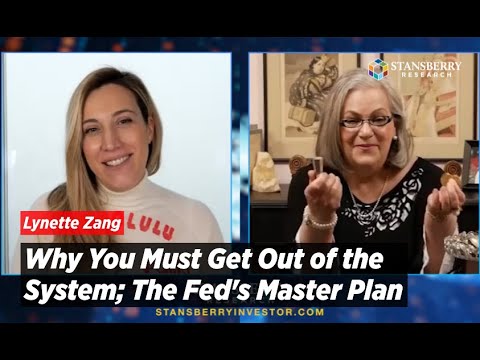

Lynette Zang: Why You Must Get Out of the System; The Fed’s Master Plan
In an era marked by economic uncertainty and increasing government intervention in financial markets, Lynette Zang has emerged as a prominent voice advocating for personal financial sovereignty. As the Chief Market Analyst at ITM Trading and a fervent educator in financial literacy, Zang’s insights offer a lens through which we can better understand the current economic landscape and the implications for everyday investors.
Understanding the System
Zang often discusses the financial system as one laden with complexities that can leave the average person feeling powerless. From her perspective, the Federal Reserve (or Fed) plays a crucial role in shaping this system, wielding immense influence over interest rates, inflation, and ultimately, the economic fate of individuals and businesses alike. This influence, she argues, is often exercised in ways that benefit the elite while leaving ordinary citizens vulnerable.
The Fed’s mandate is to foster a healthy economy, primarily through managing inflation and maximizing employment. However, Zang contends that the policies enacted by the Fed often lead to unintended consequences—such as asset bubbles, wealth inequality, and an eroding purchasing power for the middle and lower classes. In her view, the Fed’s low-interest-rate policies, quantitative easing, and constant market interventions are not just temporary solutions but part of a larger, more intricate master plan.
The Master Plan: A Call to Action
Zang argues that one of the Fed’s long-term objectives is to perpetuate a system that makes financial independence increasingly elusive. She suggests that the devaluation of currency through inflation acts to keep individuals dependent on the system. Thus, financial literacy and understanding the dynamics of the economy are no longer optional; they’re essential for survival.
One of her core messages is the importance of “getting out of the system.” This doesn’t mean abandoning traditional finance entirely but rather, recognizing the limitations and vulnerabilities of the existing financial structure and taking proactive steps to protect oneself. By diversifying assets, particularly into tangible goods like precious metals, real estate, or other forms of constitutional money, individuals can insulate themselves from the Fed’s monetary policies.
Strategies for Financial Independence
-
Educate Yourself: Zang emphasizes the necessity of financial education. Understanding how the system works allows individuals to make informed decisions rather than rely on the advice of those within it, who may have conflicting interests.
-
Diversification of Assets: Recognizing that cash, especially in a low-interest-rate environment, may diminish in value, she advocates for assets that can withstand inflation—namely, physical gold and silver. These tangible assets can act as financial insurance against the devaluation of currency.
-
Be Conscious of Debt: In a system that often encourages extensive borrowing, Zang warns against falling into a debt trap. Understanding the implications of loans in an inflationary environment can help individuals make better financial choices.
- Stay Informed: The financial landscape is constantly evolving, and staying updated on economic indicators, policy changes, and market trends is vital. Zang recommends utilizing various resources to gain a well-rounded view of the economic climate.
Conclusion
Lynette Zang’s perspective serves as a clarion call for individuals to reclaim their financial autonomy in a world increasingly dictated by centralized financial institutions. By critically examining the strategies employed by the Federal Reserve and making informed decisions about their financial future, individuals can better navigate the complexities of the current economic environment.
Embracing financial literacy, diversifying assets, and recognizing the need for proactive measures are essential steps in empowering oneself against the systemic challenges posed by modern finance. In a world where the Fed’s decisions can profoundly impact individual lives, Zang’s message is not just timely—it’s imperative.
LEARN ABOUT: Investing During Inflation
REVEALED: Best Investment During Inflation
HOW TO INVEST IN GOLD: Gold IRA Investing
HOW TO INVEST IN SILVER: Silver IRA Investing




Feels like we’re moving into a dystopian horror film lifestyle.
Have a nice day.