
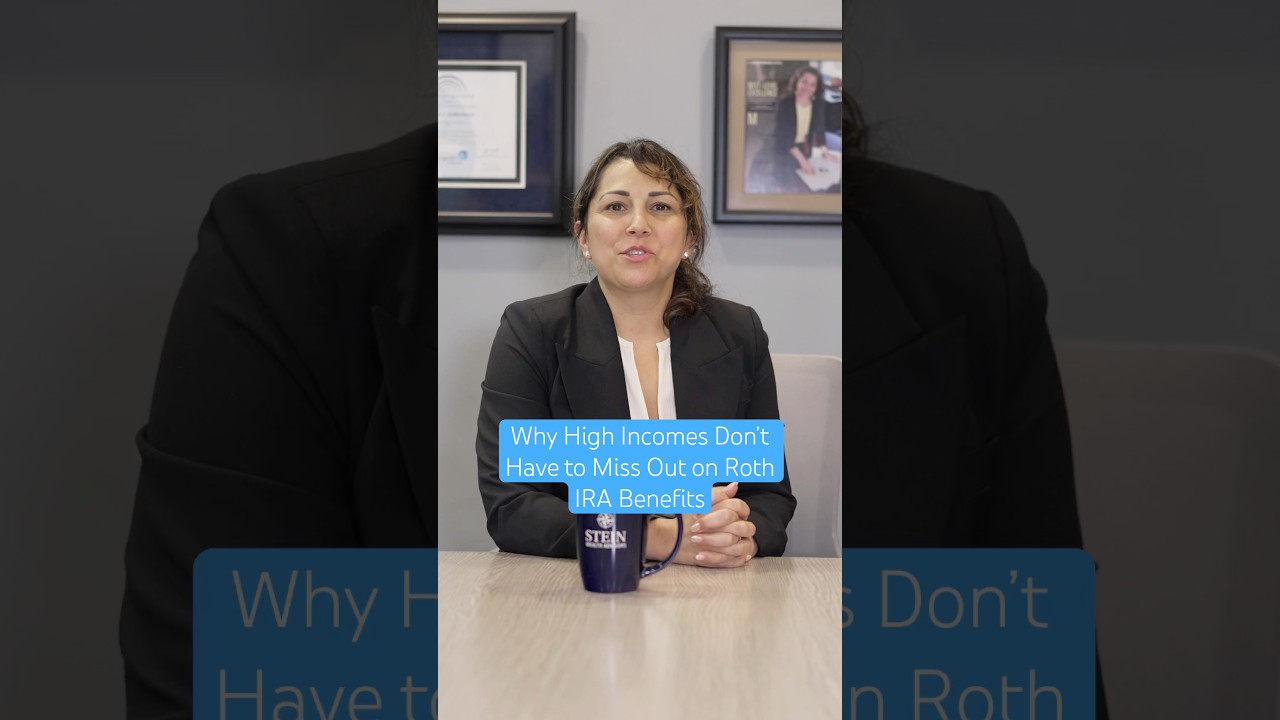

High Income, Roth IRA? It’s Still Possible! Don’t Miss Out!
For years, the Roth IRA has been touted as a powerful tool for retirement savings, offering tax-free growth and withdrawals in retirement. But a common misconception is that it’s only for those with modest incomes. While there are income limitations for directly contributing to a Roth IRA, high earners don’t have to miss out on these fantastic benefits. Thanks to a little known strategy called the “Backdoor Roth IRA,” even those in higher tax brackets can tap into the power of Roth savings.
Why Bother with a Roth IRA?
Before diving into the backdoor strategy, let’s recap why a Roth IRA is so appealing:
- Tax-Free Growth: Investment gains within the Roth IRA grow tax-free, meaning you won’t owe any taxes on your earnings.
- Tax-Free Withdrawals in Retirement: As long as you follow the rules (generally withdrawing after age 59 1/2), withdrawals in retirement are completely tax-free. This can be a huge advantage if you anticipate being in a similar or higher tax bracket in retirement.
- Flexibility: Contributions (but not earnings) can be withdrawn tax-free and penalty-free at any time, providing a safety net if needed.
- No Required Minimum Distributions (RMDs): Unlike traditional IRAs and 401(k)s, Roth IRAs don’t require you to start taking distributions at a certain age, offering more control over your retirement funds.
The Income Limits That Often Confuse People
For 2024, the income limits for directly contributing to a Roth IRA are:
- Single: Full contributions allowed if your Modified Adjusted Gross Income (MAGI) is below $146,000. Contributions are phased out between $146,000 and $161,000.
- Married Filing Jointly: Full contributions allowed if your MAGI is below $230,000. Contributions are phased out between $230,000 and $240,000.
If your income exceeds these limits, you’re not eligible to directly contribute. This is where the “Backdoor Roth IRA” comes in.
Unlocking the Backdoor Roth IRA: A Step-by-Step Guide
The Backdoor Roth IRA leverages the fact that anyone can contribute to a traditional IRA, regardless of income. Here’s how it works:
- Contribute to a Traditional IRA: Even with a high income, you can contribute to a traditional IRA. Note that these contributions may be tax-deductible depending on your income and whether you’re covered by a retirement plan at work. If you are covered by a retirement plan at work your deduction may be limited, if not allowed at all.
- Convert to a Roth IRA: After contributing to the traditional IRA, you can convert the funds to a Roth IRA. This conversion is a taxable event, but because you’re converting immediately after contributing (and ideally before any significant earnings accrue), the tax impact should be minimal.
Important Considerations and Potential Pitfalls:
While the Backdoor Roth IRA can be a powerful strategy, there are a few important considerations:
- The “Pro-Rata Rule”: This is crucial! The IRS applies the pro-rata rule when you convert pre-tax assets to a Roth IRA. This means that the conversion will be taxed based on the proportion of pre-tax and after-tax money in all of your traditional, SEP, and SIMPLE IRAs. Let’s say you have $10,000 in pre-tax money in existing traditional IRAs and contribute $6,500 to a new traditional IRA (after-tax). If you convert the $6,500 to a Roth IRA, only 6,500/16,500 (approximately 39%) of the conversion would be considered after-tax and tax-free. The remaining 10,000/16,500 (approximately 61%) would be considered pre-tax and taxed as ordinary income. Ideally, you should have no pre-tax money in traditional, SEP, or SIMPLE IRAs before undertaking a backdoor Roth conversion. Options for dealing with pre-tax money might include rolling it into a 401(k) if your employer allows it. Consult with a tax professional to understand the implications for your specific situation.
- Accurate Reporting: Make sure you properly report the contribution and conversion on your tax return using forms such as Form 8606.
- Timing: It’s generally best to convert shortly after contributing to the traditional IRA to minimize potential gains (and thus, taxes) during the conversion process.
- Consult a Financial Advisor: Due to the complexities involved, it’s always recommended to consult with a qualified financial advisor or tax professional before implementing a Backdoor Roth IRA strategy. They can help you assess your individual circumstances, understand the tax implications, and ensure you comply with all applicable rules.
Don’t Let Income Limits Hold You Back!
Even if your income is too high to directly contribute to a Roth IRA, the Backdoor Roth IRA can provide a pathway to tax-advantaged retirement savings. By understanding the process and potential pitfalls, you can take advantage of this strategy and secure a more financially secure future. Don’t let the misconception that Roth IRAs are only for low-income earners prevent you from exploring this valuable tool!
#financialplanning #rothira #retirement #backdoorroth #highincome #taxes #taxplanning #retirementplanning
LEARN MORE ABOUT: IRA Accounts
TRANSFER IRA TO GOLD: Gold IRA Account
TRANSFER IRA TO SILVER: Silver IRA Account
REVEALED: Best Gold Backed IRA




0 Comments