
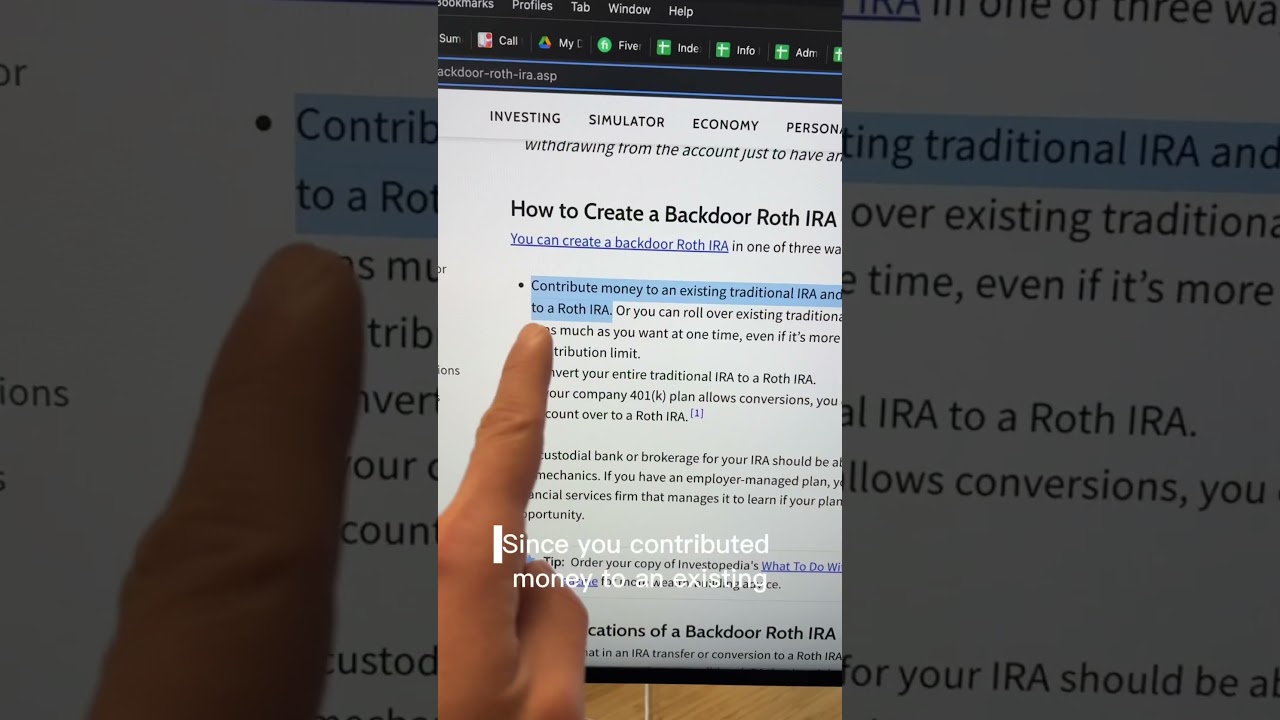

How to Use the Backdoor Roth IRA: A Step-by-Step Guide
The Backdoor Roth IRA is a powerful strategy designed to help high-income earners take advantage of the benefits offered by Roth IRAs, despite facing income limits that restrict direct contributions. This guide will explain how to use the Backdoor Roth IRA, its benefits, potential pitfalls, and best practices to maximize your retirement savings.
What is a Backdoor Roth IRA?
A Backdoor Roth IRA is not a separate account but rather a method to bypass the income limits associated with Roth IRA contributions. For the tax year 2023, individuals earning above $153,000 (or $228,000 for married couples filing jointly) cannot contribute directly to a Roth IRA. However, high earners can still benefit from this strategy by making contributions to a Traditional IRA and then converting those funds to a Roth IRA.
Benefits of a Backdoor Roth IRA
-
Tax-Free Growth: Once your money is in a Roth IRA, it grows tax-free. This means you won’t pay taxes on gains, dividends, or interest that accumulate in the account, allowing for potentially significant growth over time.
-
Tax-Free Withdrawals: After a five-year holding period and reaching age 59½, qualified withdrawals from a Roth IRA are tax-free. This can provide a significant advantage in retirement when tax rates may be higher.
-
No Required Minimum Distributions (RMDs): Unlike Traditional IRAs, the Roth IRA does not require you to start taking distributions at age 73, allowing you to let your money grow for a longer period.
- Estate Planning Benefits: If your heirs inherit your Roth IRA, they can continue to grow the funds tax-free, providing another layer of financial security for your family.
Steps to Implement a Backdoor Roth IRA
Step 1: Verify Eligibility
Before beginning, ensure that your income exceeds the Roth IRA contribution limits. If you’re under the threshold, you can contribute directly to a Roth IRA without needing a Backdoor approach.
Step 2: Open a Traditional IRA
If you don’t already have a Traditional IRA, open one at a financial institution of your choice. Many companies offer no-fee account options, which can be advantageous as you want to minimize costs.
Step 3: Make a Non-Deductible Contribution
For 2023, you can contribute up to $6,500 (or $7,500 if you’re age 50 or older) to your Traditional IRA, regardless of your income. Since this is a non-deductible contribution, you will not receive a tax break for this amount.
Step 4: Convert to a Roth IRA
Once your contribution has been made, you can convert the amount in your Traditional IRA to a Roth IRA. Most institutions allow you to do this through their website or mobile app. This conversion should generally take place shortly after the contribution to avoid complications with taxable growth.
Step 5: File Your Taxes Correctly
Since you made a non-deductible contribution to your Traditional IRA and converted it to a Roth IRA, it’s important to file IRS Form 8606 when you file your taxes. This form reports the basis (i.e., the non-deductible contributions) in your Traditional IRA and ensures that you’re not taxed on that amount during your conversion.
Potential Pitfalls
-
Pro-Rata Rule: If you have existing pre-tax money in any Traditional IRA, the IRS will consider all of your Traditional IRA assets when determining the taxability of your conversion, which can lead to unexpected tax liabilities.
-
Tax Consequences: Be mindful of any potential tax implications associated with the conversion, especially if there are gains in the Traditional IRA before conversion. You will owe taxes on any gains that are converted.
- Timing: To minimize the risk of incurring tax liability on any gains, consider timing your conversion to happen shortly after making the contribution, ideally within the same tax year.
Best Practices
-
Use Separate Accounts: Consider using a separate Traditional IRA solely for the Backdoor Roth strategy to simplify tracking and tax reporting.
-
Monitor Your IRAs: Keep an eye on your overall IRA balances to avoid complications with the pro-rata rule.
- Consult a Financial Advisor: A financial advisor can help you navigate the intricacies of retirement account contributions and ensure that you comply with IRS regulations.
Conclusion
Using the Backdoor Roth IRA can significantly enhance your retirement savings strategy, allowing high-income earners to benefit from tax-free growth and tax-free withdrawals in retirement. By following the outlined steps and being aware of the potential pitfalls, you can effectively implement this strategy to secure a more financially stable future. Always stay informed and consult with financial professionals to ensure you are making the best choices for your financial situation.
LEARN MORE ABOUT: IRA Accounts
CONVERT IRA TO GOLD: Gold IRA Account
CONVERT IRA TO SILVER: Silver IRA Account
REVEALED: Best Gold Backed IRA



Video Too short. Need to tell them how long to wait. Isn’t there a settling period? You can’t do it instantly right?