
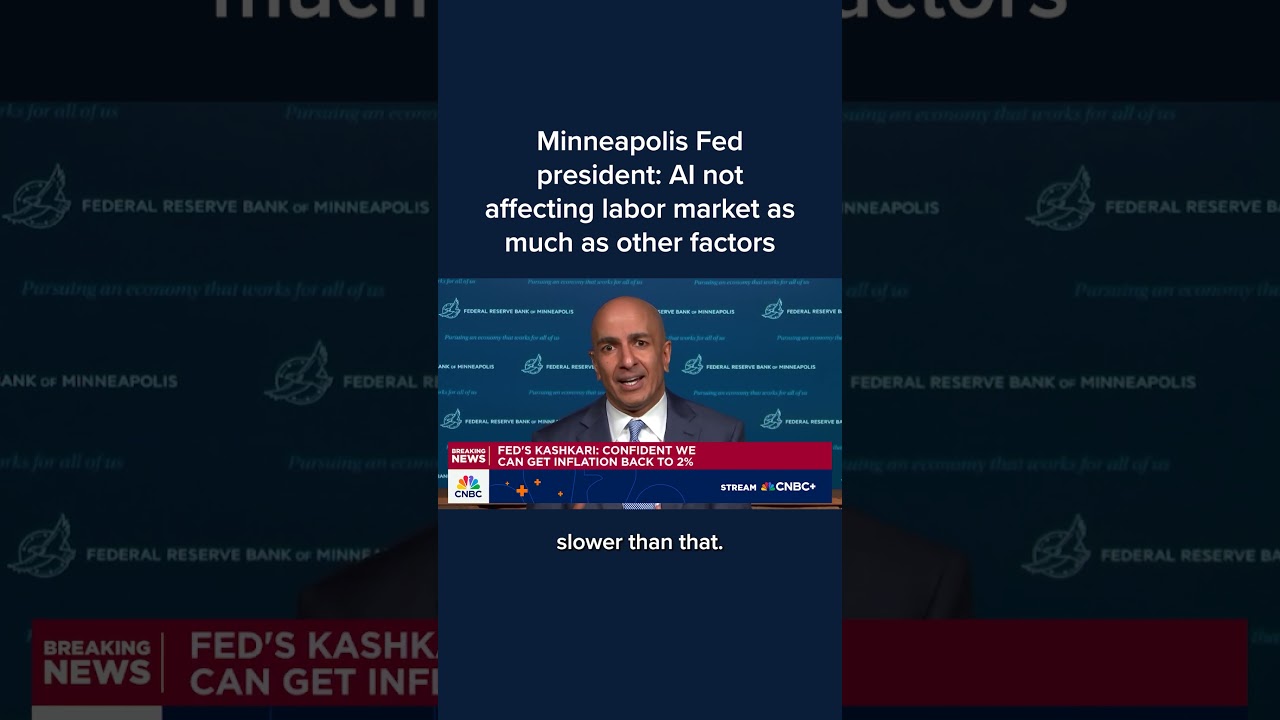

Minneapolis Fed President Says AI Impact on Labor Market Less Pronounced Than Other Factors
Minneapolis Federal Reserve President Neel Kashkari has weighed in on the ongoing debate surrounding the impact of artificial intelligence (AI) on the labor market, suggesting that its effect is currently less significant than other factors influencing employment trends. While acknowledging the potential long-term disruptive power of AI, Kashkari emphasized that broader economic forces like inflation, interest rate hikes, and shifting demographics are currently playing a more dominant role in shaping the jobs landscape.
Speaking at [Insert Event or Interview Source Here], Kashkari stated, “[Quote about AI not being the dominant factor affecting the labor market]. He argued that the current tightness in the labor market, characterized by low unemployment and persistent job openings, is primarily driven by factors such as the post-pandemic economic recovery, the aging workforce, and the decline in labor force participation rates.
Kashkari’s perspective contrasts with some more alarmist predictions that foresee mass job displacement due to AI automation. While he recognizes the potential for AI to automate certain tasks and restructure industries, he believes the technology is still in its early stages of development and deployment. He also emphasized that AI is likely to create new jobs and opportunities, albeit potentially requiring workers to adapt and acquire new skills.
“We need to be cognizant of the potential for AI to disrupt the labor market,” Kashkari cautioned. “[Quote about the need for education and workforce training to adapt to AI].” He pointed to the importance of investing in education and workforce training programs to ensure workers are equipped with the skills necessary to thrive in an AI-driven economy.
Furthermore, Kashkari highlighted the historical precedence of technological advancements transforming the labor market. “Throughout history, technological innovation has often led to initial anxieties about job losses, but ultimately has created more jobs and increased productivity,” he explained. He believes that with proactive planning and investment in human capital, the transition to an AI-powered economy can be managed effectively.
While acknowledging the limitations of predicting the future trajectory of AI and its impact on the labor market, Kashkari’s comments offer a grounded perspective amidst the hype and apprehension. His focus on the immediate challenges of inflation and labor shortages, coupled with a call for proactive workforce development strategies, underscore the importance of addressing both the short-term economic realities and the long-term potential of AI.
Key Takeaways:
- AI’s Impact is Gradual: Kashkari believes AI’s impact on the labor market is currently less significant than other economic factors.
- Focus on Immediate Concerns: Inflation, interest rate hikes, and demographics are the primary drivers of the current labor market conditions.
- Potential for Job Creation: AI is likely to create new jobs and opportunities, albeit potentially requiring workers to adapt.
- Importance of Education and Training: Investing in education and workforce training is crucial for preparing workers for an AI-driven economy.
- Historical Precedent: Technological innovation has historically led to job creation and increased productivity.
Further Discussion Points:
- What specific economic indicators support Kashkari’s perspective?
- What are the potential long-term consequences if the workforce is not adequately prepared for AI integration?
- What specific industries are most likely to be affected by AI in the coming years?
- How can policymakers and businesses collaborate to ensure a smooth transition to an AI-driven economy?
By emphasizing the current realities of the labor market while acknowledging the long-term potential of AI, Kashkari provides a balanced and pragmatic perspective on a complex and evolving issue. His call for proactive workforce development strategies underscores the importance of investing in human capital to navigate the challenges and opportunities presented by the rise of artificial intelligence.
LEARN MORE ABOUT: Investing During Inflation
REVEALED: Best Investment During Inflation
HOW TO INVEST IN GOLD: Gold IRA Investing
HOW TO INVEST IN SILVER: Silver IRA Investing




AI needs regulation. Congress should do something about this. Because that big bill stated no regulation for years. This can’t stand or we all fail
Greatttt
It will be easier to replace lawyers and accountants than truckers.
Any job that has been remote can be outsourced to cheaper countries, Fed can't stop that, too much profit at stake
It's taking longer because we aren't ready to accept people dying from self driving cars. Lets say 30000 people die in a state
AI will take at least 20% of jobs in 5 years, slower immigration will also mean lower gdp and fewer jobs. Interesting times coming up.
“Hey people on tv, we’re sooooooo out of touch.”