

Retiring with Only Pre-Tax Accounts? Make These 3 Retirement Changes
Retiring with the bulk of your savings nestled in pre-tax accounts like 401(k)s and traditional IRAs is a common scenario for many Americans. While these accounts offer significant tax advantages during your working years, they present a unique set of challenges in retirement. The biggest hurdle? Every dollar you withdraw is taxed as ordinary income.
This can be a significant shock to the system, especially if you haven’t planned accordingly. Fortunately, there are proactive steps you can take to mitigate the tax burden and ensure a comfortable and sustainable retirement. Here are three crucial retirement changes to consider if you’re primarily relying on pre-tax accounts:
1. Embrace Tax Diversification: The Roth Conversion Strategy
The beauty of pre-tax accounts is the deferral of taxes until retirement. The potential downside is the uncertainty of future tax rates. If you believe tax rates are likely to rise, or you simply want more control over your tax liability in retirement, a Roth conversion strategy could be your best friend.
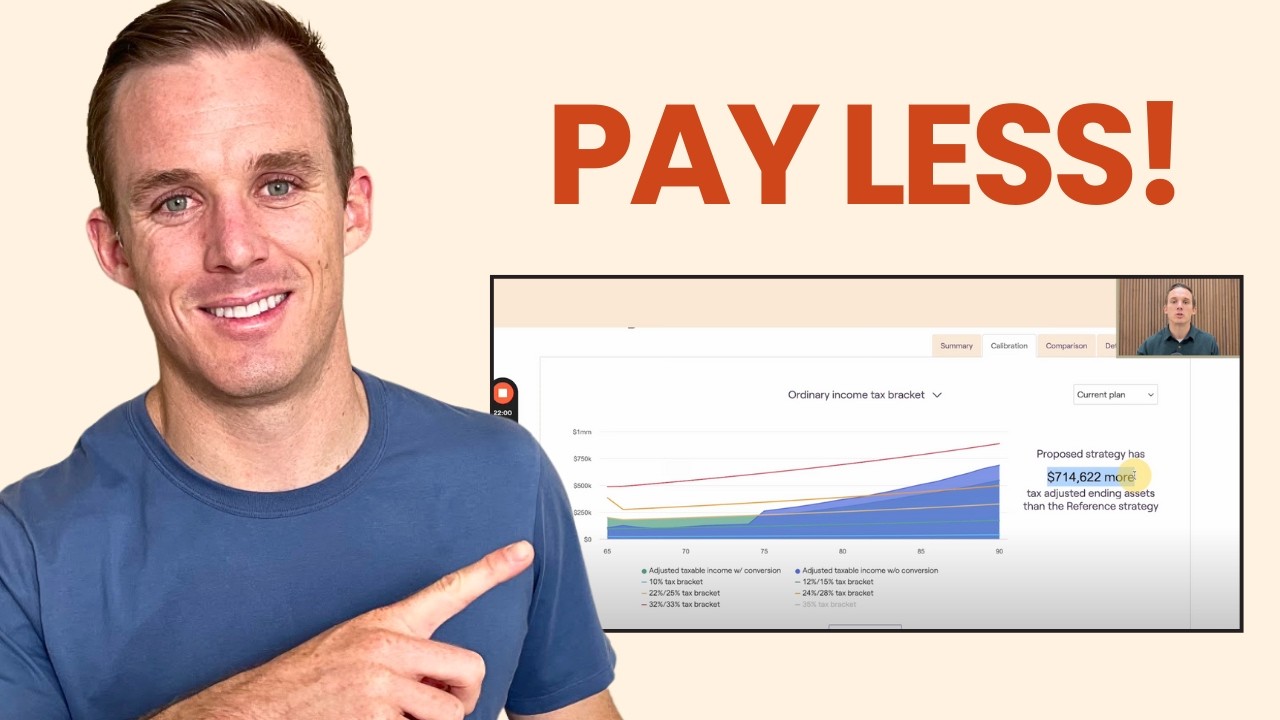
What is a Roth Conversion? It involves transferring funds from your pre-tax accounts (like a 401(k) or traditional IRA) into a Roth IRA. You pay income tax on the converted amount in the year of the conversion, but all future withdrawals from the Roth IRA are tax-free.
Why is it Important?
- Tax-Free Income Stream: Roth withdrawals are completely tax-free in retirement, providing a predictable and potentially larger net income.
- Tax Bracket Management: Converting strategically can help you stay within a lower tax bracket in your higher income years leading up to retirement, or minimize the impact of required minimum distributions (RMDs) later on.
- Inheritance Benefits: Roth IRAs offer significant tax advantages to your beneficiaries. They can inherit the account tax-free.
How to Implement It:
- Start Small: Don’t convert everything at once. Start with smaller amounts and assess the tax impact.
- Consider Your Tax Bracket: Aim to convert amounts that keep you within your current tax bracket or slightly below the next one.
- Seek Professional Advice: Consult with a financial advisor to determine the best conversion strategy for your specific situation.
2. Optimize Withdrawal Strategies: Beyond Required Minimum Distributions (RMDs)
RMDs, which begin at age 73 (or 75 for those born after 1959), force you to withdraw a percentage of your pre-tax accounts each year, potentially pushing you into a higher tax bracket. Planning your withdrawals strategically can minimize the impact of RMDs and reduce your overall tax liability.
Strategies to Consider:
- Delay Social Security: Delaying Social Security benefits as long as possible (up to age 70) allows your benefits to grow, reducing your reliance on pre-tax withdrawals in the early years of retirement.
- Qualified Charitable Distributions (QCDs): If you’re over 70 1/2 and itemize deductions, consider using QCDs from your IRA to satisfy your charitable giving. These distributions count towards your RMD but aren’t included in your taxable income.
- Sequence of Returns Risk Management: Withdraw from accounts with lower recent returns first, allowing your higher-performing investments to continue growing tax-deferred.
- Year-End Tax Planning: Carefully review your estimated income and deductions towards the end of each year to identify opportunities for tax optimization.
3. Understand the Impact of Tax Location: Consider Tax-Efficient Investing
Tax location refers to strategically allocating different types of investments across different types of accounts (taxable, tax-deferred, and tax-free) to minimize your overall tax burden. Since all withdrawals from pre-tax accounts are taxed as ordinary income, optimizing the types of investments held within these accounts is crucial.
Here’s How to Approach It:
- Hold Bonds and Income-Generating Assets in Tax-Advantaged Accounts: Since interest income is taxed at your ordinary income tax rate, holding bonds and other income-generating assets in your 401(k) or IRA can defer those taxes until withdrawal.
- Prioritize Tax-Efficient Investments in Taxable Accounts (if applicable): If you have investments outside of your pre-tax accounts, prioritize holding stocks, ETFs, and other assets that generate primarily capital gains in those accounts. Capital gains are typically taxed at lower rates than ordinary income.
- Rebalance Strategically: When rebalancing your portfolio, consider the tax implications of selling assets in taxable accounts. If possible, rebalance by contributing to underweighted asset classes in your tax-advantaged accounts.
The Bottom Line:
Retiring with only pre-tax accounts requires careful planning and a proactive approach to tax management. By embracing a Roth conversion strategy, optimizing your withdrawal strategies, and understanding the impact of tax location, you can mitigate the tax burden and ensure a more comfortable and financially secure retirement. Remember to consult with a qualified financial advisor to develop a personalized retirement plan tailored to your unique circumstances. They can help you navigate the complexities of retirement planning and make informed decisions that align with your goals.
LEARN MORE ABOUT: Qualified Retirement Plans
REVEALED: How To Invest During Inflation
HOW TO INVEST IN GOLD: Gold IRA Investing
HOW TO INVEST IN SILVER: Silver IRA Investing




Could you do a case study for po folks like me who is single and will likely have only 600K in 401k when time to retire at 70.
Dang it. Do a single person. Much harder to solve.
Is this supposed to be a real budget? Where are mortgage, real estate taxes, homeowners' insurance, car insurance, home maintenance? And who only pays $300 for "bills and utilities"? Between electricity, gas, oil, cable, internet, phone, water, trash pickup, sewer, the typical "bills and utilities" expense is going to be significantly higher than that; and this doesn't even include associated expenses like your Netflix and Amazon Prime subscriptions. I get that everyone's budget is different, but this one wasn't relatable at all.
Why does all this have to be so complicated? (rhetorical question) We shouldn't have to battle our own government for our money. Considering what DOGE has discovered recently, how much of the embattled funds are wasted? These scenarios never seem to include the costs of top notch advice. At what level of savings do these expensive advisors become worthwhile?
3% inflation used as a planning assumption. 33 Trillion national debt. I would use 5% across the board. Also, all this talk of Roth conversions is good and well. Too late to make that much more then a marginal impact and if you minus out your management fee even less. I think a big issue to consider is that they may be coming for your Roth. A consumption tax rather than taxing income. It will start small 2 to 3 % with a reduction in income taxes and then snowball to 20% .
Does it matter if you put health cost in "Goals" vs. "expenses"? Feels odd to have health care and LTC in "goals" instead of expenses.
Where is the link for the program to enter my own figures as mentioned in the video? And is the program shown in the slides Boldin?
I always find these scenarios unrealistic. The majority of people are not retiring with $4 million.
Most people are retiring with a combination of SS and investments.
Most people try to live in low tax states.
Ruben and Katie have done well
Great advice, thanks! I am in this area of mostly 401K that will be taxable.
I don't understand why he's using 75 as the age to start their RMD's. Is this correct? I thought the age was 73. What am I missing?
Again good video
$332k just sitting in my emergency fund, and now I’m here like, ‘Time to make it rain!’ Seriously though, great step-by-step guide! I’ve been itching to dive into stocks but honestly, need a boost to make sure I'm not just throwing cash into the fire. Any tips to help me not mess this up right out the gate?
Don't forget about IRMAA. And with the plan shown, they would both pay IRMAA once RMDs kick in. How to reduce this would be to Roth convert more early on. Opening up more that can be removed from pre-tax accounts would be to delay social security until they're 70. This gives them 3 years to take pre-tax money out for living expenses. Keeping track of ALL income including interest and dividends in taxable is important to stay under the IRMAA first limit.
informative
Am I the only one wondering how a couple in CA lives on $7500 a month? I am frugal but that seems a bit low for that area of the country.
Is it just me or does this guy take too long to make his points ?
Great video, but you might consider talking a little slower. Lots of information to digest. Considering your software and wondering if it would work for our scenario. I'm about to retire at 65 in 7 months. My husband will be working part-time for a couple more years, he's 66. We have rental income that will most likely always push us into a higher bracket. I'm trying to figure out when to take social security and when to convert our savings to Roth. It's mostly all just IRA.
James, as always, great video and very informative. My situation is not what you typically demonstrate in your case studies. I wonder if you would be able to provide a case study for a couple with 7 years age difference and how tax planning can be optimized. Thank you, for the gift of information. Hope this gets to you.
We have all of our retirement savings in pretax accounts. Options presented were convert 401k into
*variable annuity( 1/2 invested, 20% protected from market downside. The other 1/2 fixed interest @ 8.3%- cost to manage .6%
*Rolling over into 10 pay whole life to offset taxes on growth, interest rate is 5%
And put small portion into Roth conversion
I’ll have a small pension,
We also have a small IRA
IN short- my husband is 62 want to retire @ 62, still contributing to 401k plans to retire btwn 65-67
I’m retired -64
Want to preserve investments, realize some growth,minimize taxes, have enough to cover longevity care.
What are your thoughts on annuities and/whole life options.
Really should not be a problem if your income is dividends and LTCG – really depends on the principal's taxability
A very good and helpful discussion of strategies. I would just point out that the conversion to Roth here – the so-called filling up the bracket strategy – may not be the most effective one. Doing earlier conversions even if it increases your tax brackets often shows better long-term results.
Awesome video and great resource on using the software that I downloaded. Your course is awesome too!
Such GREAT stuff.
the 3rd point is essentially the same as the 1st point, just doing roth conversion to the point where it makes sense.
If we have all pre-tax accounts, I am not sure if it’s beneficial to do Roth IRA conversion because we need to take out extra for tax?