
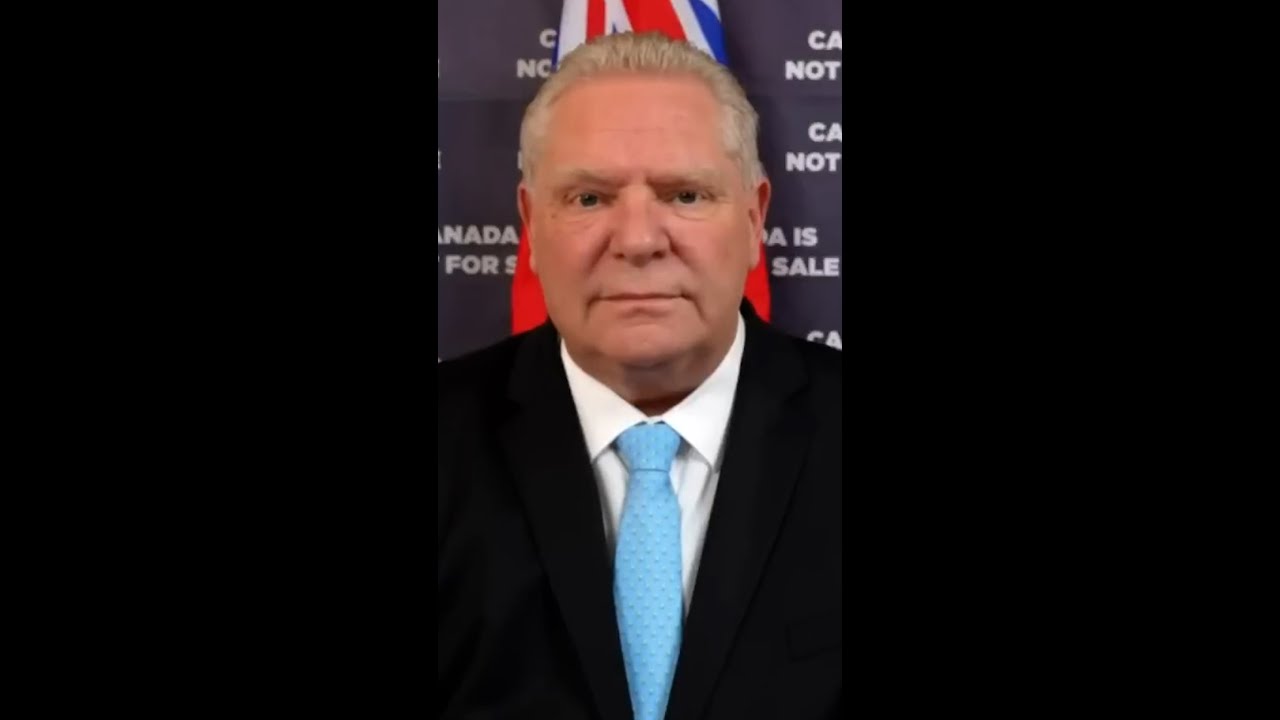

Doug Ford Addresses Concerns of a “Trump’s Recession” Impacting Ontario
Ontario Premier Doug Ford has addressed growing concerns regarding the potential impact of a slowing U.S. economy, often referred to as “Trump’s Recession,” on the province’s economic outlook. While acknowledging the interconnectedness between the two economies, Ford struck a cautiously optimistic tone, emphasizing Ontario’s resilience and ongoing efforts to attract investment and create jobs.
The term “Trump’s Recession” has gained traction in recent years, particularly during Donald Trump’s presidency and in the aftermath, reflecting concerns about his trade policies, fiscal policies, and overall impact on the U.S. economy. While economic indicators have been mixed, fears of a potential recession in the U.S. persist, raising anxieties about its potential spillover effects on Canada, particularly on Ontario, which relies heavily on trade with its southern neighbour.
During a recent press conference, Premier Ford acknowledged the potential risks posed by a U.S. economic downturn. “We’re always watching what’s happening south of the border,” he stated. “The U.S. is our largest trading partner, and their economy directly impacts ours. We need to be prepared for any scenario.”
However, Ford also highlighted the province’s proactive measures to mitigate potential damage. He pointed to the government’s focus on cutting red tape, reducing business taxes, and investing in infrastructure as key strategies to boost Ontario’s competitiveness and attract foreign investment.
“We’re making Ontario open for business,” Ford emphasized. “We’re creating an environment where businesses can thrive, creating good-paying jobs for Ontarians. This will help us weather any economic storm, regardless of what happens elsewhere.”
He also stressed the importance of diversifying Ontario’s economy beyond its reliance on the U.S. market. He cited ongoing efforts to expand trade partnerships with other countries, particularly in Asia and Europe, as crucial to securing Ontario’s long-term economic prosperity.
Opposition parties, however, have criticized Ford’s approach, arguing that the government’s cuts to public services and its reliance on supply-side economics are insufficient to protect Ontario from a significant economic downturn. They have called for greater investment in social programs, education, and healthcare to provide a safety net for vulnerable populations and stimulate demand within the province.
“Saying ‘open for business’ is not a comprehensive economic strategy,” stated Ontario NDP Leader Marit Stiles in a recent statement. “We need a real plan to support workers, families, and small businesses if we’re going to weather a potential recession. That means investing in the things people need, like affordable housing, childcare, and healthcare.”
Experts remain divided on the potential severity of the impact of a U.S. recession on Ontario. Some economists predict a mild slowdown, while others warn of a more significant downturn, depending on the depth and duration of the U.S. economic woes.
Regardless of the precise impact, Premier Ford’s acknowledgement of the potential risks and his emphasis on proactive measures reflect a recognition of the interconnectedness between the two economies. Whether the government’s policies will prove sufficient to protect Ontario from a potential “Trump’s Recession” remains to be seen, but the debate surrounding the province’s preparedness is likely to continue in the coming months. The focus will remain on monitoring key economic indicators, both in the U.S. and in Ontario, and on evaluating the effectiveness of the government’s efforts to bolster the province’s economic resilience.
LEARN MORE ABOUT: Investing During Inflation
REVEALED: Best Investment During Inflation
HOW TO INVEST IN GOLD: Gold IRA Investing
HOW TO INVEST IN SILVER: Silver IRA Investing




0 Comments