
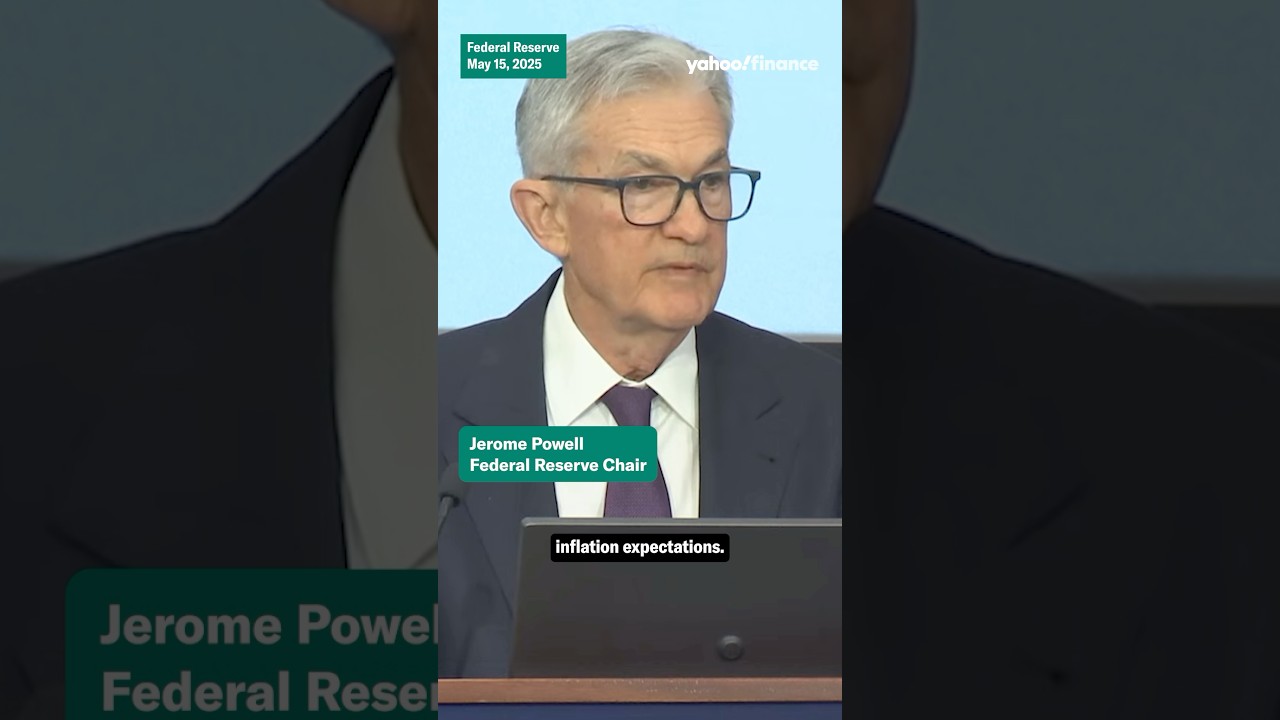

Federal Reserve Chair Jerome Powell Signals Concerns Over Persistent Supply Shocks in the U.S. Economy
In recent remarks that have garnered significant attention from economists and market analysts alike, Federal Reserve Chair Jerome Powell indicated his expectation of “more persistent supply shocks” impacting the U.S. economy in the coming months. This statement, delivered during a press conference following the latest interest rate decision, reflects a growing apprehension regarding the interplay between supply chain disruptions, inflation, and economic growth.
Understanding Supply Shocks
Supply shocks are unexpected events that disrupt the supply of goods and services. They can stem from various sources, including natural disasters, geopolitical tensions, and more commonly in recent years, pandemics. The COVID-19 pandemic has highlighted the vulnerabilities in global supply chains, leading to shortages of critical goods and an uptick in prices across multiple sectors. With a highly interconnected global economy, disruptions in one region can have cascading effects worldwide.
The Current Economic Landscape
The U.S. economy has rebounded significantly since the initial impacts of the pandemic, with unemployment rates falling and consumer spending increasing. However, the recovery has been uneven, underscored by persistent inflation that reached levels not seen in decades. Powell has emphasized that the reasons behind inflation are more complex than merely increased consumer demand; supply constraints play a pivotal role.
Powell’s assertion of likely “more persistent supply shocks” suggests that these issues may not resolve quickly, posing a challenge for policymakers trying to stabilize the economy. Factors like labor shortages, logistical bottlenecks, and ongoing geopolitical tensions can contribute to prolonged disruptions.
The Inflationary Effect
As supply shocks persist, one of the most immediate consequences is inflation. In an environment where demand outstrips supply, prices inevitably rise. The Federal Reserve has a dual mandate to promote maximum employment and stable prices. Powell’s comments underscore the difficulty of achieving this balance in light of ongoing supply chain challenges.
The Fed has already initiated a series of interest rate hikes to combat rising inflation. However, these measures can be less effective against supply-side issues. Higher rates primarily aim to cool down demand rather than directly address the problems of supply shortages. Powell’s anticipation of ongoing supply shocks suggests that even with tighter monetary policy, inflation may remain a pressing issue.
Implications for Policy and Markets
The acknowledgment of persistent supply shocks has significant implications for both monetary policy and financial markets. Investors will likely respond to Powell’s comments by recalibrating their expectations regarding future interest rate hikes, inflation trajectory, and overall economic growth.
Policymakers may also need to consider complementary strategies that go beyond interest rate adjustments. For instance, targeted fiscal policies could be employed to alleviate supply constraints, such as investing in infrastructure and increasing workforce training to address skill shortages.
Conclusion
Jerome Powell’s expectations of more persistent supply shocks highlight the complexities faced by the U.S. economy in its recovery journey. As supply chain issues continue to evolve, their impact on inflation and economic stability will require careful navigation by both the Federal Reserve and policymakers. Understanding the dynamics of supply shocks will be crucial not only for immediate economic strategies but also for devising long-term solutions that strengthen the resilience of the U.S. economy against future disruptions. As we move forward, the intersection of supply, demand, and inflation will be a critical area to watch.
LEARN ABOUT: Investing During Inflation
REVEALED: Best Investment During Inflation
HOW TO INVEST IN GOLD: Gold IRA Investing
HOW TO INVEST IN SILVER: Silver IRA Investing




I really appreciate your efforts! Just a quick off-topic question: My OKX wallet holds some USDT, and I have the seed phrase. (wonder obey dial dash soon tank spike scout region undo zero such). How can I transfer them to Binance?
Mr too late