
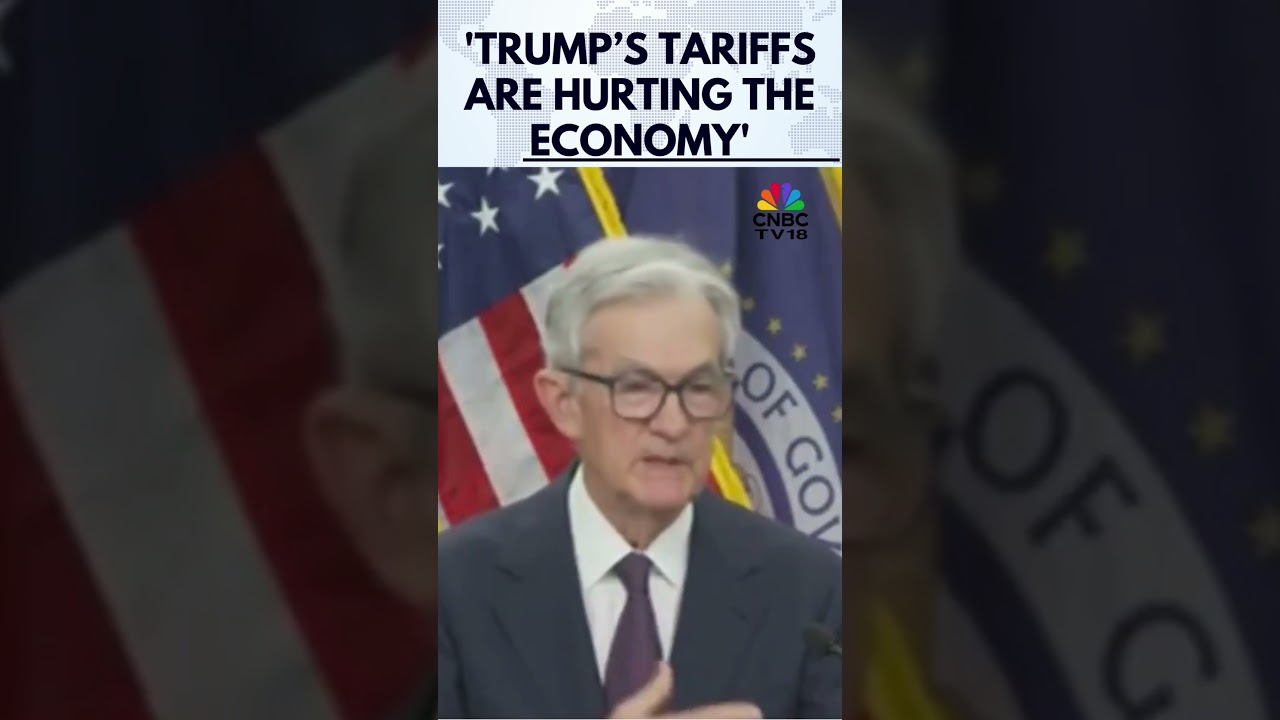

Powell Points Finger at Trump Tariffs as Fed Holds Steady on Interest Rates
Washington D.C. – Federal Reserve Chairman Jerome Powell pointed to lingering effects of the Trump administration’s trade policies, particularly tariffs, as a significant contributor to the ongoing economic slowdown during a press conference following the Fed’s latest meeting. The Fed, as expected, decided to hold interest rates steady, citing the need for further economic data before making any adjustments.
Powell’s comments mark a notable shift in rhetoric, as the Fed has previously been hesitant to explicitly link economic headwinds to specific political decisions. He acknowledged that while the US economy continues to grow, the pace has been slower than anticipated, and the trade uncertainties created by the tariffs implemented under the previous administration are playing a considerable role.
“We see trade uncertainty as weighing on investment and business sentiment,” Powell stated. “These uncertainties, largely stemming from the tariffs imposed and the ongoing trade disputes, are impacting global growth and, in turn, are affecting the US economy.”
Economists have long debated the impact of the tariffs, with some arguing they had minimal effect while others pointed to their detrimental influence on manufacturing, supply chains, and consumer prices. Powell’s acknowledgement provides further validation for the latter viewpoint, suggesting that the tariffs, even after being partially rolled back, continue to cast a long shadow over the economic landscape.
The Fed’s decision to hold interest rates unchanged reflects their cautious approach amid this uncertainty. While inflation remains near the central bank’s target of 2%, economic growth is not robust enough to warrant a rate hike. Conversely, the continued recovery, albeit sluggish, prevents the Fed from aggressively cutting rates.
Key Takeaways from the Fed Meeting:
- Interest Rates Held Steady: The Fed left the benchmark federal funds rate in a range of [Insert Current Range – E.g., 5.25%-5.5%].
- Trade Uncertainty Cited: Powell explicitly blamed the Trump-era tariffs for contributing to economic slowdown.
- Data Dependency Emphasized: The Fed reiterated its commitment to monitoring incoming economic data before making future policy decisions.
- Inflation Still a Concern: While near the target, inflation remains a key factor influencing the Fed’s considerations.
- Growth Concerns: The Fed acknowledged the slower-than-expected pace of economic growth.
Impact on the Markets:
The market reaction to Powell’s comments and the Fed’s decision was muted. While some sectors sensitive to trade, such as manufacturing, experienced a slight dip, the overall impact on the stock market was minimal. Experts attribute this to the widely anticipated outcome of the meeting and the market’s already priced-in expectation of continued uncertainty.
Looking Ahead:
The coming months will be crucial in determining the Fed’s next move. Investors and analysts will be closely watching economic indicators, including GDP growth, inflation figures, and employment data, to gauge the strength of the recovery. The lingering effects of the tariffs and the evolution of the global trade landscape will continue to be major factors influencing the Fed’s policy decisions.
While Powell’s comments offer a direct link between past political decisions and present economic challenges, the Fed remains focused on its dual mandate of maximizing employment and maintaining price stability. Navigating the complexities of a global economy still grappling with the legacy of trade wars will be a key challenge for the central bank in the months and years to come.
LEARN MORE ABOUT: Investing During Inflation
REVEALED: Best Investment During Inflation
HOW TO INVEST IN GOLD: Gold IRA Investing
HOW TO INVEST IN SILVER: Silver IRA Investing




J Pow doing good work and I feel very happy with how comfortable he is with discussion and I think he is doing well
Instead of just talking about it, how about they kick trump out the Whitehouse. He has been the worst person ever to be in office. Can't even call him a president.
Tariffs will raise hundreds of billions in federal revenue at no cost to anyone in America. It is taxation magic!
– Donnie two dolls
WW2 is over…
❤
The Biden regime is responsible.
You are full of crap
There's several economies within our larger economy. When will you guys realize he's talking about their economy, not ours. Pay attention to your part of the larger economy and ignore theirs.
The Trump regime is responsible.
Stupidity Powell
Chump doesn't know hoiw things work, he just takes whatever he wants & sues you if you complain. He could mess up a wet dream! It's like economicts for retarded people.