
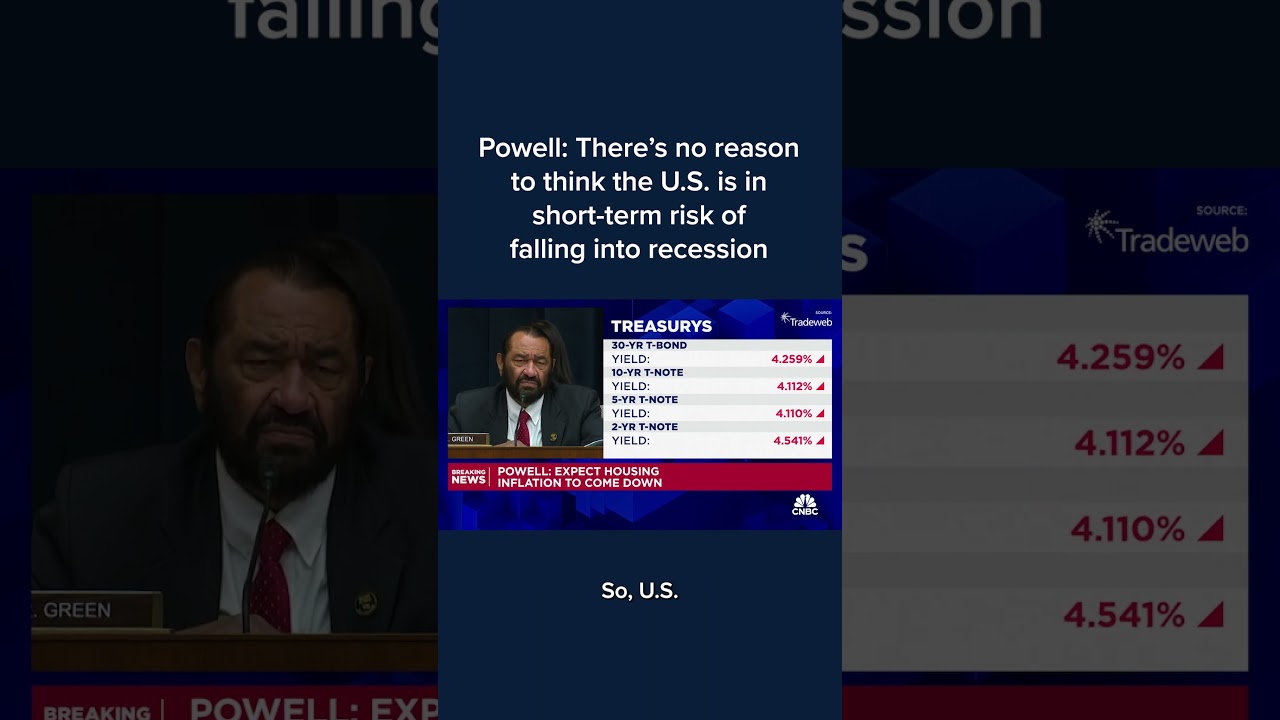

Powell Says No Immediate Recession Danger: Is He Right?
Federal Reserve Chairman Jerome Powell has recently stated that there’s “no reason to think the U.S. is in short-term risk of falling into recession.” This statement, made against a backdrop of rising interest rates, persistent inflation, and global economic uncertainty, has been met with a mix of relief and skepticism. Is Powell’s assessment accurate, or are we overlooking potential warning signs?
Powell’s confidence stems from several key factors. Firstly, the labor market remains remarkably strong. Unemployment is near historic lows, and job creation continues to exceed expectations. This robust demand for labor suggests businesses are still confident in future growth and are willing to hire. High employment levels provide a crucial buffer against economic downturns, as consumers have more disposable income to spend.
Secondly, consumer spending, while slowing, is still holding up. While inflation has eroded purchasing power, consumers continue to spend, albeit more cautiously. This is partially supported by savings accumulated during the pandemic, although these savings are dwindling for many. Furthermore, consumer confidence, while volatile, hasn’t plummeted to recessionary levels.
Finally, the banking sector remains generally healthy. Despite some isolated incidents and concerns about regional banks, the overall financial system appears stable and well-capitalized. This is crucial for ensuring the flow of credit to businesses and consumers, which is essential for economic growth.
However, dismissing recession risks entirely would be premature. Several factors warrant careful consideration:
- The lagged effects of interest rate hikes: The Fed’s aggressive monetary policy tightening takes time to fully impact the economy. The effects of past rate increases are still working their way through the system, and future hikes could further dampen economic activity.
- Persistent inflation: While inflation has shown signs of cooling, it remains above the Fed’s 2% target. Continued high inflation could force the Fed to maintain its hawkish stance, potentially triggering a recession.
- Global economic headwinds: Geopolitical tensions, supply chain disruptions, and economic slowdowns in other countries could negatively impact the U.S. economy. The war in Ukraine, rising energy prices, and China’s economic challenges all pose significant risks.
- The potential for a credit crunch: As interest rates rise, banks may become more cautious about lending, potentially leading to a credit crunch. This could disproportionately hurt small and medium-sized businesses, which rely heavily on bank loans.
So, is Powell right? His assessment of “no immediate recession danger” may be accurate in the very short term. However, the economic landscape is complex and rapidly evolving. While the labor market and consumer spending are providing a strong foundation, the potential for unforeseen shocks and the lagged effects of tighter monetary policy remain significant concerns.
Ultimately, predicting the future with certainty is impossible. Powell’s optimism should be interpreted with caution. It’s crucial to monitor key economic indicators closely, including inflation, unemployment, consumer spending, and business investment, to assess the true state of the U.S. economy and the likelihood of a recession. While a full-blown recession might not be imminent, vigilance and proactive planning are essential in navigating the uncertain economic waters ahead.
LEARN MORE ABOUT: Investing During Inflation
REVEALED: Best Investment During Inflation
HOW TO INVEST IN GOLD: Gold IRA Investing
HOW TO INVEST IN SILVER: Silver IRA Investing




It’s because Amazon is the backbone of this economy
Green another lifer . He has no clue man has been a beaurcrat for along time.
What's the date of this clip?
We have already been in a recession under biden, but the democrats and left wing media changed the definition. Next is another great depression. They will light the curtains of the country on fire before Trump takes office so they can blame him.
Bidenomics
Bidenflation
Causing the greatest depression