
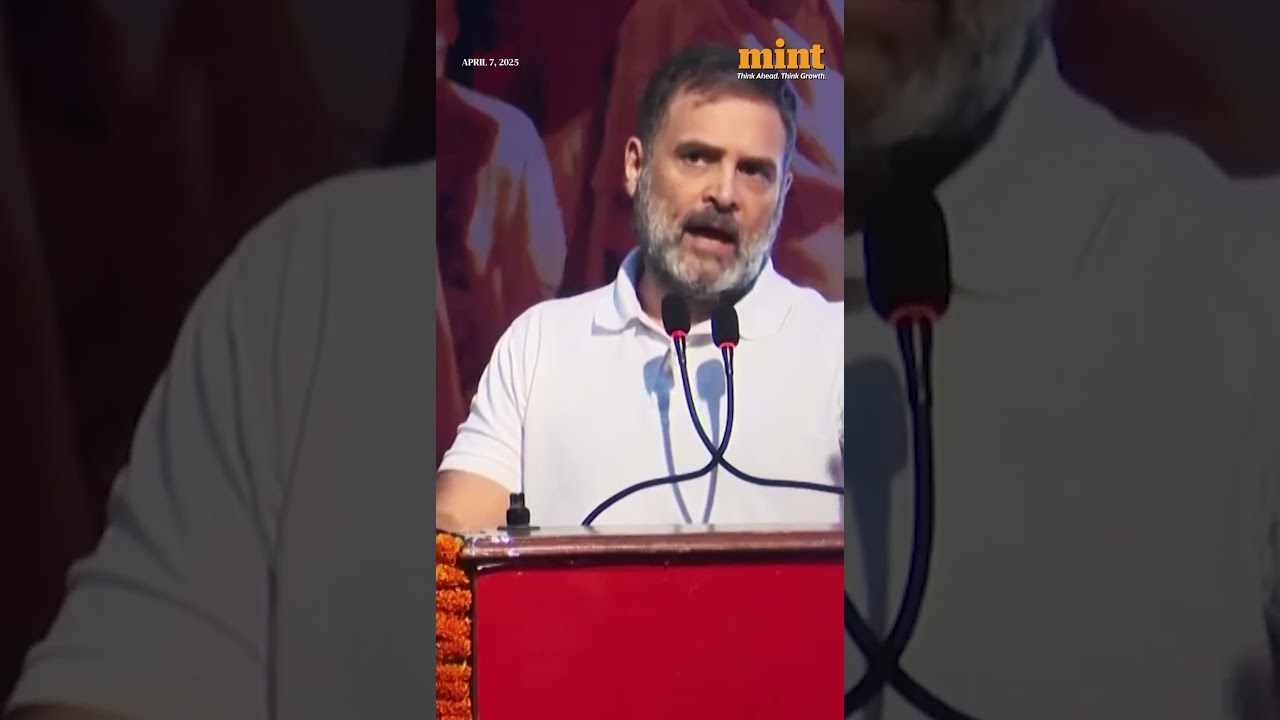

Rahul Gandhi Accuses US President of Causing Stock Market Crash
In a recent address, Indian politician Rahul Gandhi has made headlines by blaming the US President for a significant downturn in the stock market. This provocative claim has reignited discussions around the international implications of U.S. economic policies and their ripple effects across the global financial landscape.
The Context
The stock market is often viewed as a barometer of economic health, reflecting investor confidence and future growth potential. Fluctuations in the stock market can be attributed to a multitude of factors, including domestic policies, global economic trends, and international relations. During periods of economic uncertainty, the actions and decisions made by powerful nations, particularly the United States, can have profound implications on markets around the world.
Gandhi’s remarks come during a particularly tumultuous time for global markets, which have been grappling with rising inflation rates, interest rate adjustments by the Federal Reserve, and ongoing geopolitical tensions. In this context, the connection Gandhi is making underscores a growing sentiment among some international leaders that U.S. policies are not merely isolationist but have far-reaching consequences.
Key Points from Gandhi’s Statement
-
Global Economic Interdependence: Gandhi emphasized that in today’s interconnected world, the economies of nations are mutually dependent. A downturn in the U.S. market can lead to panic selling and declines in stock markets across Europe and Asia, affecting countries like India.
-
Critique of Economic Policies: He pointed to specific U.S. policies that, in his view, have fueled the current instability. He claimed that a lack of coherent economic strategy, particularly during critical times, has contributed to uncertainty among investors globally.
- Call for Action: Gandhi urged the Indian government and global leaders to reassess their economic strategies, positing that they should not solely rely on external factors, but rather focus on robust domestic policies that can safeguard their economies from such shocks.
Reactions and Implications
Gandhi’s assertion has garnered mixed reactions. Supporters argue that his comments highlight the need for India to develop a more resilient economy, while critics contend that blaming the U.S. is an oversimplification of a complex issue. Many economists caution against viewing stock market fluctuations through the lens of blame, instead advocating for a nuanced understanding of economic fundamentals.
Furthermore, this statement comes at a time when India’s own economic policies are under scrutiny. Questions remain about how effectively India can insulate itself from global economic turmoil, particularly as it strives to establish itself as a major global player.
Conclusion
Rahul Gandhi’s comments about the U.S. President’s role in the stock market crash serve as a reminder of the interconnectedness of global economies. As nations navigate this complex landscape, the focus must shift towards fostering resilience and sustainability in their own economies, while also engaging in dialogues that promote stability and cooperation on a global scale. The implications of Gandhi’s statements will likely continue to unfold as both markets and political landscapes evolve in the coming months.
BREAKING: Recession News
REVEALED: Best Investment During Inflation
HOW TO INVEST IN GOLD: Gold IRA Investing




0 Comments