
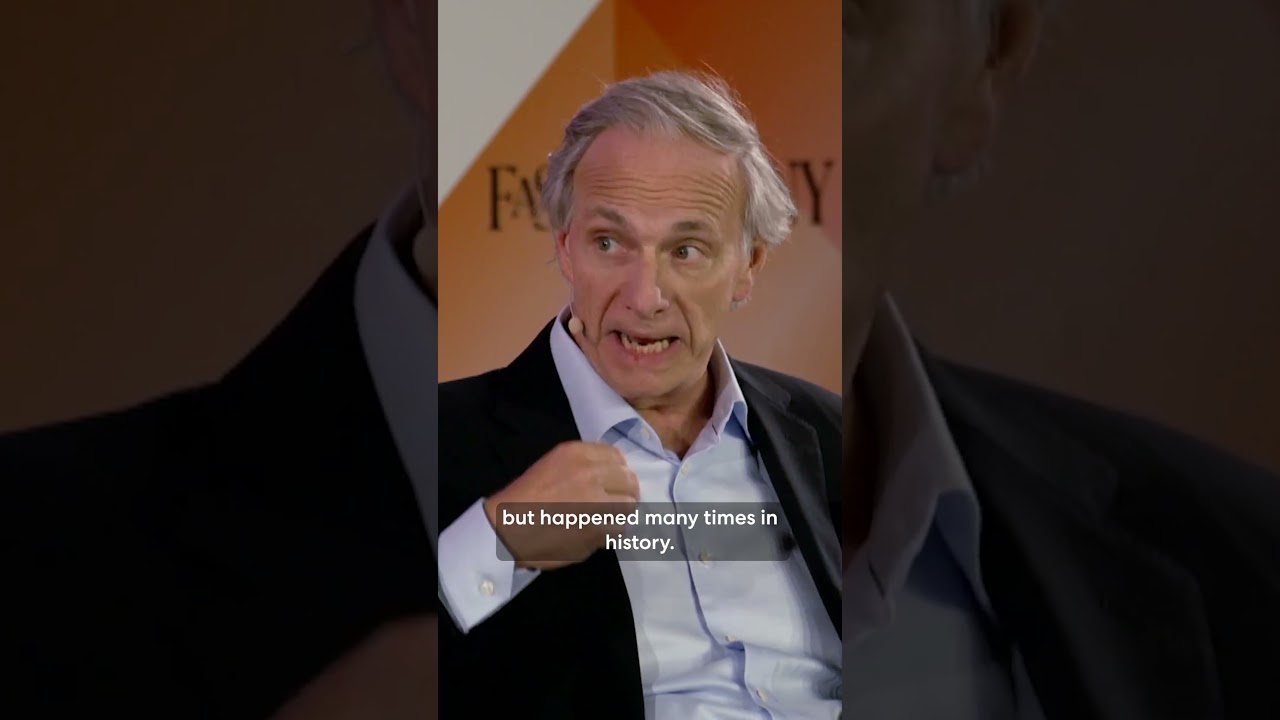

Ray Dalio Warns: Three Seismic Shifts Reshaping Our World
Ray Dalio, the billionaire founder of Bridgewater Associates, is known for his pragmatic insights into the global economy. He’s not just a money manager; he’s a student of history, meticulously analyzing patterns to understand the forces shaping our present and future. In recent analyses and interviews, Dalio has identified three major shifts that are dramatically altering the economic and political landscapes, demanding attention and adaptation.
1. The Debt Crisis: A Looming Storm
Dalio’s most consistent warning revolves around the overwhelming debt burden plaguing nations worldwide. He argues that historically, excessive debt creation, combined with central banks printing money to manage it, has always led to painful consequences. He points out that:
- Debt Levels are Unsustainable: Governments and corporations have accumulated unprecedented levels of debt, making them vulnerable to economic shocks and interest rate hikes.
- Central Banks are Trapped: Stuck between controlling inflation and preventing debt defaults, central banks face a difficult balancing act. Raising interest rates combats inflation but can trigger bankruptcies and recessions, while easing rates risks further fueling inflation.
- The Risk of “Debt Cycles”: Dalio believes we are approaching the end of a long-term debt cycle, characterized by a period of deleveraging and restructuring, potentially leading to economic hardship and volatility.
He emphasizes that this debt crisis isn’t just a potential threat; it’s already unfolding, manifested in rising inflation, economic slowdowns, and geopolitical tensions. Understanding this crisis and its potential implications is crucial for individuals, businesses, and governments alike.
2. Internal Conflict: Rising Polarization and Inequality
Beyond economic concerns, Dalio highlights the growing internal strife within nations, particularly in developed countries. He points to:
- Deepening Political Polarization: Societies are becoming increasingly divided along ideological lines, making it difficult to find common ground and implement effective policies.
- Widening Wealth and Opportunity Gaps: The gap between the rich and the poor continues to widen, leading to social unrest, resentment, and a breakdown of social cohesion.
- Erosion of Shared Values and Trust: Declining trust in institutions, media, and even each other is undermining the fabric of society, making it harder to address collective challenges.
Dalio believes these internal conflicts weaken a nation’s ability to compete on the global stage and create instability that can spill over into economic and political turmoil. He stresses the importance of bridging divides, fostering dialogue, and addressing the root causes of inequality to create more stable and prosperous societies.
3. The Rise of a New World Order: The Clash of Powers
The third significant shift identified by Dalio is the emergence of a new world order, characterized by the rise of China and its competition with the United States for global dominance. He emphasizes:
- Shifting Economic Power: China’s rapid economic growth has positioned it as a major economic player, challenging the long-held dominance of the US.
- Geopolitical Rivalry: The competition between the US and China extends beyond economics, encompassing technology, military strength, and geopolitical influence.
- Potential for Conflict: This rivalry could lead to increased tensions, trade wars, and even military conflict, with profound implications for the global economy and political stability.
Dalio argues that understanding the dynamics of this shifting world order is crucial for navigating the future. He advocates for peaceful competition, cooperation on shared challenges, and a recognition of the changing global landscape.
Preparing for the Future:
Ray Dalio’s warnings might sound daunting, but he also offers a path forward. He emphasizes the importance of:
- Understanding History: Studying historical cycles and patterns can provide valuable insights into the present and help us anticipate future events.
- Diversifying Investments: Spreading investments across different asset classes and geographies can help mitigate risk during periods of economic uncertainty.
- Embracing Learning and Adaptability: In a rapidly changing world, it’s crucial to be open to new ideas, adapt to evolving circumstances, and continuously learn and grow.
Ray Dalio’s analysis provides a valuable framework for understanding the complex forces shaping our world. By acknowledging these three seismic shifts and preparing for their potential consequences, individuals, businesses, and governments can navigate the challenges ahead and build a more resilient and prosperous future. His message is clear: The future is not predetermined; it is shaped by our understanding and response to the forces at play.
LEARN MORE ABOUT: Investing During Inflation
REVEALED: Best Investment During Inflation
HOW TO INVEST IN GOLD: Gold IRA Investing
HOW TO INVEST IN SILVER: Silver IRA Investing




When did you film this video? You look messy. Try to get tidy. Trim your hair. And always be happy. A happy smile is good on you.
Thanks boomers
Decades ago I read a book on macroeconomics. It said the way government controls the money supply is through the (central bank or fed) buying bonds to disperse money and selling bonds to vacuum it up. So there is nothing new. The bonds bought since 2008 have increasingly been new issues from the treasury which is fine because you want the money in circulation to match the value of the economy to balance deflation vs inflation. Lately in has become too much.
Tell the left to bring it. There's more of us than there is of them.
Patriots
We the People
And Global Warming