
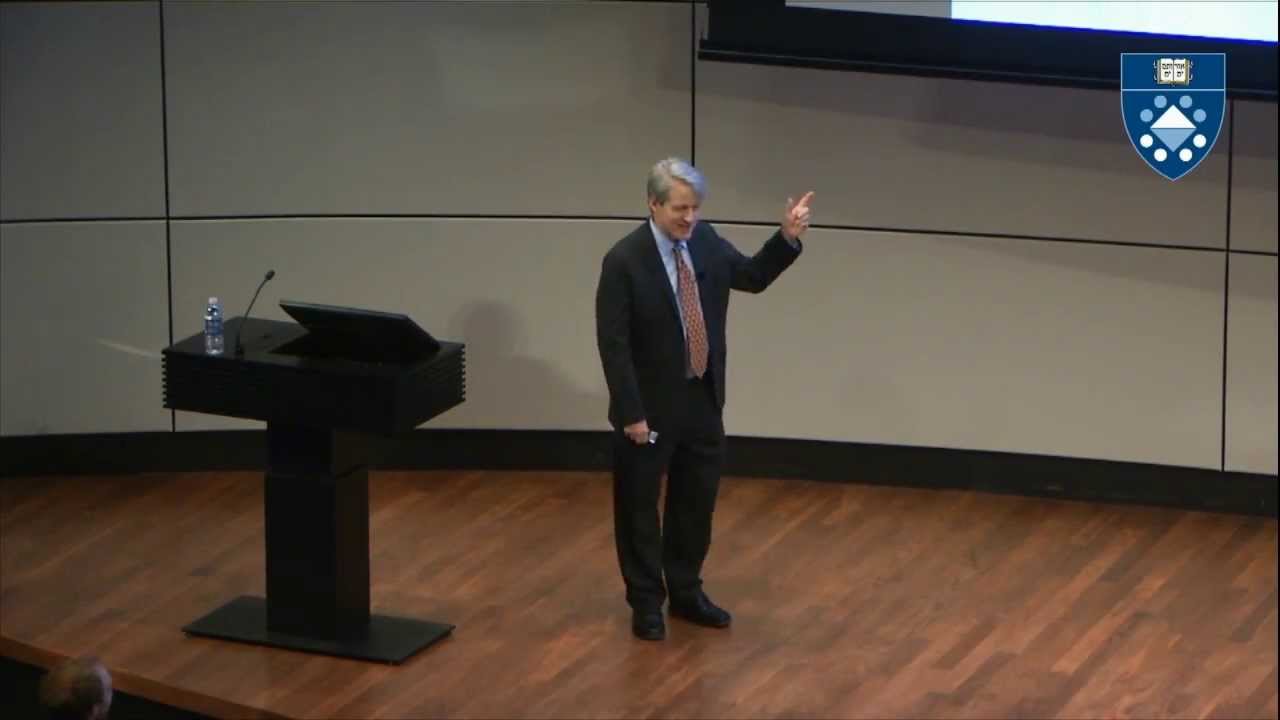

Robert Shiller: A Pioneer in Understanding Speculative Asset Prices
Introduction
Robert J. Shiller, an eminent economist and Nobel laureate, has made significant contributions to the understanding of speculative asset prices. His work delves into how market psychology and behavioral economics can influence the valuation of assets, resulting in prices that often deviate substantially from their intrinsic values. Shiller’s insights have transformed how both academics and practitioners view financial markets, particularly in the context of bubbles and crashes.
Early Life and Career
Born on March 29, 1946, in Detroit, Michigan, Shiller exhibited an early interest in economics and mathematics. He earned his Ph.D. in economics from MIT in 1972 and began his career as a professor. Over the years, he has held positions at various prestigious institutions, most notably at Yale University, where he has taught since 1982.
Shiller’s work has spanned various disciplines within economics, including finance, macroeconomics, and behavioral economics. He gained widespread recognition for his ability to blend theory with real-world observations, making his contributions particularly relevant to financial markets.
The Concept of Speculative Asset Prices
One of Shiller’s primary contributions to the field of economics is his investigation into speculative asset prices—the prices of assets driven by investor behavior and sentiment rather than fundamental values. In his landmark book, "Irrational Exuberance", published in 2000, Shiller explored the irrational factors that lead to asset bubbles, using the stock market and the real estate market as primary case studies. He argued that psychological factors, hype, and speculation can lead to significant price inflation, far beyond what economic fundamentals would justify.
This notion was especially poignant during the dot-com bubble of the late 1990s and the housing bubble of the mid-2000s. Shiller’s analysis of these phenomena helped provide a framework for understanding the dynamics that lead to unsustainable asset prices, offering insights that resonated deeply with both investors and policymakers.
Shiller’s Index and Behavioral Economics
In addition to his theoretical work, Shiller has been instrumental in developing practical tools that reflect the concepts of speculative asset prices. Notably, he co-created the Case-Shiller Home Price Indices, which track changes in residential property values across different regions in the United States. These indices have become a critical resource for understanding and analyzing the housing market and its cyclical fluctuations.
Shiller’s work in behavioral economics has also highlighted how cognitive biases influence financial decision-making. He discusses various psychological phenomena, such as overconfidence, herd behavior, and loss aversion, that can distort the perceived value of assets. By incorporating psychology into economic models, Shiller has provided a more comprehensive understanding of market dynamics.
Impact on Financial Markets and Policy
Shiller’s ideas have not only shaped academic discussions but have also influenced financial practices and policy decisions. His warnings leading up to both the 2000 and 2008 financial crises underscored the importance of being vigilant about speculative behavior. Policymakers and regulators have increasingly recognized the need for measures that address excessive speculation and protect against market instability.
In recognition of his groundbreaking work, Shiller was awarded the Nobel Prize in Economic Sciences in 2013, jointly with Eugene Fama and Lars Peter Hansen. The award acknowledged Shiller’s innovative research on how asset prices reflect market participants’ expectations, which can deviate from rational economic principles.
Conclusion
Robert Shiller’s insightful analysis of speculative asset prices has reshaped our understanding of financial markets. By integrating behavioral economics with traditional financial theories, Shiller has illuminated the complex interplay between human psychology and market dynamics. As financial markets continue to evolve and face new challenges, Shiller’s work remains a vital reference point for investors, academics, and policymakers alike, emphasizing the need to be cautious of the irrational exuberance that can drive asset prices to unsustainable heights.
In an era marked by rapid economic change and financial innovation, the lessons drawn from Shiller’s research serve as an essential guide for navigating the intricate world of asset valuation.
LEARN ABOUT: Investing During Inflation
REVEALED: Best Investment During Inflation
HOW TO INVEST IN GOLD: Gold IRA Investing
HOW TO INVEST IN SILVER: Silver IRA Investing




0 Comments