
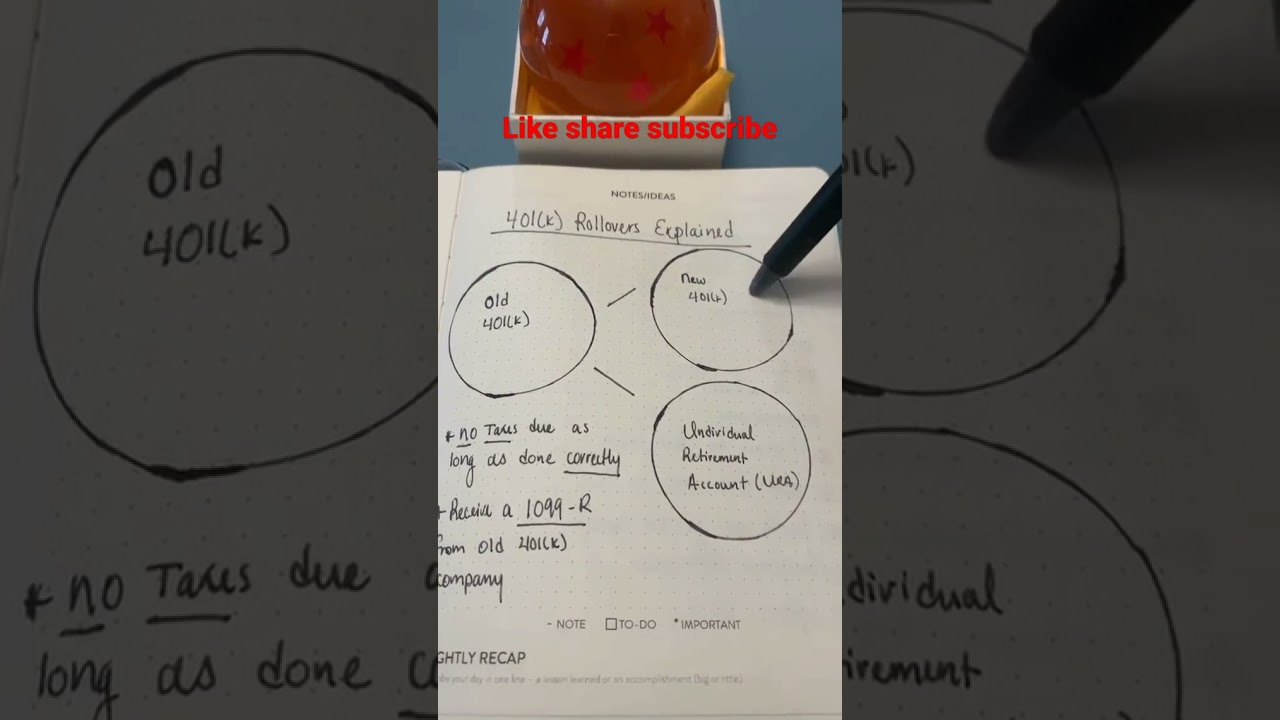

401(k) Rollover Explained: Secure Your Retirement Future
Securing your financial future is a long game, and your 401(k) is likely a key player in that strategy. But what happens when you change jobs, retire, or simply want more control over your investments? That’s where a 401(k) rollover comes in.
Understanding the ins and outs of 401(k) rollovers is crucial for maximizing your retirement savings and avoiding costly mistakes. In this article, we’ll break down what a 401(k) rollover is, the different types available, and the factors you should consider before making a move.
What is a 401(k) Rollover?
Simply put, a 401(k) rollover involves moving funds from your employer-sponsored 401(k) plan to another retirement account. This allows you to continue enjoying the tax-deferred benefits of your retirement savings while potentially gaining more control over your investments.
Think of it as transferring your retirement savings from one “bucket” to another without triggering taxes or penalties (provided you follow the correct procedures).
Why Consider a 401(k) Rollover?
There are several compelling reasons to consider a 401(k) rollover:
- Job Change: When you leave a job, you typically have a few options for your 401(k). Rolling it over prevents you from losing track of your savings or being limited to your former employer’s investment choices.
- Investment Flexibility: Rollovers often provide access to a wider range of investment options. You can choose investments that align with your risk tolerance and financial goals, potentially leading to better returns.
- Lower Fees: Some 401(k) plans have high administrative fees. Rolling over to an IRA with lower fees can save you money over the long term.
- Estate Planning: Rolling over to an IRA may offer more flexibility for estate planning purposes.
- Consolidation: Rolling over multiple retirement accounts into one can simplify your finances and make it easier to manage your investments.
Types of 401(k) Rollovers:
There are two main types of 401(k) rollovers:
- Direct Rollover: This is the most common and often preferred method. Your 401(k) provider directly transfers the funds to your new retirement account (either another 401(k) or an IRA). You never physically receive the money, which eliminates the risk of tax implications.
- Indirect Rollover: In this scenario, you receive a check from your 401(k) provider. You then have 60 days to deposit the funds into a new retirement account. Important: The 401(k) provider is required to withhold 20% for federal income taxes. You’ll need to make up that 20% when you deposit the funds to avoid penalties. Failure to deposit the full amount within 60 days will result in the withheld 20% being considered a taxable distribution, subject to income tax and potentially a 10% penalty if you’re under age 59 ½.
Where Can You Roll Over Your 401(k)?
You have a few options for where to roll over your 401(k):
- Another 401(k) Plan: If your new employer offers a 401(k) plan, you can roll your funds into that plan. This is often a good option if you like the investment choices and fees offered by the new plan.
- Traditional IRA: A Traditional IRA offers tax-deferred growth and allows you to contribute pre-tax dollars (or deductible after-tax dollars). You’ll pay taxes on withdrawals in retirement.
- Roth IRA: A Roth IRA allows you to contribute after-tax dollars, but your withdrawals in retirement are tax-free. This can be a particularly attractive option if you anticipate being in a higher tax bracket in retirement.
Factors to Consider Before Rolling Over:
Before initiating a 401(k) rollover, consider the following:
- Fees: Compare the fees associated with your current 401(k) plan and the potential receiving account.
- Investment Options: Evaluate the investment choices offered by both plans to ensure they align with your financial goals.
- Withdrawal Rules: Understand the withdrawal rules and penalties associated with each type of account.
- Creditor Protection: Some retirement accounts offer greater protection from creditors in case of bankruptcy or lawsuits.
- Tax Implications: Consult with a financial advisor to understand the tax implications of your specific situation. Rolling over from a Traditional 401(k) to a Roth IRA will trigger taxes on the converted amount.
- Loans: If you have an outstanding loan against your 401(k), you may need to repay it before you can roll over your funds.
- Company Stock: Carefully consider the tax implications of rolling over company stock. You might be able to utilize the Net Unrealized Appreciation (NUA) rule to your advantage.
Steps to Initiate a 401(k) Rollover:
- Research Your Options: Compare different retirement accounts and choose the one that best suits your needs.
- Contact Your 401(k) Provider: Request the necessary paperwork and instructions for initiating a rollover.
- Open a New Account: Open a new retirement account with the financial institution of your choice.
- Complete the Paperwork: Fill out the required forms and submit them to your 401(k) provider.
- Monitor the Transfer: Keep an eye on the transfer process to ensure your funds are moved correctly.
- Consult a Professional: Consider seeking guidance from a financial advisor or tax professional to ensure you’re making the right decision.
Conclusion:
A 401(k) rollover can be a powerful tool for managing and growing your retirement savings. By understanding the different types of rollovers, the factors to consider, and the steps involved, you can make informed decisions that will help you secure your financial future. Don’t hesitate to seek professional advice to navigate the complexities and ensure you’re on the right track towards a comfortable retirement.
finance #financialfreedom
LEARN MORE ABOUT: IRA Accounts
TRANSFER IRA TO GOLD: Gold IRA Account
TRANSFER IRA TO SILVER: Silver IRA Account
REVEALED: Best Gold Backed IRA




Do you "buy" at the current stock price of the new 401K investment plan when you rollover?