
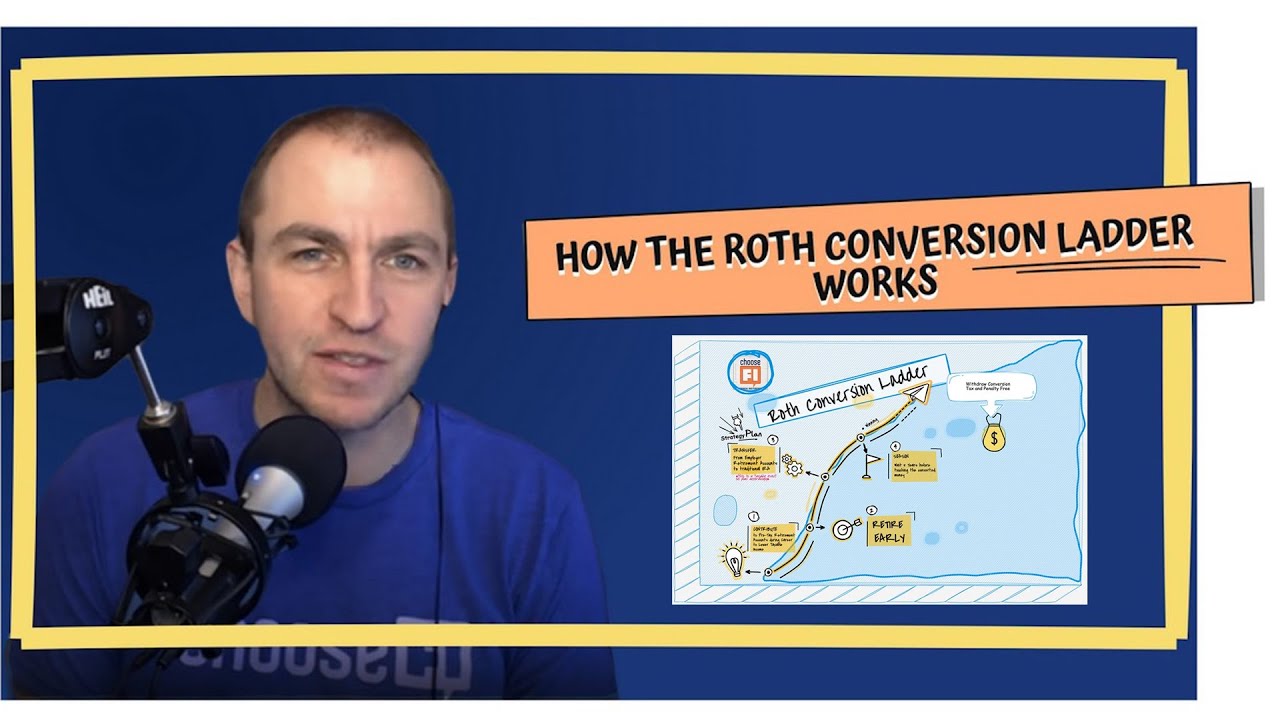

Understanding the Roth IRA Conversion Ladder: A Strategic Approach to Tax-Free Retirement Income
As individuals approach retirement, one of the critical elements of financial planning is determining the right strategy for drawing down retirement savings while minimizing taxes. One innovative technique that has gained traction among savvy savers is the Roth IRA conversion ladder. This approach allows retirees to enjoy tax-free income while effectively managing their tax liabilities in retirement.
What is a Roth IRA?
A Roth Individual retirement account (IRA) is a type of retirement savings account that allows individuals to contribute after-tax dollars. The principal benefits of a Roth IRA are that qualified withdrawals in retirement are tax-free, and there are no required minimum distributions (RMDs) during the account holder’s lifetime. This can provide significant flexibility for individuals in managing their retirement income.
What is a Roth IRA Conversion?
A Roth IRA conversion involves transferring funds from a traditional IRA or other qualified retirement accounts into a Roth IRA. When you convert to a Roth IRA, you must pay taxes on the pre-tax contributions and earnings in the year of the conversion. However, once the funds are in the Roth IRA, they grow tax-free, and qualified withdrawals are also tax-free.
What is a Roth IRA Conversion Ladder?
A Roth IRA conversion ladder is a systematic strategy for converting traditional IRA or 401(k) funds to a Roth IRA over a series of years to manage and minimize taxes effectively. This method is particularly beneficial for ensuring a consistent stream of tax-free income during retirement.
How It Works
-
Initial Funding: The process begins during your working years or early retirement, where you convert a portion of your traditional IRA into a Roth IRA.
-
Staggered Conversions: Instead of converting a large sum at once, you stagger conversions over several years. This allows you to stay within a certain tax bracket and avoid a large tax bill.
-
Five-Year Rule: It’s important to note that Roth IRA conversions are subject to a five-year waiting period before you can withdraw the converted amounts tax-free. Therefore, if you convert funds this year, you won’t have tax-free access to that money until five years later.
-
Withdrawal Strategy: In retirement, rather than withdrawing from your taxable accounts, you can tap into your Roth IRA contributions and conversions after the five-year period. This creates a ladder of conversions where different "rungs" become available for tax-free withdrawals each year.
- Continual Conversion: As you proceed through retirement, you can continue to convert additional funds from your traditional retirement accounts to the Roth IRA. The goal is to have a steady stream of tax-free income while minimizing your overall tax burden.
Example of a Roth IRA Conversion Ladder
- Year 1: Age 50. Convert $20,000 from your traditional IRA to a Roth IRA. You pay taxes on the conversion but establish a foundation for tax-free income starting five years later.
- Year 2: Age 51. Convert another $20,000 to your Roth IRA, again paying taxes on this amount.
- Year 3: Age 52. Repeat the process with another $20,000.
- Year 4: Age 53. Convert $25,000, increasing the amount as your income allows.
- Year 5: Age 54. You can begin withdrawing the first converted amount of $20,000 tax-free, as it has surpassed the five-year waiting period.
By continuing this pattern each year, you create a series of conversion “rungs” that will allow you to make systematic tax-free withdrawals in retirement, thus providing greater financial flexibility.
Benefits of a Roth IRA Conversion Ladder
-
Tax-Free Withdrawals: Once the funds have met the five-year rule, you can withdraw them tax-free, which is a significant advantage over traditional retirement accounts.
-
Tax Management: This strategy allows retirees to manage their tax liability by controlling the amount converted each year and potentially keeping themselves in a lower tax bracket.
-
Estate Planning Advantages: Roth IRAs can be passed on to heirs without tax consequences, providing a tax-efficient estate planning vehicle.
- Flexibility in Retirement: With no RMDs forcing withdrawals, retirees have the flexibility to leave their Roth IRAs untouched to continue growing tax-free.
Conclusion
A Roth IRA conversion ladder is a powerful strategy for managing retirement income and optimizing tax efficiency. By staggering conversions and planning withdrawal strategies, individuals can enjoy tax-free retirement income while minimizing their tax obligations. However, as with any financial strategy, it is advisable to consult with a financial advisor or tax professional to tailor a plan that aligns with individual financial goals, risk tolerance, and retirement timelines. With proper planning and execution, a Roth IRA conversion ladder can be a valuable tool for achieving financial security in retirement.
LEARN MORE ABOUT: IRA Accounts
TRANSFER IRA TO GOLD: Gold IRA Account
TRANSFER IRA TO SILVER: Silver IRA Account
REVEALED: Best Gold Backed IRA




A VERY important point to remember is that after the 5 year waiting period ONLY the initial contribution amount is available tax AND penalty free. Any gains are penalty free but NOT tax free until you reach 59.5. For example, with a $40k conversion to a Roth IRA that grows to $60k after 5 years, on the sixth year you can withdraw your original $40k contribution tax and penalty free. The remaining $20k in gains is penalty free but you still have to pay taxes on it until you reach 59.5.
When should you withdraw the first 40K from the 401K? Does it have to be after you quit your job and in a new year? For example you were making lots of money in the year and you quit at the end of the year and then withdraw on the first day of the next year. So that year will be a low tax because you had no income except the 40k.
Stupid question: What do you live off of when you initially retire early? This strategy requires taking your income to zero to be at the lower tax rate to even start the ladder. I can't really do this in my last years of working otherwise I'd be taxed in higher brackets.
It seems to me that one should open a separate Roth Ira account for these conversions so they are not comingled with Roth contributiions. This is due to trying to manage the various 5 year rules and money withdrawl rules would be messy and potentially restrictive if all Roth investments are all together in one account.
I'm 58, in a year and a half I will be 59.5. Do I still need to wait 5 years to access that money or will it be available once I'm 59.5??
Once we convert that money into a Roth IRA , say $50k, that that money in the Roth IRA be invested – say vtsax or does it have to stay in cash ?
Thank you Thank you thank you!!
I had quick questions how about the 10% early withdrawal penalty does that apply when doing for example a 403b into ROTH IRA conversion?
I like this idea and I'm planning on using it, but I'm still not entirely convinced it's better than just throwing money in a individual taxable account and pulling out long term cap gains tax free (assuming your income remains below a certain amount). There's the opportunity cost of losing 5 years of gains on that money you have on the sidelines that you're using to pay for that first 5 year period where you can't touch the contributions). Not to mention to even save up 5 years of income you're either slowly adding to a savings account (so opportunity cost of not having it invested), or you're investing it in the stock market and then cashing it out prior to the 5 years you'll need it (which means you paid taxes on it, which you wouldn't have had to do if it was all just individual taxable account). Also, even though you can touch the contributions in 5 years, you still can't touch the gains until retirement, so that means you've basically lost out on those gains for another 20-40 years (depending on how early you retire) unless you wanna pay that fee. Whereas, with an individual taxable, I can keep my money invested up until I need to use it and I can pull all of it out tax free as long as I remain in the lowest long term cap gains tax bracket. Obvious downside is with individual taxable you're paying taxes up front and if you have a 401k match at work you'd be missing out on that. So that's why I still max my 401k (plus the fact that rules around accounts change a lot, so I like to have a diversity of account types. Also retirement accounts tend to be harder for people to take money from if you get sued or if you have a medical emergency that lands you heavily in debt), but I just wish there were better calculators out there that let you take all of this into account so I could really do a side-by-side comparison.
Is there a way to withdraw from a roth ira before the age limit?
Your explanation is excellent.
Great topic and love the shorter video
Is there a 10% penalty to do this before 59.5?
I assume this is also true of the 403b?
Madfientist baby!!
Love these bite sized snippets.
More please.