
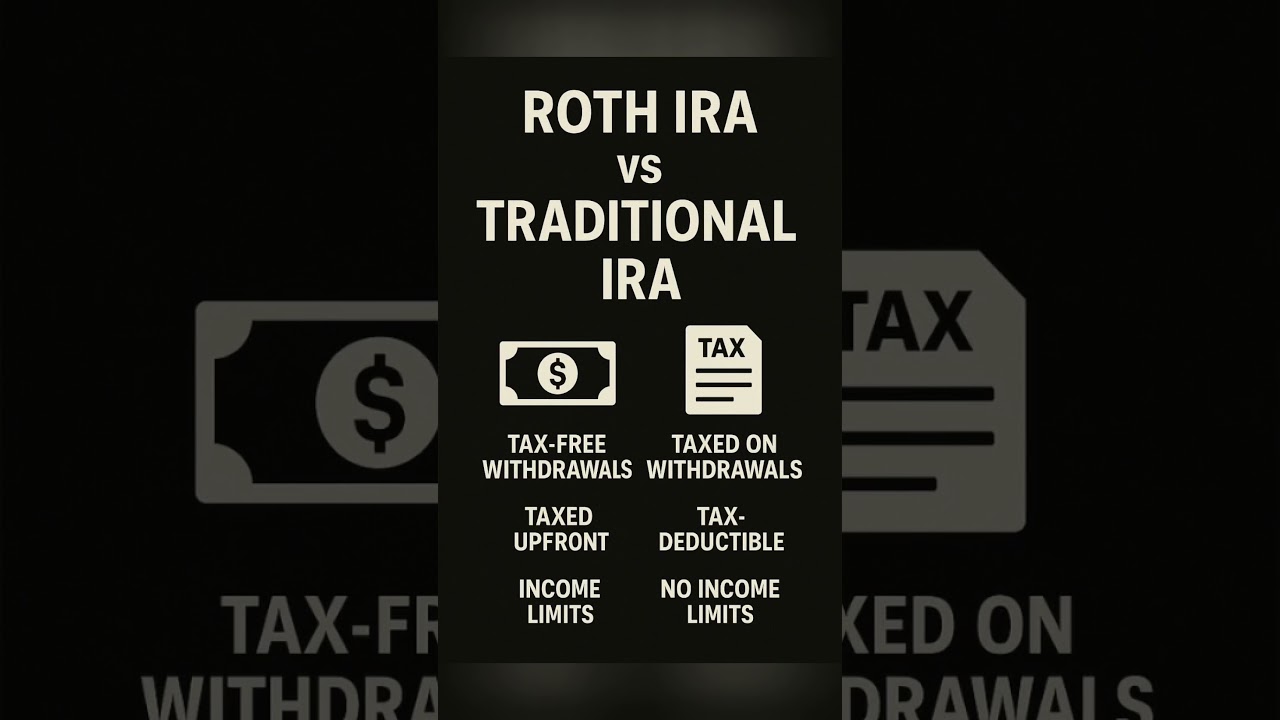

Roth vs. Traditional IRA: Which Retirement Vehicle is Right for You?
Saving for retirement is crucial for financial security, and Individual Retirement Accounts (IRAs) are powerful tools to help you achieve that goal. But navigating the world of IRAs can feel like deciphering a foreign language, especially when faced with the decision between a Roth IRA and a Traditional IRA.
Both offer significant advantages, but understanding their nuances is key to choosing the option that best aligns with your financial situation and goals. Let’s break down the key differences:
Traditional IRA: The Tax-Deferred Option
-
How it Works: Contributions to a Traditional IRA may be tax-deductible in the year you make them, potentially lowering your current tax liability. Your earnings and growth within the account are tax-deferred, meaning you don’t pay taxes until you withdraw the money in retirement.
-
Tax Implications: You’ll pay income tax on your withdrawals in retirement. If you took tax deductions on your contributions, you’re essentially deferring taxes to a later date.
-
Best Suited For:
- Individuals who anticipate being in a lower tax bracket in retirement than they are currently.
- Those seeking immediate tax relief in the present.
- Individuals who believe their income will be significantly lower in retirement.
- Example: You’re currently in a high tax bracket and contribute to a Traditional IRA, claiming a deduction on your taxes. You benefit from the immediate tax break, and your investments grow tax-deferred. In retirement, when your income (and tax bracket) is lower, you’ll pay taxes on your withdrawals.
Roth IRA: The Tax-Free Option
-
How it Works: Contributions to a Roth IRA are made with after-tax dollars. This means you don’t get a tax deduction in the year you contribute. However, your earnings grow tax-free, and withdrawals in retirement are also tax-free, as long as certain conditions are met (typically being over 59 1/2 and the account being open for at least five years).
-
Tax Implications: You pay taxes upfront, but you never pay taxes on the growth or withdrawals in retirement.
-
Best Suited For:
- Individuals who anticipate being in a higher tax bracket in retirement than they are currently.
- Those seeking tax-free income in retirement.
- Younger individuals with a long investment horizon, allowing for significant tax-free growth.
- Individuals who believe their income will be higher in retirement.
- Example: You’re currently in a lower tax bracket and contribute to a Roth IRA. You don’t get a tax deduction now, but your investments grow tax-free, and you can withdraw them tax-free in retirement, even if you’re in a higher tax bracket.
Key Differences Summarized:
| Feature | Traditional IRA | Roth IRA |
|---|---|---|
| Contribution Taxes | Potentially Tax-Deductible | After-Tax |
| Growth Taxes | Tax-Deferred | Tax-Free |
| Withdrawal Taxes | Taxed as Ordinary Income | Tax-Free (Qualified Withdrawals) |
| Income Limits | No Income Limits for Contribution | Income Limits Apply |
| Early Withdrawals | Subject to Penalty (Generally) | Principal can be withdrawn tax-free and penalty-free |
Real Estate and IRAs:
While you can’t directly buy real estate inside an IRA (with a few complex exceptions like using a self-directed IRA, which comes with its own set of rules and risks), understanding your IRA choice can still impact your real estate goals.
-
Roth IRA and Future Real Estate: Tax-free withdrawals from a Roth IRA can provide funds for a down payment on a property in retirement.
- Traditional IRA and Real Estate Taxes: The tax deductions from a Traditional IRA can free up capital that could be used for initial investment in real estate
Things to Consider Before Choosing:
- Current and Projected Tax Bracket: Are you in a high or low tax bracket now? Where do you think you’ll be in retirement? This is the most crucial factor.
- Age and Time Horizon: Younger individuals with longer time horizons may benefit more from the tax-free growth of a Roth IRA.
- Income Limits: Roth IRAs have income limits for contributions. If your income exceeds these limits, a Traditional IRA might be your only option.
- Withdrawal Needs: Do you anticipate needing access to your contributions before retirement? Roth IRAs offer more flexibility for withdrawing contributions without penalty.
- Future Tax Law Changes: Tax laws can change, and the long-term impact of these changes is difficult to predict.
Beyond the Basics:
-
Contribution Limits: The IRS sets annual contribution limits for both Traditional and Roth IRAs. Make sure to stay within these limits to avoid penalties. For 2023, the contribution limit is $6,500, with an additional $1,000 "catch-up" contribution for those aged 50 and over.
- Consult a Professional: This information is for educational purposes only and should not be considered financial advice. Consult with a qualified financial advisor to determine the best IRA strategy for your specific situation.
Making the Decision:
The choice between a Roth IRA and a Traditional IRA is a personal one, based on your individual financial situation and goals. By understanding the key differences and carefully considering your own circumstances, you can make an informed decision that will help you build a secure and comfortable retirement. Don’t delay, start saving today!
LEARN MORE ABOUT: IRA Accounts
TRANSFER IRA TO GOLD: Gold IRA Account
TRANSFER IRA TO SILVER: Silver IRA Account
REVEALED: Best Gold Backed IRA




0 Comments