
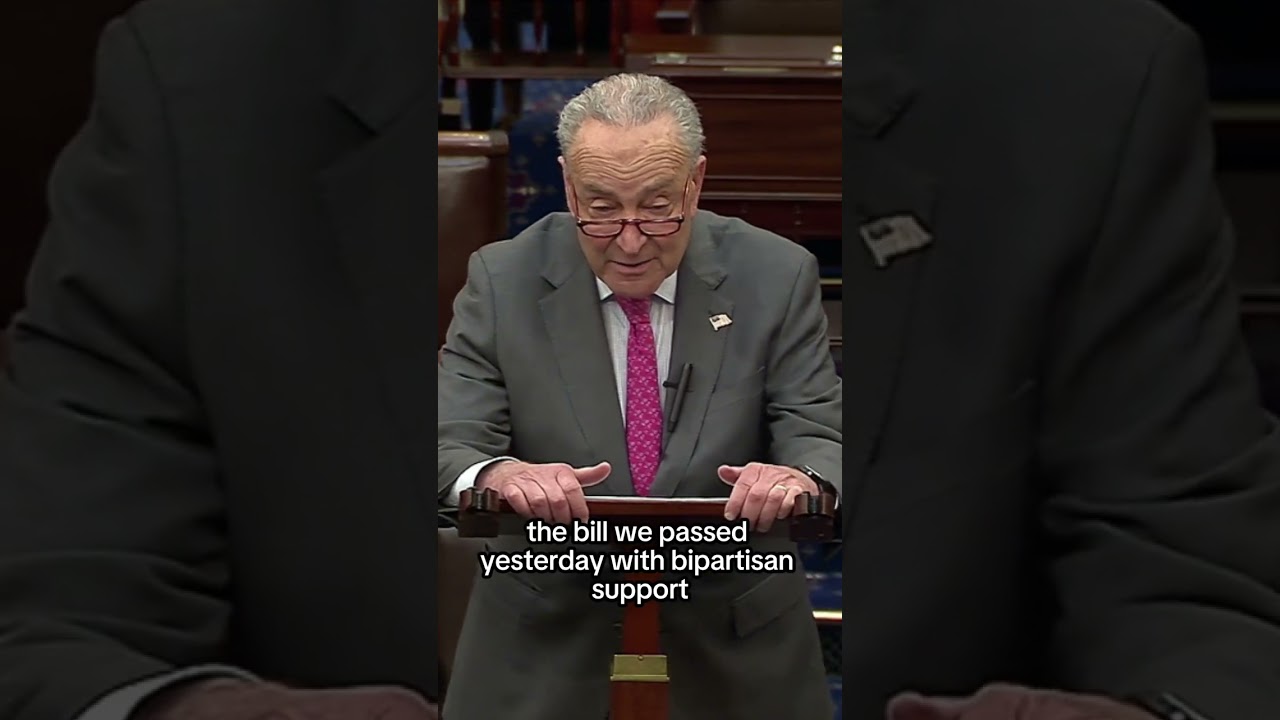

Schumer Slams Trump’s Global Tariff Talk as “Economic Self-Sabotage”
Senate Majority Leader Chuck Schumer didn’t mince words this week, blasting former President Donald Trump’s recent musings on reciprocal global tariffs as “reckless” and a recipe for “economic self-sabotage.” Speaking to reporters, Schumer warned that implementing such a policy would trigger a global trade war, ultimately hurting American businesses, consumers, and the overall economy.
Trump, during a recent interview, floated the idea of imposing a “reciprocal tariff” on all goods entering the United States, matching the import duties charged by other countries. This essentially means if Country X charges a 20% tariff on US exports, the US would slap a 20% tariff on goods coming from Country X.
Schumer argues that this seemingly straightforward concept is deeply flawed in practice. He highlighted the complex web of international trade agreements and the potential for retaliatory measures that would ripple through the global economy.
“This isn’t just a bad idea; it’s an actively dangerous one,” Schumer stated. “Trump’s reciprocal tariffs would ignite a trade war that would decimate American exports, drive up prices for consumers, and leave countless businesses scrambling to survive.”
He further argued that such tariffs would disproportionately harm American farmers and manufacturers who rely on access to global markets to sell their goods. These businesses, Schumer pointed out, are already grappling with inflation and supply chain challenges. Adding a layer of retaliatory tariffs would only exacerbate their struggles.
“Our farmers are already facing headwinds,” Schumer said. “Closing off access to international markets would be a devastating blow to their livelihoods and to the rural communities that depend on them.”
Schumer’s criticism echoes concerns raised by economists and trade experts across the political spectrum. Many argue that a reciprocal tariff policy would lead to:
- Higher Prices for Consumers: Tariffs are ultimately paid by consumers through higher prices for imported goods.
- Reduced Exports: Retaliatory tariffs from other countries would make American goods more expensive and less competitive in global markets, leading to decreased exports and job losses.
- Disrupted Supply Chains: Global supply chains would be severely disrupted as businesses struggle to adjust to new tariffs and retaliatory measures.
- Increased Uncertainty: The unpredictable nature of a trade war would create significant uncertainty for businesses, discouraging investment and innovation.
While Schumer acknowledged the need to address unfair trade practices by other countries, he stressed that reciprocal tariffs are not the solution. Instead, he advocated for a more targeted and strategic approach, working with allies to pressure countries to comply with international trade rules and address specific grievances.
“We need to be smart and strategic about how we approach trade,” Schumer concluded. “Trump’s reckless tariff talk is a dangerous distraction from the real work of building a strong and competitive American economy.”
The debate over Trump’s proposed reciprocal tariffs highlights the ongoing tension between protectionist and free trade policies. As the global economy continues to navigate complex geopolitical challenges, the implications of these competing ideologies will undoubtedly remain a key focus of political and economic discourse.
LEARN MORE ABOUT: Investing During Inflation
REVEALED: Best Investment During Inflation
HOW TO INVEST IN GOLD: Gold IRA Investing
HOW TO INVEST IN SILVER: Silver IRA Investing




Haha dumb as*….the numbers are in Trumps favor 3 months after this video