

Self-Directed IRA FAQs: Contribution Limits vs. Unlimited Profits Explained!
Thinking about taking control of your retirement savings and investing beyond traditional stocks and bonds? A Self-Directed IRA (SDIRA) might be the answer. These specialized retirement accounts offer the flexibility to invest in alternative assets like real estate, precious metals, private equity, and more. However, understanding the nuances of SDIRAs is crucial, especially when it comes to contribution limits and the potential for unlimited profits. Let’s dive into some frequently asked questions:
What exactly is a Self-Directed IRA?
Unlike a traditional IRA held at a brokerage firm that typically limits your investment options, a Self-Directed IRA allows you to hold a wider range of assets. It’s still a retirement account governed by the same IRS rules as traditional and Roth IRAs, but you have more control over where your money goes.
What types of investments can I hold in a Self-Directed IRA?
This is where the excitement lies! While stocks and bonds are still permissible, SDIRAs open the door to alternative investments, including:
- Real Estate: Single-family homes, commercial properties, land, etc.
- Precious Metals: Gold, silver, platinum, and palladium.
- Private Equity: Investing in privately held companies.
- Cryptocurrencies: Although caution is advised due to volatility.
- Tax Liens: Purchasing tax liens on properties.
- Promissory Notes: Lending money to others.
Important Note: While the possibilities are vast, certain investments are prohibited, such as life insurance contracts and collectibles (e.g., antiques, stamps, wine). You also can’t personally benefit from investments held within the SDIRA (more on that later).
What are the contribution limits for a Self-Directed IRA?
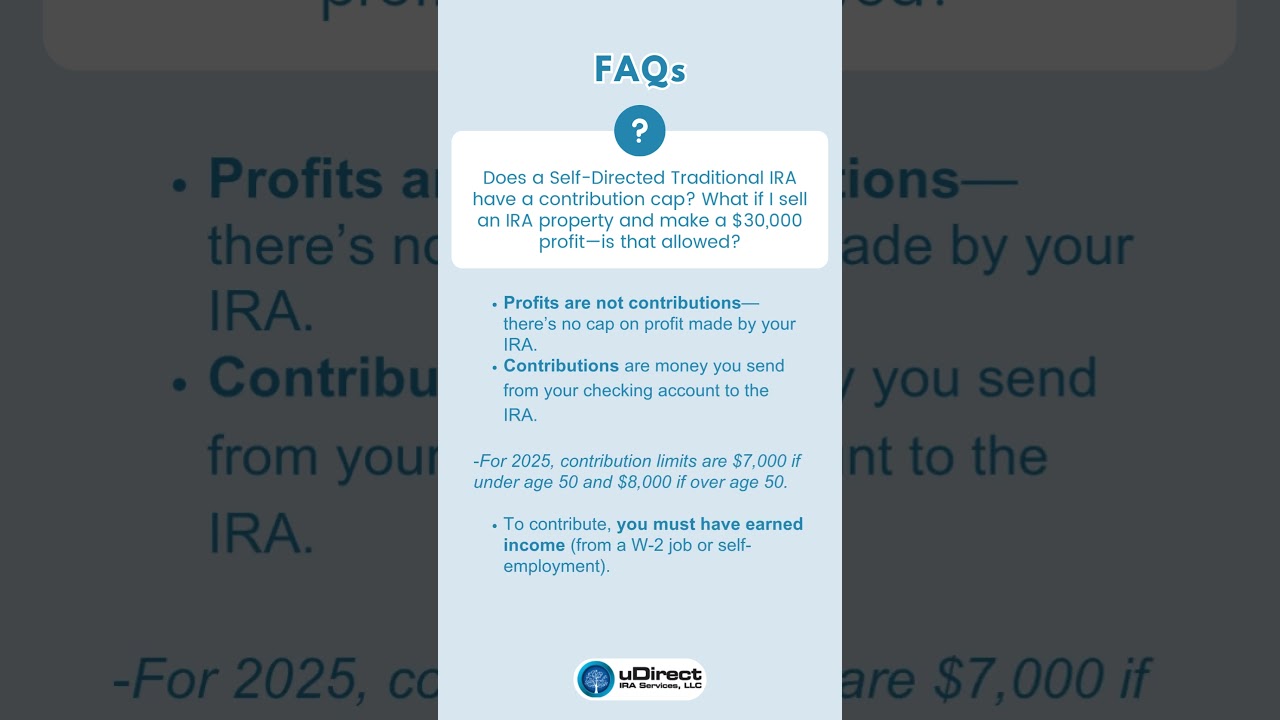
Just like traditional and Roth IRAs, SDIRAs are subject to annual contribution limits set by the IRS. These limits are the maximum amount you can contribute each year, regardless of how high your potential profits might be.
For 2023, the contribution limits are:
- $6,500 for individuals under age 50.
- $7,500 for individuals age 50 and older (includes a $1,000 catch-up contribution).
These limits can change annually, so always refer to the IRS guidelines for the most up-to-date information.
Can I make unlimited profits with a Self-Directed IRA?
While contribution limits restrict the amount you can invest annually, there is no limit to the potential profits you can earn within the SDIRA. If your real estate investment appreciates significantly or your private equity stake pays off handsomely, those gains remain within the tax-advantaged environment of your IRA.
This is a key advantage of SDIRAs: your profits can compound tax-deferred (traditional IRA) or tax-free (Roth IRA) over time!
What are the rules regarding using assets held in my Self-Directed IRA?
This is crucial! You cannot personally benefit from any assets held within your SDIRA. This is strictly prohibited by the IRS. This means:
- Real Estate: You cannot live in, rent out to family members, or use personally.
- Precious Metals: You cannot use them as jewelry or for personal consumption.
- Loans: You cannot borrow from your own SDIRA.
Any violation of these rules could lead to the entire SDIRA being disqualified and taxed as a distribution.
How do I set up a Self-Directed IRA?
You’ll need to work with a custodian that specializes in Self-Directed IRAs. These custodians are equipped to handle the unique requirements of alternative investments. They’ll guide you through the account setup process and ensure compliance with IRS regulations. Research different custodians and compare their fees and services.
What are the risks associated with Self-Directed IRAs?
While the potential for higher returns is attractive, SDIRAs also come with risks:
- Complexity: Alternative investments can be more complex and require more due diligence.
- Liquidity: Some alternative assets, like real estate, may be less liquid than stocks or bonds.
- Valuation: Determining the fair market value of certain assets can be challenging.
- Fraud: Due to less regulation compared to traditional investments, SDIRAs can be targets for scams.
- Custodial Fees: SDIRA custodians typically charge higher fees than traditional brokerage firms.
Disclaimer: Always consult with a qualified financial advisor and tax professional before making any investment decisions, especially those involving Self-Directed IRAs. They can help you assess your risk tolerance, understand the tax implications, and ensure you’re making informed choices that align with your financial goals.
In Conclusion:
Self-Directed IRAs offer a powerful tool for diversifying your retirement portfolio and potentially achieving higher returns. While contribution limits apply, the potential for unlimited profits, coupled with the tax advantages of an IRA, makes them a compelling option for savvy investors. However, it’s crucial to understand the rules, conduct thorough due diligence, and seek professional advice to navigate the complexities and mitigate the risks involved. With careful planning and execution, a Self-Directed IRA could be the key to unlocking a more secure and prosperous retirement.
LEARN MORE ABOUT: IRA Accounts
TRANSFER IRA TO GOLD: Gold IRA Account
TRANSFER IRA TO SILVER: Silver IRA Account
REVEALED: Best Gold Backed IRA




0 Comments