

Are You Sleeping on a SEP IRA? A Simple retirement account for the Self-Employed
retirement planning is a vital part of securing your future, but navigating the maze of options can feel overwhelming. While 401(k)s and Roth IRAs often dominate the conversation, there’s a lesser-known but incredibly powerful tool specifically designed for the self-employed: the SEP IRA (Simplified Employee Pension plan).
If you’re a freelancer, small business owner, or independent contractor, and you haven’t heard of a SEP IRA, you might be missing out on a fantastic opportunity to significantly boost your retirement savings. Let’s break down what a SEP IRA is and why it could be the right choice for you.
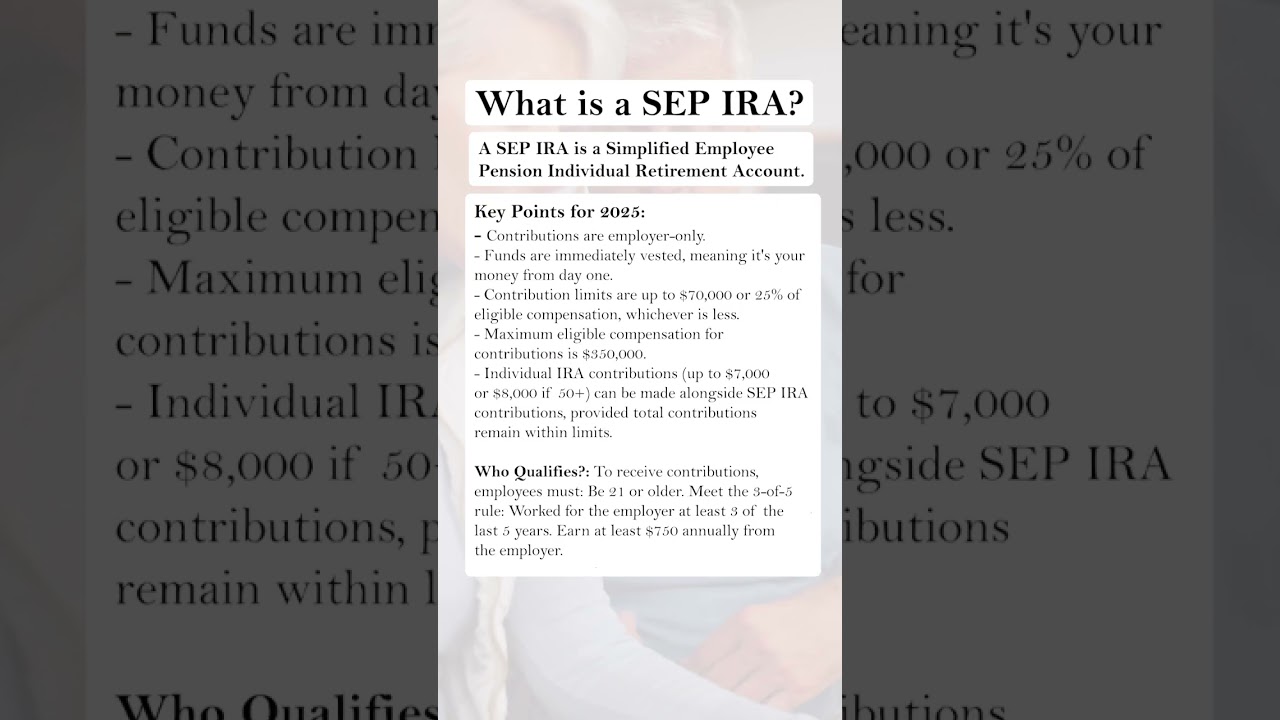
What is a SEP IRA?
A SEP IRA is a type of retirement account that allows self-employed individuals and small business owners to contribute pre-tax money to their retirement savings. Think of it as a simplified 401(k) specifically tailored for those who don’t have access to a traditional employer-sponsored plan.
Key Advantages of a SEP IRA:
- High Contribution Limits: This is where the SEP IRA really shines. You can contribute up to 20% of your net self-employment income, with a maximum contribution of $69,000 for 2024. This significantly surpasses the contribution limits of traditional or Roth IRAs.
- Tax Advantages: Contributions are tax-deductible, meaning they lower your taxable income for the year. This can lead to significant tax savings.
- Simple to Set Up and Maintain: Unlike some other retirement plans, SEP IRAs are relatively easy to establish and maintain. You can open an account at most brokerage firms or banks.
- Flexibility: You have complete control over your investments within the SEP IRA. You can choose from a variety of options, including stocks, bonds, mutual funds, and ETFs.
- No Mandatory Contributions: You’re not obligated to contribute every year. If your business has a tough year, you can skip contributions without penalty.
Who is a SEP IRA Right For?
A SEP IRA is particularly well-suited for:
- Freelancers: Writers, designers, consultants, and other independent contractors.
- Small Business Owners: Sole proprietors, partners, and S-corp owners with few or no employees.
- Those Seeking High Contribution Limits: If you have significant self-employment income and want to maximize your retirement savings, a SEP IRA is a great option.
Things to Consider:
- Employer Contribution Only: With a SEP IRA, you can only contribute as the employer. If you have employees, you’ll need to contribute the same percentage of their compensation as you do for yourself.
- Withdrawals are Taxable: While contributions are tax-deductible, withdrawals in retirement are taxed as ordinary income.
- Early Withdrawal Penalties: Like other retirement accounts, early withdrawals (before age 59 1/2) are typically subject to a 10% penalty, in addition to being taxed as income.
How to Get Started:
- Calculate Your Net Self-Employment Income: Determine your income after deducting business expenses.
- Open a SEP IRA Account: Choose a reputable brokerage firm or bank offering SEP IRAs.
- Contribute to Your Account: Contribute up to 20% of your net self-employment income, within the annual limit.
- Choose Your Investments: Select investments that align with your risk tolerance and long-term financial goals.
The Bottom Line:
A SEP IRA is a valuable tool for self-employed individuals looking to build a comfortable retirement. With its high contribution limits, tax advantages, and flexibility, it offers a compelling alternative to traditional retirement plans. If you’re self-employed and haven’t explored the benefits of a SEP IRA, now’s the time to investigate. Investing in your future is never a bad decision, and a SEP IRA might be just the boost your retirement savings need.
#retirementaccount #investing #SEPIra #selfemployed #retirementplanning #smallbusiness #financialplanning
LEARN MORE ABOUT: IRA Accounts
CONVERTING IRA TO GOLD: Gold IRA Account
CONVERTING IRA TO SILVER: Silver IRA Account
REVEALED: Best Gold Backed IRA




0 Comments