
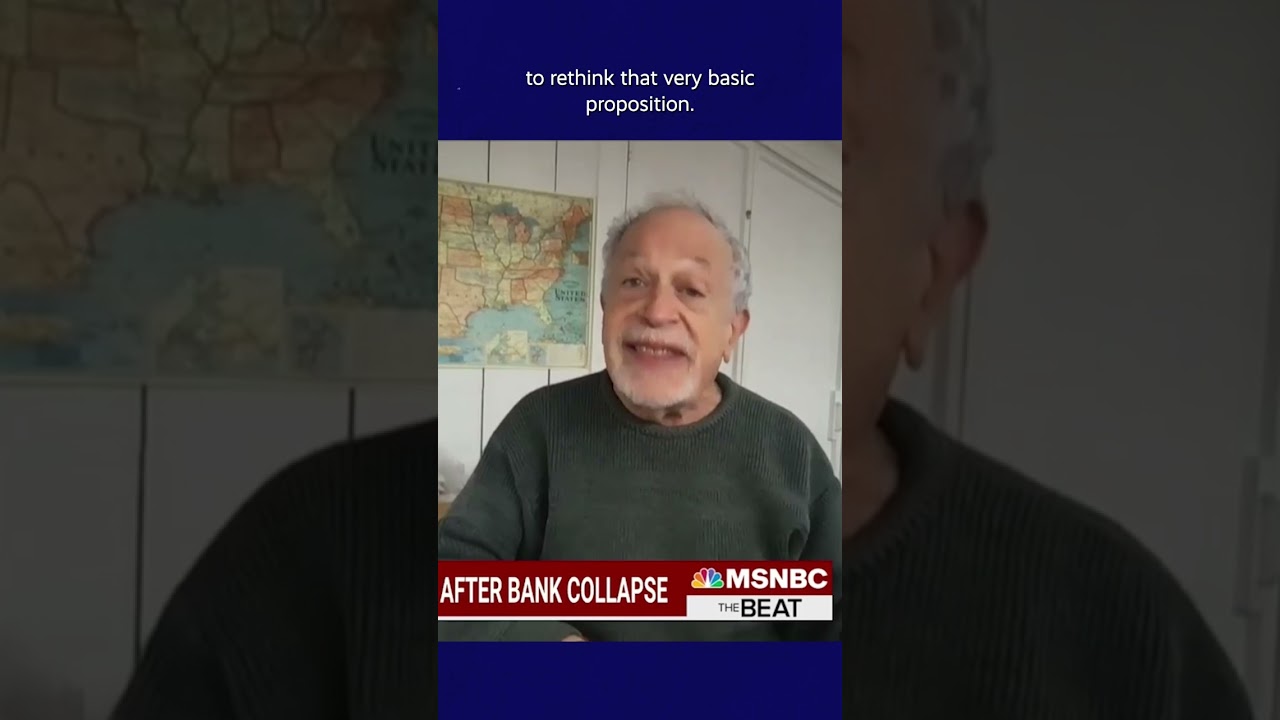

Should Banks Be Able to Gamble with Your Savings? The Risky Business of Modern Banking
The question of whether banks should be able to “gamble” with our savings cuts to the very heart of our trust in the financial system. While not literally throwing money at a roulette wheel, the complex financial instruments and investment strategies employed by banks often carry significant risks, raising concerns about the safety of the deposits we entrust to them.
On the one hand, banking is inherently about risk. Banks take in deposits and lend them out to individuals and businesses, hoping the loans will be repaid with interest. This process, known as fractional-reserve banking, is fundamental to economic growth. Without banks taking risks, businesses wouldn’t get funding, individuals couldn’t afford mortgages, and the economy would stagnate.
However, the scale and complexity of modern banking have amplified the potential for those risks to spiral out of control. Banks invest in complex derivatives, securitize mortgages into complex bonds, and engage in proprietary trading, betting on market movements with the bank’s own capital, including the funds derived from customer deposits. These activities, while potentially lucrative, are far removed from the traditional image of banks simply lending to local businesses.
The Argument for Letting Banks Take Calculated Risks:
Proponents of allowing banks to engage in these activities argue that:
- Economic Growth: High-risk investments can lead to higher returns, ultimately benefiting the economy by funding innovation and creating jobs.
- Global Competitiveness: Restricting banks’ ability to take risks could put them at a disadvantage compared to international competitors.
- Expertise and Oversight: Banks employ sophisticated professionals who understand and manage these risks, and regulatory bodies like the FDIC are in place to provide oversight.
- Deposit Insurance: Systems like FDIC insurance in the US protect depositors up to a certain amount, mitigating the impact of bank failures.
The Argument Against Unfettered Risk-Taking:
Critics argue that the potential downsides far outweigh the benefits:
- Moral Hazard: When banks know they are “too big to fail” and will be bailed out by taxpayers, they are incentivized to take on excessive risk, knowing the downsides will be socialized.
- Systemic Risk: A bank’s risky investments can trigger a domino effect, leading to a wider financial crisis and jeopardizing the entire economy. The 2008 financial crisis serves as a stark reminder of this.
- Opacity and Complexity: The complexity of these financial instruments makes it difficult for regulators and even bank management to fully understand the risks involved, leading to potential blind spots.
- Erosion of Trust: When depositors perceive their savings as being used for speculative ventures, it erodes trust in the financial system, leading to instability.
The Question of Regulation:
The key lies in finding a balance between fostering economic growth and protecting depositors. This requires robust regulation that:
- Limits Excessive Risk-Taking: Restricts banks from engaging in excessively risky activities, such as proprietary trading with depositors’ funds.
- Increases Transparency: Demands greater transparency about banks’ investments and risk exposures.
- Strengthens Capital Requirements: Requires banks to hold more capital to absorb potential losses, reducing the likelihood of needing government bailouts.
- Enforces Stricter Oversight: Provides regulatory bodies with the resources and authority to effectively monitor and supervise banks’ activities.
Conclusion:
The debate over whether banks should be able to “gamble” with our savings is complex and multifaceted. While some level of risk-taking is inherent in the banking system and necessary for economic growth, unchecked speculation can have devastating consequences.
The answer is not to eliminate risk altogether, but to ensure that it is carefully managed, transparently disclosed, and appropriately regulated. Finding the right balance between innovation and security is crucial for maintaining a stable and trustworthy financial system that serves the needs of both individuals and the economy as a whole. Ultimately, it’s about striking a responsible compromise that safeguards our savings while allowing banks to play their vital role in facilitating economic progress.
LEARN MORE ABOUT: Investing During Inflation
REVEALED: Best Investment During Inflation
HOW TO INVEST IN GOLD: Gold IRA Investing
HOW TO INVEST IN SILVER: Silver IRA Investing




Credit Unions don’t do this shit. You are the only shareholders.
But congress wouldn’t get any kickbacks
SOUNDS CORRECT
Reinstate the Glass-Stegall
Basta Thank you Prof Reich
Wow great comment I have been saying the same thing for years.
No!!
Clinton signed the repeal of Glas-Stegall in 1998. He made a huge mistake in supporting that GOP legislation. Passed in 1932, under G-S Wall Street was forbidden to enter the mortgage market after they destroyed the world's economy in the Great Depression.
Repealing G-S led directly to the world-wide financial meltdown in late 2008 ten years later.
If they get bailouts, they shouldn't make record profits!!
BANKS NEED MORE REGULATION NOT LESS OVERSITE
Hell No, the banks screw up – invest in the wrong products and then DC Republican politicians are obligated to send bailouts money. Back in the early 1970’s Hospitals were obligated to show profits and a little time passed and Health Care went to hell. We are NOT the best country for Healthcare, it’s Denmark, Norway, Switzerland, Sweden are the top 4. So No Banksters can make good investments and not crazy investments and live with their ill-fated decisions all by themselves.
Regulate the daytraders. Also define each type of bank too. Student loan bank. Credit card bank etc…. stop reverse mortgage loan scam too. Thanks
1930s everything collapsed with the great depression
That is a big NO
1. Return to Glass-Steigal
2. Cap Credit Card interest at 10%
50 yrs of no major bank failures and runs on banks—. Until under Clinton admin the Glass Stegal Act was voided
Communist
@RBReich Has there been a law that repealed the Glass-Steagall Act? Because if not, then we Americans, as account holders, should organize a class-action suit against all commercial banks and compel them to comply with the same federal law – the supreme law of the land.
Restore Glass-Seagall. Americans would be better off.
This current banking failure was caused by the democrats loosening restrictions
Mention that
what he saying is historical truth and Americans have forgotten or never cared
If you haven't already, move your money to a local credit union. I love my credit union. For twenty five years I've had my mortgage, car loans when I have them, and all my banking there. Never the slightest problem.
Thank you, voice of reason.
Didn't Clinton turn the banks loose?
I seem to remember his repealing the exact legislation he's talking about….
Bubba sucked.
His name should be Robert 3rd reich! That’s what Germany and Russia did by following their international socialist agenda (the nazis were national socialists while Russian were international socialists)
No.
Two words … Postal Banking
Let the dirt bags go burn their shareholders money if they want, but give people a public option for safe stable banking, with near universal access and availability.
In the early 1980s, conservatives tried to privatize Social Security. Tip O'Neal and the Democrats in congress blocked it.
If Social Security had been privatized, almost everyone over 50 would be a millionaire by now. It would have alleviated the wealth gap to a large extent.
If Robert Reich actually cared about poor and working class people, Reich would be a Kennedy Reagan conservative.
When during the Trump administration the 1/5th of wage earners had their incomes rise the fastest of all groups. That was the first time that had happened since the George W Bush administration.
Because both Trump and W. used Kennedy's theory of using lower taxes, less immigration, deregulation, and smaller government to tighten up the labor market. Which raises wages, allows mobility, allows for advancement, and gives people dignity.
Compare that to the Democrat policies of using high taxes, over regulation, open immigration, and big government to put permanent slack into the labor market. Which drives down wages and drives up housing prices at the same time, to the point tens of millions of people don't have any money left over at the end of the month. And it's the low wages at the bottom that allows the excesses at the top, causing the wealth gap.
Raising the bottom 1/5th of wage earners wealth relative to everyone else is something liberals will never be able to do because of their policies.
The answer is more likely to be to dispense with limited liability. There's no problem with investors then as, being personally liable, they'll be much more careful who they employ as managers. Also whilst it is a truism, a precondition of insolvency is the existence of debt. Get rid of debt and there will be no insolvency.
The movers and shakers the rain makers the captains of industry what have you done to me?
As we move through the different generational cycles we forget the lessons of the past and thus need to relearn them. Eventually the new generation will make the necessary corrections, peace and prosperity will ensue and the cycle will begin all over to be repeated in 80 to 100 years.
RBReich, Bobby, you are absolutely right, as usual. God bless you. We all know that former president Trump was a terrible president, but he is a skilled and prolific liar. Trump is an unrighteous, covetous, wicked, malicious, fornicator. People, don't follow that reprobate to Hell. I'm praying that he gets saved by the grace of God and escape the damnation of Hell, before or during his prison term.