
Published August 2026
The collectibles rule, in plain terms
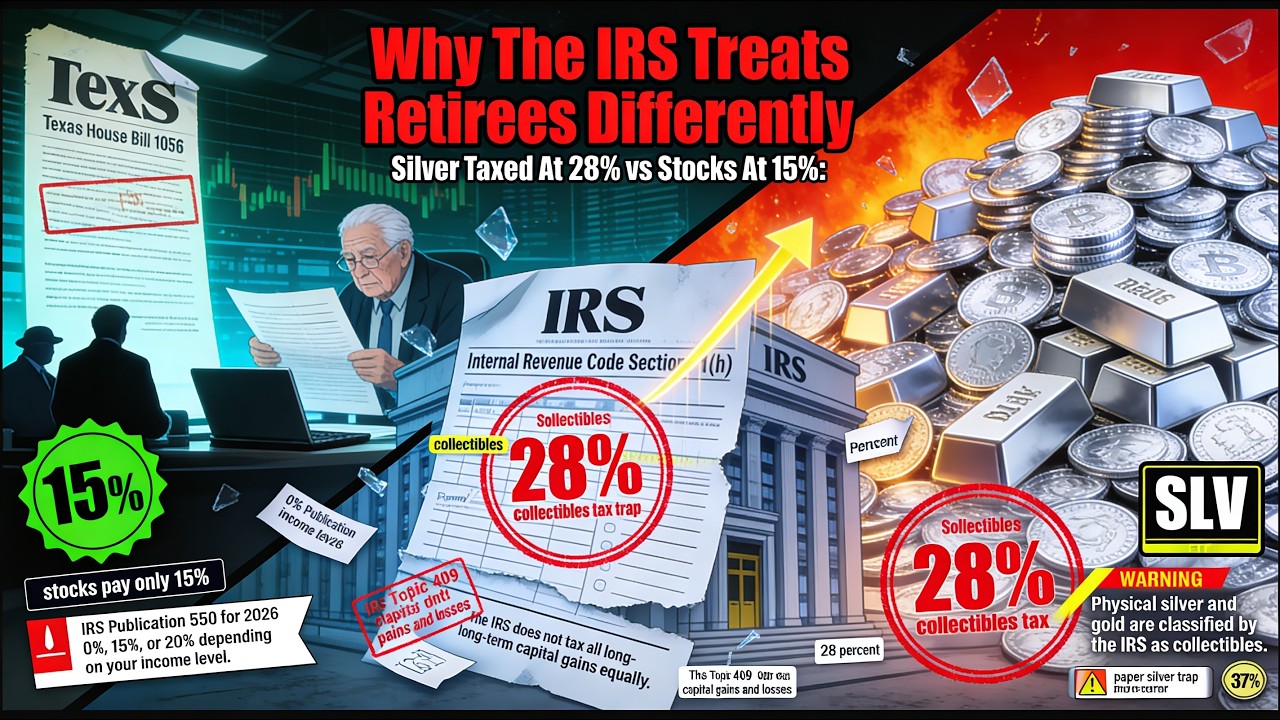
Gold, silver, and most other precious metals held for investment are defined as “collectibles” under IRC §408(m). Under IRC §1(h)(5), long-term gains (assets held over one year) on collectibles are subject to a maximum federal rate of 28%, instead of the standard long-term capital gains brackets of 0%, 15%, or 20% that apply to stocks, most funds, and real estate. Short-term gains on collectibles — held one year or less — are taxed at your ordinary income rate, the same as any other short-term gain; there’s no special short-term collectible rate.
28% is a cap, not a flat tax
A common misreading is that all silver gains are taxed at a flat 28%. In reality, the 28% figure is the maximum rate that can apply. If your ordinary income tax bracket for that year is below 28%, your long-term collectible gain is taxed at your actual marginal rate instead — the cap only matters for higher earners whose ordinary rate would otherwise exceed 28%. Either way, it’s still a worse outcome than the 15% or 20% rate that applies to a long-term stock gain in the same bracket, which is the real, practical difference to plan around.
| Holding | Long-term gain tax treatment |
|---|---|
| Physical silver, held directly, outside an IRA | Max 28% collectibles rate under IRC §1(h)(5) |
| Silver-backed ETF (e.g., SLV), held directly | Also taxed as a collectible — same 28% cap, despite trading like a stock |
| Traditional Silver IRA distribution | Ordinary income rate on withdrawal — the 28% collectible rate doesn’t apply inside an IRA |
| Roth Silver IRA qualified distribution | Tax-free |
Collectibles definition and 28% maximum rate per IRC §408(m) and §1(h)(5); IRA distribution tax treatment follows standard Traditional/Roth IRA rules regardless of the underlying asset.
The SLV trap
Silver ETFs backed by physical metal, like iShares Silver Trust (SLV), issue a standard 1099-B and trade exactly like a stock through any brokerage account — which leads many investors to assume they get standard capital gains treatment. They don’t. Because the fund physically holds silver bullion, the IRS treats gains on it the same as gains on physical coins: as a collectible, subject to the same 28% cap. This is a genuinely easy mistake to make, since nothing about the trading experience signals the different tax treatment.
This is exactly where a Silver IRA changes the outcome
The 28% collectibles rate only touches silver you own directly, outside a retirement account. Move the same metal into a properly structured Silver IRA, and the collectible rate disappears — you’re taxed under ordinary IRA distribution rules instead (or not at all, for qualified Roth withdrawals). That’s a real, structural reason the account type matters, separate from any argument about silver’s price outlook.
Frequently Asked Questions
Is silver always taxed at a flat 28%?
No — 28% is a ceiling. If your ordinary tax bracket is lower, your long-term silver gain is taxed at that lower rate instead.
Does a silver ETF like SLV avoid the collectibles tax rate?
No. Because it holds physical silver, SLV is taxed as a collectible under the same rules as physical bullion, despite trading like an ordinary stock.
Does the 28% rate apply to silver inside a Silver IRA?
No. IRA distributions are taxed under ordinary Traditional or Roth IRA rules regardless of the underlying asset — the collectibles rate only applies to silver held directly, outside a retirement account.


I’ve listened to a few of your presentations. ROTH IRAs are a crucial vehicle to mention. I wish I had known and I would have set one up long ago. I do appreciate your reminder to get documentation on basis purchase of metals.