
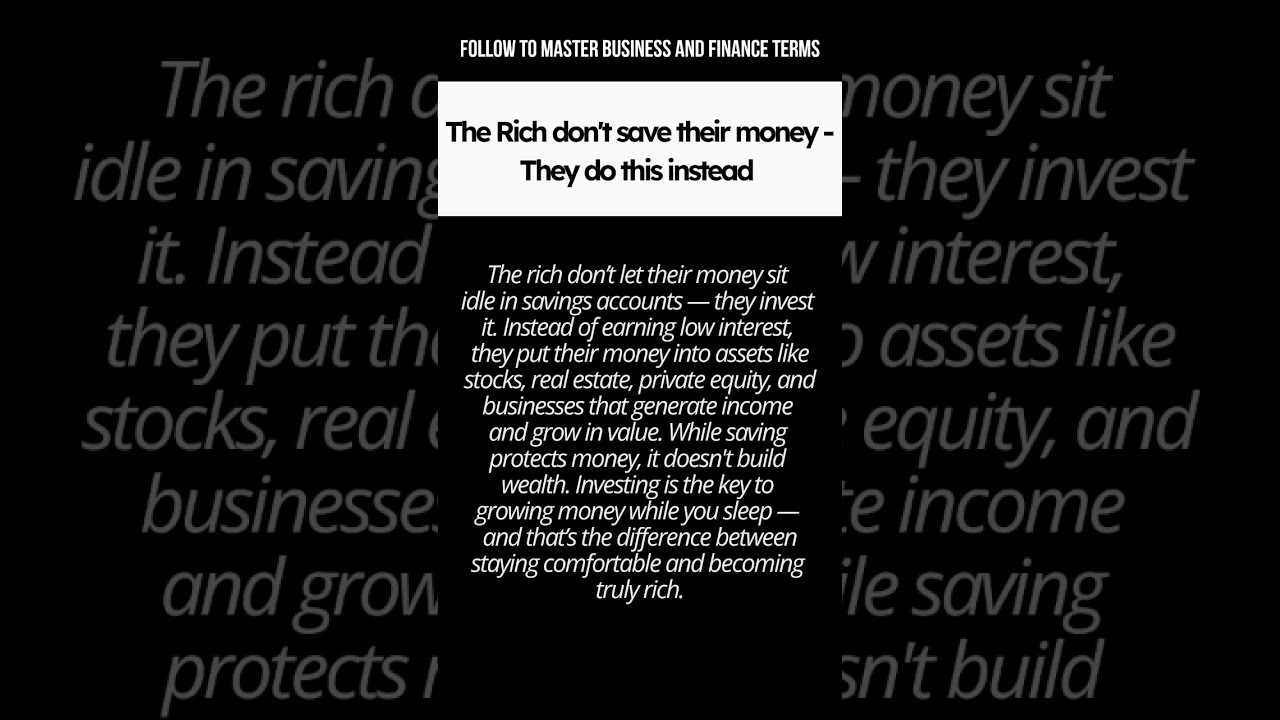

Don’t Save Your Money: Invest It Wisely for a Wealthier Future
When it comes to personal finance, traditional wisdom often tells us, “Save your money.” While there’s merit to having savings for emergencies and immediate needs, relying solely on savings can be a limiting strategy in today’s fast-paced financial landscape. Instead, consider investing your money wisely to create wealth that grows over time. This article will explore the reasons why you should rethink your saving habits and adopt a more strategic approach to your finances.
The Pitfalls of Saving Alone
Saving money has its benefits, notably the ability to cover unforeseen expenses and avoid debt. However, merely saving may not yield the returns you desire. Here are some reasons to reconsider the "save first, invest later" mindset:
1. Inflation Erodes Value
Inflation can significantly diminish the purchasing power of your savings. If your money simply sits in a savings account, it could lose value over time due to rising costs of living. For example, if the inflation rate is 3% and your savings account earns just 1% in interest, you’re effectively losing money.
2. Missed Investment Opportunities
The earlier you invest, the more time your money has to grow. Compound interest works in your favor when you give your investments time to mature. Delaying investments in favor of saving can mean missing out on substantial returns.
3. Limited Growth Potential
Savings accounts often come with low-interest rates that barely keep pace with inflation. Conversely, investing in stocks, bonds, mutual funds, or real estate opens up more lucrative possibilities, with potential gains far exceeding standard savings account rates.
What to Do Instead: Smart Investing
Rather than accruing wealth in a savings account, consider various forms of investing that can amplify your financial growth:
1. The Stock Market
Investing in stocks has historically provided high returns. While it does require a certain level of risk tolerance, historically, the stock market has outperformed savings accounts, especially in the long term. Consider diversifying your portfolio to manage risks effectively.
2. Real Estate
Real estate can be an excellent investment. Owning property appreciates over time and can generate rental income, provide tax advantages, and be leveraged for further investments. It’s a tangible asset that often performs well against inflation.
3. Mutual Funds and ETFs
If you prefer a hands-off approach, consider mutual funds or exchange-traded funds (ETFs). These investment vehicles provide diversification and professional management for your investment, reducing the risks associated with single stocks.
4. Retirement Accounts
Maximize contributions to retirement accounts like 401(k)s or IRAs. These accounts not only offer tax benefits but often come with employer matching, essentially providing "free money" toward your future.
The Mindset Shift: From Saving to Investing
This shift from saving to investing isn’t merely about financial instruments; it’s about adopting a new mindset that emphasizes growth, risk management, and long-term planning. Here are some steps to facilitate this change:
1. Educate Yourself
Knowledge is power. Take the time to learn about the different investment vehicles available, their risks, and potential returns. Online courses, webinars, and financial blogs are great resources.
2. Start Small
If you’re nervous about jumping into investing, start small. Begin with a modest amount you’re comfortable with and gradually increase your investments as you become more confident.
3. Establish Clear Goals
Define your financial goals. Are you saving for retirement, a home, or a dream vacation? Knowing your aspirations will guide your investment strategy and motivate you to stay committed.
4. Develop a Budget
Create a budget that allocates a percentage of your income for investments. Treat investing as a non-negotiable expense, just like rent or utilities.
Conclusion: Invest in Your Future
The idea of saving money is foundational—but it shouldn’t be the end goal. Instead, invest your money wisely to ensure your financial growth. By understanding the drawbacks of relying solely on savings, embracing central investment principles, and shifting your mindset, you’ll position yourself to cultivate wealth that stands the test of time. Remember, money is a tool; when invested wisely, it works for you—allowing you to live the life you’ve always dreamed of.
LEARN ABOUT: Investing During Inflation
REVEALED: Best Investment During Inflation
HOW TO INVEST IN GOLD: Gold IRA Investing
HOW TO INVEST IN SILVER: Silver IRA Investing




0 Comments