
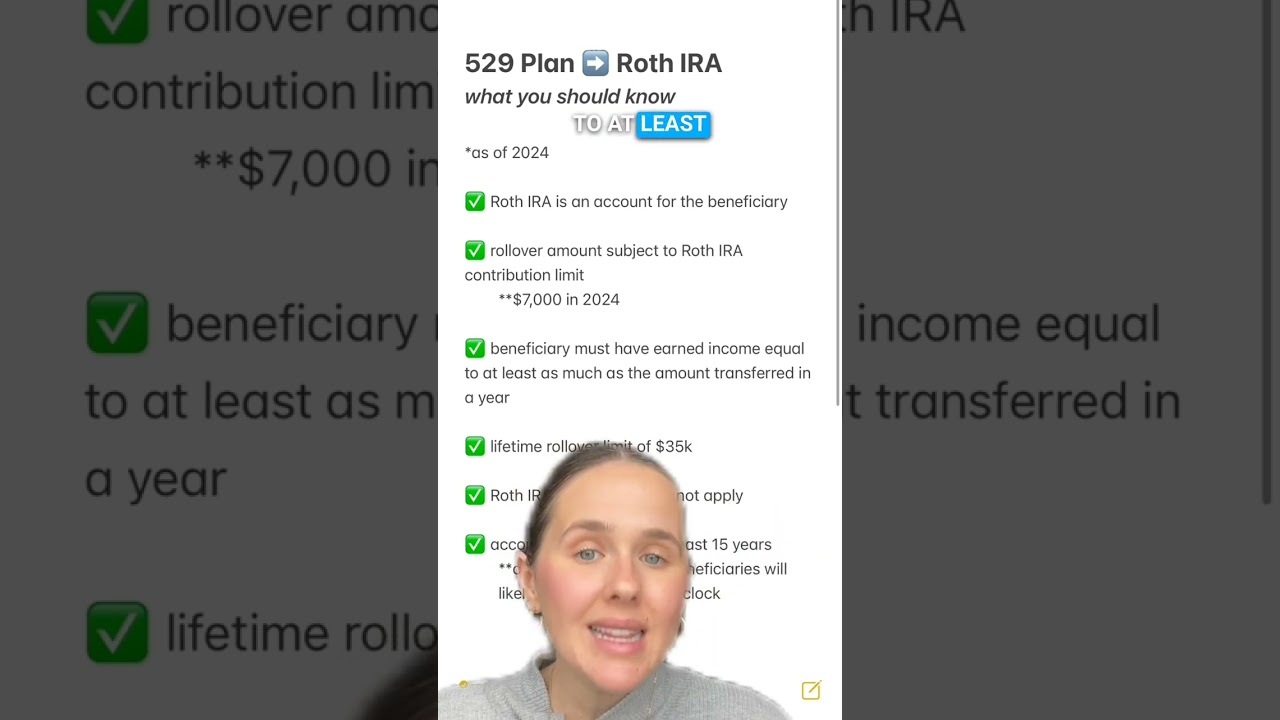

Rollover 529 to Roth IRA: A Financial Strategy for Education and Retirement
In the world of personal finance, understanding the various tools available for saving and investment is essential. Two commonly referenced accounts are the 529 Plan and the Roth IRA. Both serve distinct purposes—one primarily focused on education savings and the other on retirement. However, recent developments have led many to consider a strategic approach: the rollover of a 529 Plan into a Roth IRA. This article explores what these accounts are, the potential benefits of this rollover, and the key considerations to keep in mind.
Understanding 529 Plans
A 529 Plan is a tax-advantaged savings plan designed to encourage saving for future education costs. There are two types of 529 Plans: prepaid tuition plans and education savings plans. Contributions to a 529 Plan are made post-tax, meaning they don’t provide a tax deduction, but earnings grow tax-free, and withdrawals for qualified education expenses are also tax-free.
One of the appealing features of 529 Plans is their flexibility. If the funds are not used for educational purposes, account holders may withdraw their contributions, although any earnings might incur taxes and penalties if not used for eligible expenses.
Exploring Roth IRAs
A Roth IRA is a retirement savings account that allows individuals to contribute post-tax income. The benefits of a Roth IRA include tax-free growth and tax-free withdrawals in retirement, provided certain conditions are met. Unlike traditional IRAs, there are no required minimum distributions (RMDs) during the account owner’s lifetime, making Roth IRAs a powerful tool for tax-efficient retirement planning.
The Rollover Strategy: 529 to Roth IRA
The concept of rolling over a 529 Plan into a Roth IRA is appealing, particularly in the context of evolving tax laws and personal financial planning. Here are some key considerations:
-
Eligibility: Generally, there are no direct rollovers from a 529 Plan to a Roth IRA. However, recent legislation in some states has opened the door for such transfers, often with specific guidelines. It’s essential to check your state laws and any potential federal regulations.
-
Contribution Limits: Roth IRAs have annual contribution limits—$6,500 for individuals under 50 and $7,500 for those 50 and older (as of 2023). If the funds in your 529 Plan exceed these limits, it may take several years to fully transfer all funds.
-
Tax Implications: When rolling over funds, it’s vital to understand the tax implications. Since 529 contributions were made with after-tax dollars, you won’t face double taxation on those funds. However, any earnings accumulated in the 529 Plan may be subject to taxes or penalties unless they align with qualified expenses.
-
Potential Penalties: Before initiating a rollover, consider the penalties associated with non-qualified withdrawals from the 529 Plan. If the rollover is not completed correctly, you could end up facing unexpected costs.
- Flexibility for Future Generations: One significant advantage of rolling over 529 Plan funds into a Roth IRA is the potential for multi-generational benefits. Funds in a Roth IRA can be passed to heirs, continuing to grow tax-free and potentially providing financial support for their education or retirement.
Making the Decision
The decision to roll over a 529 Plan to a Roth IRA should not be taken lightly. It requires careful consideration of your current financial situation, future goals, and the logistics of such a transfer. Consulting with a financial advisor can help clarify your options and ensure you make an informed decision that aligns with your long-term financial strategy.
In summary, while rolling over a 529 Plan to a Roth IRA can provide strategic benefits, it is essential to navigate the complexities of the process and understand the rules involved. By doing so, you can make the most of your education and retirement savings, ensuring a financially secure future. Whether you’re a parent saving for your child’s college education or an individual planning for retirement, exploring the potential of these financial tools may pave the way for greater financial freedom.
LEARN MORE ABOUT: IRA Accounts
TRANSFER IRA TO GOLD: Gold IRA Account
TRANSFER IRA TO SILVER: Silver IRA Account
REVEALED: Best Gold Backed IRA




0 Comments