

T. Rowe Price Capital Appreciation vs. Vanguard Wellington: A Comparative Analysis
When it comes to choosing mutual funds for long-term investment, two well-regarded options are the T. Rowe Price Capital Appreciation Fund (PRWCX) and the Vanguard Wellington Fund (VWELX). Both funds offer investors a balanced approach to portfolio management, with their unique investment strategies and performance records. This article seeks to provide a comparative analysis of these two funds, evaluating their investment objectives, performance, fees, and suitability for various types of investors.
Overview of the Funds
T. Rowe Price Capital Appreciation Fund (PRWCX)
The T. Rowe Price Capital Appreciation Fund aims for long-term capital growth by investing in a diversified portfolio of U.S. and foreign stocks, primarily focusing on companies with strong fundamentals that are likely to deliver solid earnings growth. The fund employs a blend of growth and value investing strategies, which allows it to capitalize on attractive market opportunities while managing risk through diversification.
Vanguard Wellington Fund (VWELX)
In contrast, the Vanguard Wellington Fund is one of the oldest balanced funds in the market, pursuing a dual goal of capital appreciation and income generation. This fund invests approximately 60-70% in stocks and 30-40% in bonds. The Wellington Fund is typically less volatile than pure equity funds due to its fixed-income allocation, making it a more conservative option for income-focused investors.
Investment Strategy
-
T. Rowe Price Capital Appreciation
- Focus: Primarily equities with a broad range of sectors.
- Strategy: Growth and value blend, aiming for capital gains with some income from dividends.
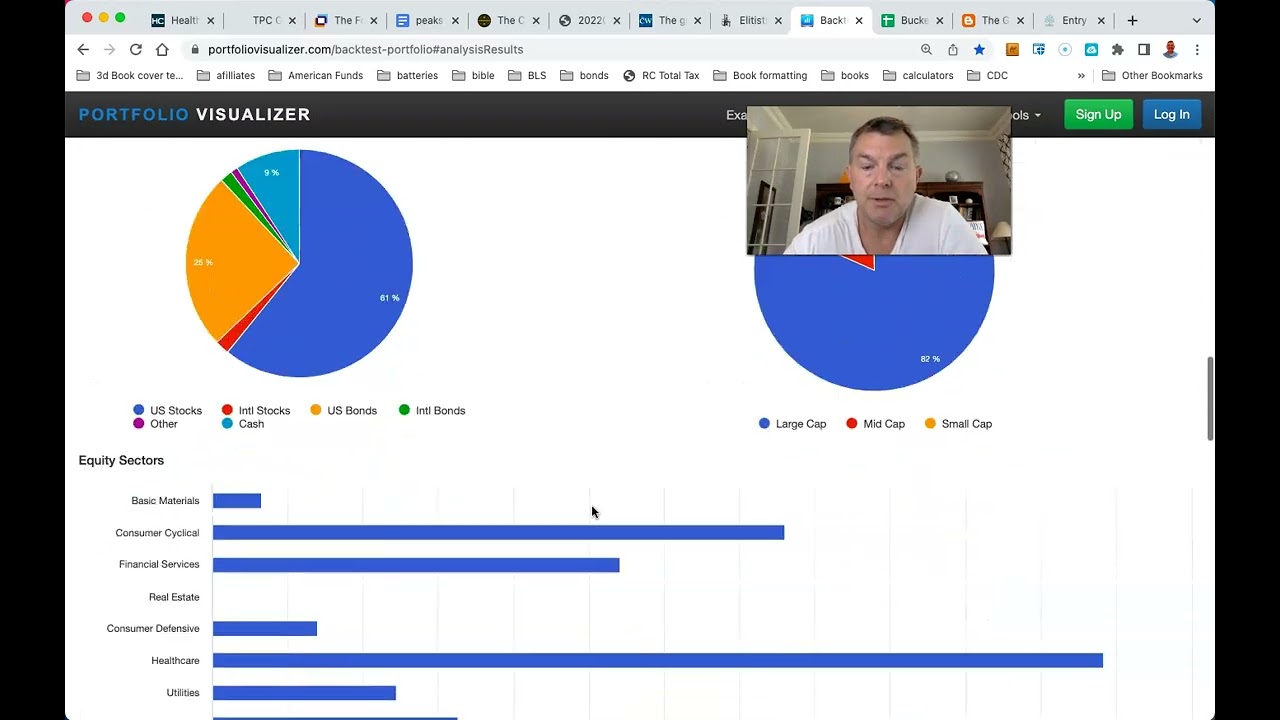
- Holdings: The fund tends to have a higher concentration in sectors such as technology and healthcare, reflecting its growth-oriented approach.
- Vanguard Wellington
- Focus: Balanced allocation between stocks and bonds.
- Strategy: Income generation while providing capital appreciation through a diversified portfolio.
- Holdings: The fund has a mix of large-cap stocks and high-quality bonds, adhering to its conservative nature.
Performance Comparison
Performance metrics can vary widely based on market conditions and the time horizon considered. Historically, PRWCX has shown impressive returns, particularly in bull markets, driven by its growth-oriented stock selection. However, it can experience higher volatility during market downturns.
On the other hand, VWELX has provided more stable returns over time, thanks to its balanced allocation. This makes it a solid choice for conservative investors who prefer steady growth with less volatility. Historical performance shows that while Wellington may lag in aggressive bull markets, it tends to outperform in bear markets due to its fixed-income component.
Fees and Expenses
-
T. Rowe Price Capital Appreciation (PRWCX)
- Expense Ratio: Generally higher than many passive funds, reflective of its active management approach.
- Management Fees: The fund incurs management fees that cover the cost of active investment strategies.
- Vanguard Wellington (VWELX)
- Expense Ratio: Typically lower than the industry average, especially due to Vanguard’s emphasis on cost efficiency.
- Management Fees: As a more passive fund, its management fees are lower, appealing to cost-conscious investors.
Suitability for Investors
-
T. Rowe Price Capital Appreciation Fund (PRWCX)
- Best suited for investors looking for high growth and who can tolerate a higher level of volatility. It may appeal to younger investors with longer time horizons who seek significant capital appreciation.
- Vanguard Wellington Fund (VWELX)
- Ideal for conservative investors or those seeking a balanced approach with income generation. It appeals to retirees or those nearing retirement who desire reduced risk while still achieving some growth.
Conclusion
Choosing between the T. Rowe Price Capital Appreciation Fund and the Vanguard Wellington Fund largely depends on individual investment goals, risk tolerance, and time horizons. PRWCX offers a path to high capital appreciation through aggressive equity investment, making it suitable for growth-oriented investors. In contrast, VWELX appeals to those seeking stability, income, and balanced growth. Both funds have stood the test of time, making them worthy contenders in the mutual fund landscape. Investors are encouraged to conduct further research and consider their specific financial situations before making a selection.
LEARN MORE ABOUT: IRA Accounts
INVESTING IN A GOLD IRA: Gold IRA Account
INVESTING IN A SILVER IRA: Silver IRA Account
REVEALED: Best Gold Backed IRA



I've owned PRWCX for ~ 20 years.
.98 Expense Ratio
PRWCX is one of the GOATs. I’ve been using in portfolios for years, and it’s really hard criticize it at all aside from the expensive ratio. A lot of advisors haven’t heard of it because it has been closed to a very long time, and is only available on a few platforms.
Josh love your videos, been following you for several years now and have really learned a lot. Greatly appreciate all of the work and time you have put into building your content….I'm curious have you done a video on "Top 5 balanced funds?" or "Top 5 funds for retirement?" or something like that? God Bless! Jeff
Josh, I have had PRWCX as part of my active taxable portfolio since 2005. It, along with several others from T.Rowe, have been very good to me. Currently I have no principal at all at risk in that portfolio and am living on the valuations alone. I plan to keep that fund open along with the others so that I can reinvest any extra retirement income into it, as I know I cannot use retirement funds to add to my IRA's or 401k.
I have T R P Cap Appreciation. It generates a lot of dividends and capital gains. Sometimes painful to own in the taxable account – works better in my ROTH IRA.
Great fund but closed to new investors.
I wish you also just compared the fund to sp500
7% junk bonds in a 35 year period where interest rates went from double digit to near zero is a huge plus. as a recent retiree, I don't want junk bonds in my portfolio.
There should be other funds that mimic this one? Or you could setup your own via ETFs and percentages, no?
The wisest thing that should be on everyone's mind currently should be to invest in different streams of income that doesn't depend on the government. Especially with the current economic crisis around the word. This is still a good time to invest in Gold, silver and digital currencies(BTC, ETH..)
Wow, I asked you to do this comparison before. Thanks Josh. Half of my Troweprice account is in the Capital Appreciation fund.
PRWCX was quite successful such that it closed to new investors. It always did pretty well in down times which is why I liked it for slow and steady (and am still in it since around 2003). It did not lose money in 2018 when the S&P lost around 5%. However it has not outperformed the S&P in the last 10 years.
While it is still technically closed to investors, you can still get into it through the TRowe "Summit" program once you exceed $250K invested with TRowe overall. There is another tier such that at $500K you can access I-Class funds with a $50K minimum for "TRAIX".
I bought some in my Roth IRA and I re-invest all dividends and capital gains every December when they are declared. But they announced that the fund was closed to any new investment. So, I just watch it increase each year.
Great video! Are the charts net earnings after the expense ratios?
“Closed to new investors” in my Fidelity account.
Josh, I can't believe you haven't heard of T Rowe Capital appreciation., Probably the best actively managed mutual fund there is. I had the fund in my 403B , but once I retired and did ira rollover to fidelity, could no longer purchase without opening a separate account with Trowe.
Too bad, it's closed to new investors.