
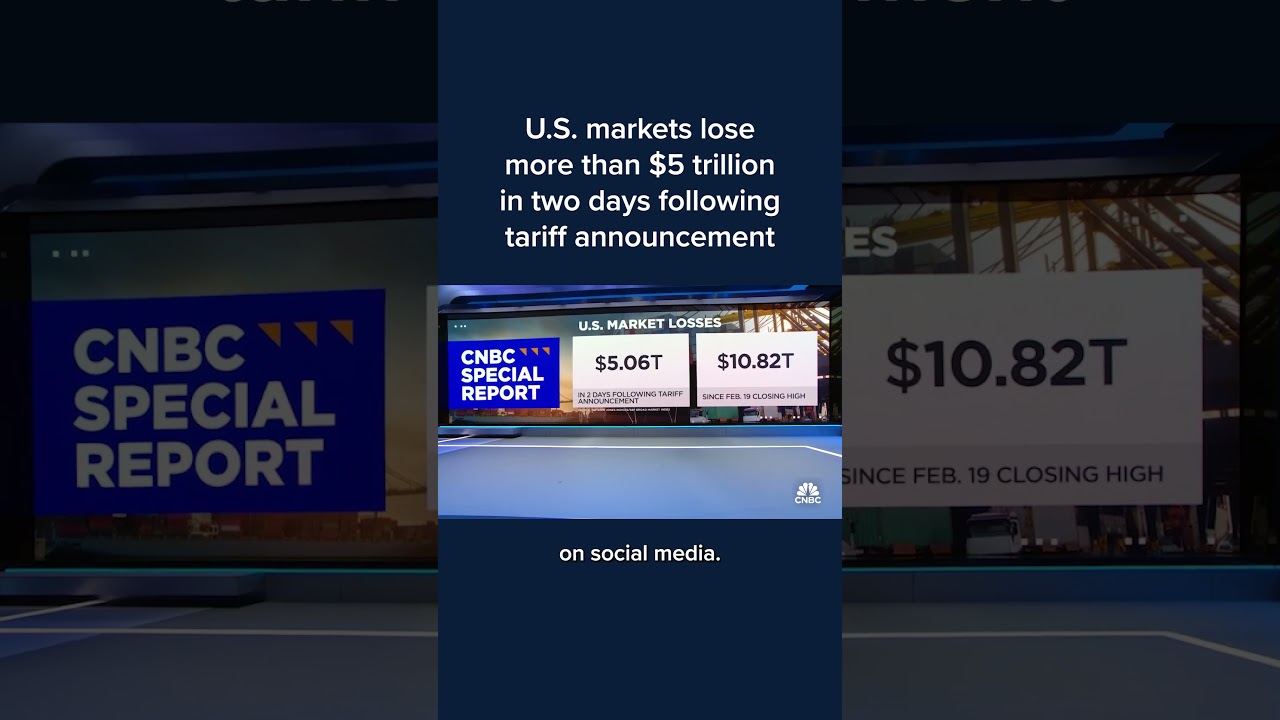

U.S. Markets Plunge: $5 Trillion Evaporates as Tariff Fears Grip Investors
Wall Street suffered a brutal two-day rout this week, wiping out a staggering $5 trillion in market value after President Biden’s administration announced significant tariff increases on a range of Chinese goods. The news triggered widespread anxieties about escalating trade tensions, potential retaliatory measures, and the overall health of the global economy, sending investors fleeing to safety.
The Dow Jones Industrial Average, S&P 500, and Nasdaq Composite all experienced significant drops, with tech stocks particularly hard hit. While markets have seen volatility this year, the magnitude and speed of the recent decline underscore the sensitivity of investors to geopolitical and trade uncertainties.
The Tariff Trigger:
The catalyst for the market turmoil was the announcement of increased tariffs on Chinese goods including electric vehicles, semiconductors, solar cells, and medical equipment. The move, framed by the administration as a measure to protect American industries and secure supply chains, was quickly met with skepticism from economists and analysts.
Concerns centered around the potential for:
- Retaliation: China is widely expected to retaliate with its own tariffs or other measures, leading to a tit-for-tat trade war that could disrupt global supply chains and raise prices for consumers.
- Inflation: Higher tariffs could increase the cost of imported goods, contributing to inflationary pressures that the Federal Reserve is already struggling to contain.
- Economic Slowdown: A prolonged trade conflict could dampen global economic growth, impacting corporate earnings and investor sentiment.
- Disrupted Supply Chains: Companies relying on Chinese-made components or goods could face increased costs and logistical challenges, impacting their profitability.
Market Fallout:
The initial reaction was swift and decisive. Investors dumped stocks across various sectors, seeking refuge in traditionally safer assets such as U.S. Treasury bonds. Key sectors particularly affected include:
- Technology: Tech companies reliant on manufacturing in China or importing Chinese components faced significant selling pressure.
- Manufacturing: Businesses dependent on imported steel, aluminum, and other raw materials were also negatively impacted.
- Consumer Goods: Companies that rely on Chinese-made finished products or components saw their stocks decline amid concerns about higher prices and reduced consumer demand.
Beyond the Tariffs:
While the tariff announcement served as the immediate trigger, other underlying factors contributed to the market’s vulnerability:
- Inflation Concerns: Persistent inflation continues to worry investors, particularly as the Federal Reserve weighs its next move on interest rates.
- Geopolitical Instability: Ongoing conflicts and geopolitical tensions in various parts of the world add to market uncertainty.
- Valuation Concerns: Some analysts believe that the market had been overvalued, making it more susceptible to a correction.
The Road Ahead:
The long-term impact of the tariffs and the market correction remains to be seen. Experts are divided on the potential severity of the trade conflict and its implications for the global economy.
“This is a wake-up call for investors,” warned financial analyst Sarah Chen. “The market is highly sensitive to trade policy and geopolitical risks. Investors need to be prepared for continued volatility and potential downside risk.”
Moving forward, market participants will be closely watching:
- China’s Response: The nature and extent of any retaliatory measures from China will be crucial.
- Negotiations: Whether the U.S. and China can find a path to de-escalate tensions and reach a trade agreement.
- Federal Reserve Policy: The Fed’s response to inflation and its impact on interest rates will play a key role in shaping market direction.
- Economic Data: Upcoming economic data, including inflation figures, GDP growth, and unemployment rates, will provide insights into the overall health of the economy.
In the meantime, investors are advised to exercise caution, diversify their portfolios, and seek professional advice to navigate the uncertain market landscape. While the recent market rout has been painful, history shows that markets eventually recover. Staying informed and making prudent investment decisions will be crucial in the coming months.
LEARN MORE ABOUT: Investing During Inflation
REVEALED: Best Investment During Inflation
HOW TO INVEST IN GOLD: Gold IRA Investing
HOW TO INVEST IN SILVER: Silver IRA Investing




Peoples money doesn't affect Donald trump
His government needs money money thats all to build F75
Let it Crash!!
I M P E A C H – the illegally crowned king!