
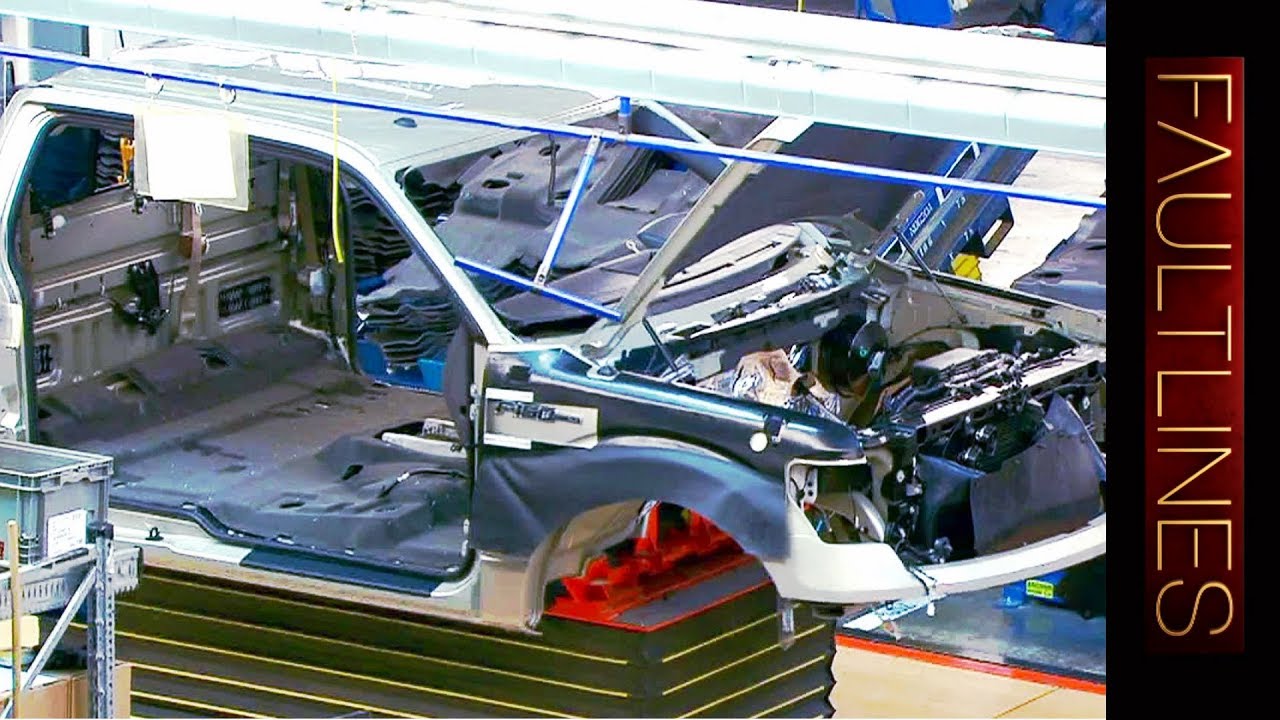

Collapsing Auto Industry in Detroit: A Critical Examination
The American automotive industry has long been synonymous with innovation, production prowess, and economic vitality. Detroit, once hailed as the "Motor City," was the hub of this dynamic sector, known for its bustling factories and a legacy of iconic car brands such as Ford, General Motors, and Chrysler. However, in recent years, this once-thriving industry has faced unprecedented challenges, resulting in a significant and concerning collapse. This article delves into the factors contributing to the decline of Detroit’s auto industry, the consequences for the local economy and workforce, and the path forward for recovery.
Historical Context: A Legacy in Decline
The roots of Detroit’s automotive industry run deep, with the Ford Model T launched in 1908, marking the beginning of mass production in America. This innovation spurred economic growth, attracting workers and businesses to the region. However, the city’s reliance on a single industry made it vulnerable. The auto industry’s cyclical nature meant that any downturn would have dire implications for the local economy.
In the years leading up to the 2008 financial crisis, the auto industry was already suffering due to increasing global competition, rising production costs, and shifting consumer preferences. The crisis itself proved catastrophic, leading to massive bailouts for the Big Three automakers. While the industry initially rebounded post-crisis, structural weaknesses persisted, and the tide has once again turned against Detroit’s automotive giants.
Factors Contributing to the Current Crisis
1. Global Competition
Asian automakers, particularly those from Japan and South Korea, have increasingly cornered the market with reliable, fuel-efficient vehicles at competitive prices. Firms like Toyota and Hyundai have set benchmarks for quality and innovation that domestic brands struggle to match. The influx of electric vehicles (EVs) from companies like Tesla has further disrupted traditional market dynamics, forcing established automakers to scramble to keep up.
2. Supply Chain Disruptions
The COVID-19 pandemic exposed vulnerabilities in global supply chains, impacting production capabilities significantly. A shortage of semiconductor chips, essential for modern vehicles, has crippled auto manufacturing in Detroit. Factories that once churned out thousands of vehicles weekly have had to scale back production or shutter entirely, leading to layoffs and furloughs that resonate throughout the local economy.
3. Shift to Electric Vehicles
The shift towards electric vehicles represents both a challenge and an opportunity. While there is tremendous potential for growth in the EV market, traditional automakers are racing against time to transition their production lines. Many lack the infrastructure and expertise required for large-scale EV manufacturing, putting them at risk of obsolescence in an increasingly electrified marketplace.
4. Labor Strife and Workforce Issues
Labor unions, historically a powerful force in the automotive industry, are currently facing challenges in representing workers amid technological change and downsizing. The rise of gig and contract work also threatens job security, as many traditional manufacturing roles are being replaced by automation. Consequently, the workforce faces uncertainty as the industry evolves and jobs become increasingly reliant on advanced technologies.
The Impact on Detroit’s Economy and Community
The ramifications of the collapsing auto industry extend beyond mere job losses; they penetrate deep into the fabric of Detroit’s economy and communities. The decline has led to increased poverty rates, diminished public services, and a shrinking tax base. In neighborhoods once vibrant with the economic activity generated by the auto industry, many residents now face empty storefronts and limited resources.
With the auto industry’s decline, the city must also contend with rising crime rates and deteriorating infrastructure. A once-flourishing middle class—a product of the auto industry—faces increasing pressure, leading to a decline in overall quality of life.
The Road Ahead: A Path to Recovery
Despite the challenges, there are pathways forward for Detroit’s auto industry and its economy.
1. Investing in Innovation
A concerted effort to invest in research and development of new automotive technologies, particularly in the realm of EVs and autonomous vehicles, could revitalize the industry. Partnerships between automakers, tech companies, and universities can create a robust ecosystem for innovation and attract new talent.
2. Diversification of the Economy
Detroit has historically relied heavily on the auto industry, but now is the time to promote economic diversification. Investing in emerging sectors such as technology, healthcare, and renewable energy can help stabilize the economy and provide new job opportunities that are less susceptible to global market shifts.
3. Reskilling the Workforce
As the industry changes, so must the skills of its workforce. Providing training and reskilling programs tailored to the needs of the modern auto industry and other growing sectors will be crucial for workforce sustainability. This effort will not only benefit the industry but also empower workers to adapt to an evolving job market.
4. Community Investment
Investing in community development, public services, and infrastructure can help revive Detroit. Fostering a sense of community through collaboration between local government, businesses, and residents will foster resilience and promote economic activity beyond the automotive sector.
Conclusion
The collapse of Detroit’s auto industry marks a turning point, reflecting larger global trends that impact traditional manufacturing sectors. However, the road to recovery is not only about salvaging an industry; it’s an opportunity for a city to reinvent itself. By embracing innovation, investing in diverse economic opportunities, and nurturing its workforce, Detroit can emerge from this crisis, not just as a relic of its automotive past, but as a leading example of resilience and adaptation in the face of change.
BREAKING: Recession News
REVEALED: Best Investment During Inflation
HOW TO INVEST IN GOLD: Gold IRA Investing




This Grace Boggs character has been a system shill and subverter for 50 years, then
What were the workers like? Were they coming to work? Was there a lot of FMLA people? were there people calling their supervisors names for asking them to do their job? Were the workers working while at work or were they making excuses? Just wondering because I know for a fact that doors were closed because of this kind of thing too. And I know there’s a lot more factors but I wonder about the workers as well.
This is happening all over again. People don’t learn what the UAW does.
All their products were junk and poorly assembled. The unions protected the absolute worst workers in the world who regularly did drugs and drank on the job. There were numerous books and articles written about misconduct on the line. You were advised as to what car you should buy based on the day it came off the line because worker productivity was only worth a darn on a Wednesday. The American unionized worker is far inferior to its Asian and European counterparts and it is because of the unions. That being said the unions were the least of the many problems that Detroit created for itself. Go to Hiroshima and go to Detroit and ask yourself, who really won the war.
I wonder if the public housing was nice to live in public housing in Baltimore wasn’t the best, but the lady in this video seems like she really liked living over there. Did they build new public housing or did the people leave with the closing of the plants ?
This is what happens when you base an entire economy on one thing
industrial capitalism seems to be working out well for Texas, seems to me Detroits problems set in when the capitalists were forced out of business by corrupt politicians.
chevy vega, chevy citation, pontiac aztec, cadillac cimmeron, ford pinto, edsil, gm 8/6/4, gm diesel converted from gas engines, and pure lack of quality control. Tell me again how the us car companies are failing????
Nafta and bill Clinton had a lot to do with the destruction of Detroit
Detroit is destroyed
Copart salvage vehicles are causing inflation in America. For over two decades salvage vehicles have progressively been swarming our highways and streets without notice competing with the vehicle industry. Having hundreds ofthousands of people buying salvaged vehicles for profit devalue the market and has been a rising concern. Mexico car industry has crashed in regards to inflation due to Copart salvage vehicles and the united States is Next.
1st. You telling me you work for GM for over 20yrs and you didn't save no money? 2nd. How you went bankrupt after 1yr GM close? Ppl don't need a job they need to be financial education.
Problem with US management is fhat it is based on greed.
16:27
For who exactly?! Anything 'new' coming to Detroit is going to cost money and the poor that live there won't be able to pay the roi demanded by those who brought it there. Or put simply: new has yet to not mean gentrification!
6:40 WHAT?! i know this video is old but how was that even possible?!
The dream has been destroyed and now we to make a new dream. Who, where, when is the unanswered and what are we going to do is the question. This is a beginning.
Yea this was during Obama, things have changed for the better
Evefhbodt vehivcles
Lakes yacthsz
Dope
Hi
T
A le the buses i did lady greedy
They have made inferior products for years. Especially Dodge & Ram .Freaking Junk . And made gas guzzlers for years. The economy collapsing in2008 didn’t help one bit . Thanks you wall-street and banks. George Carlin had a great plane for the bankers. CHOP OFF THERE HEAD !!!! Nine Freaking Kids !!!! Idiots !!!!
I grew up in LosAngeles, far far away from brick bldgs, gothic architecture and car manufacturers. LA may not be in the best shape either but I will say we learned to network, do what you say, and leave it better than when you got it. (maybe not all of us, but I am blessed)
US and whole no places in this World make any car . US is big mouths . Proof at US more than 99.99999% population are living by welfare under name FINANCIAL . Discovered in 2010 by The New York Times .
That lady is amazing for insight
Gm is moving to China but when they have trouble they run to the US taxpayer for help something that bothers me quite a bit.