
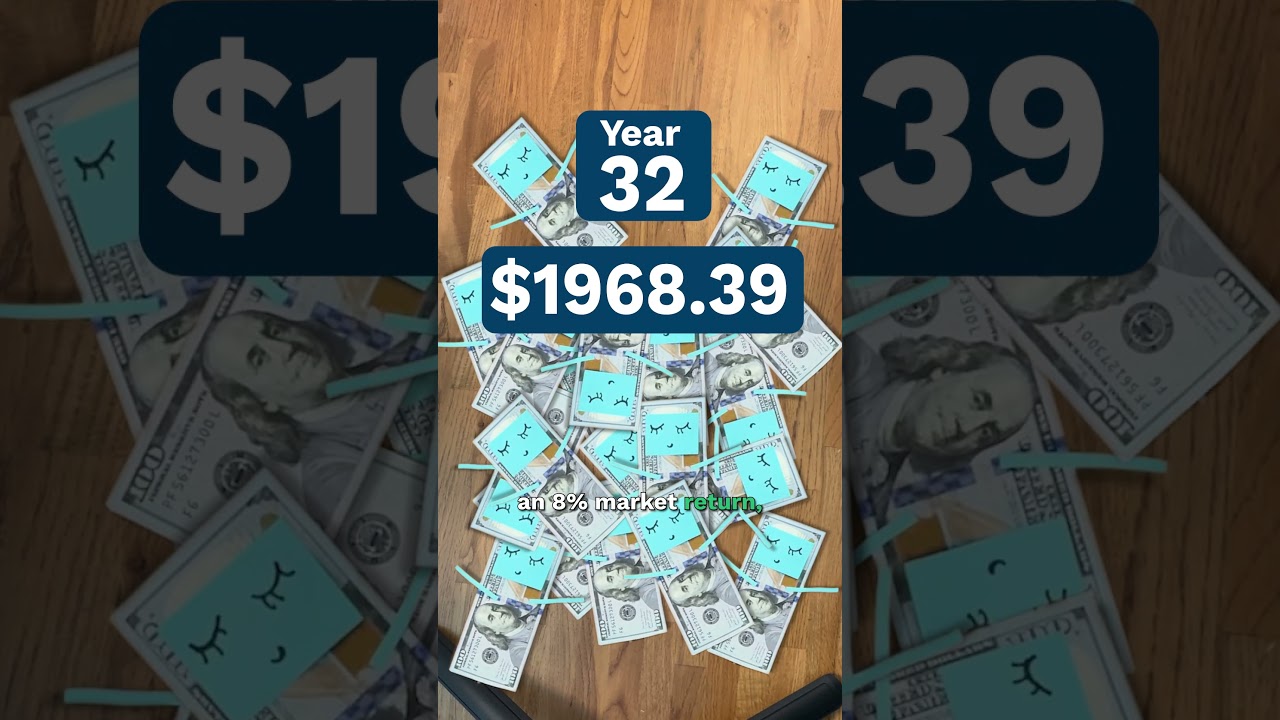

The Power of Long-Term Investing: What Could Happen Investing $100 for 40 Years
Investing is often seen as a pathway to wealth, but many are deterred by the notion that it requires substantial capital. However, even a small amount like $100 can yield substantial returns over time, especially with the magic of compounding interest. Let’s explore how investing $100 for 40 years can potentially reshape your financial future.
Understanding Compounding Interest
At the heart of successful investing lies compounding interest. This means that not only do you earn returns on your initial investment, but you also earn returns on the returns. The longer your money is invested, the more pronounced this effect becomes.
Scenario 1: Average Stock Market Returns
Historically, the U.S. stock market has returned an average of around 7% annually after adjusting for inflation. If you were to invest your $100 in a broad market index fund and achieve this average return, here’s how your investment would grow over the years:
- After 10 years: Approximately $196
- After 20 years: About $386
- After 30 years: Roughly $1,064
- After 40 years: Close to $2,208
This demonstrates that with a consistent annual return of 7%, your initial $100 could more than 20 times over in four decades.
Scenario 2: Higher Returns with Growth Stocks
If you invest in individual growth stocks or sectors that have historically outperformed, your returns could be significantly higher. For instance, if you average a 10% return annually:
- After 10 years: About $259
- After 20 years: Around $672
- After 30 years: Approximately $1,744
- After 40 years: Nearly $45,259
This scenario illustrates the remarkable potential of investing in high-growth opportunities. However, it’s important to note that higher returns usually come with increased risk.
Scenario 3: Minimal Returns with Bonds
For those who prefer safer investments, government and corporate bonds typically yield lower returns, averaging about 3% per year. Here’s how a $100 investment would look:
- After 10 years: Approximately $134
- After 20 years: About $181
- After 30 years: Roughly $242
- After 40 years: Around $321
While this shows that your money can grow, the returns are much lower, which may not keep pace with inflation over the long term.
The Role of Time and Consistency
One key takeaway from these scenarios is the importance of time. Investing $100 is certainly a modest entry point, yet it highlights the potential for growth when left untouched for decades. Moreover, consistently adding to your investment, even small amounts over time, can significantly amplify your returns.
Risk and Diversification
While the possibilities may sound enticing, it’s crucial to be aware of the risks involved. The stock market can be volatile, and returns are not guaranteed. Diversifying your investments across different asset classes—stocks, bonds, and real estate—can help mitigate risks while maximizing potential returns.
Conclusion: Start Early, Invest Wisely
The act of investing—no matter how small—can lay the groundwork for financial independence and wealth accumulation. By starting early and allowing your investment to grow over time, you harness the power of compounding interest.
So, if you have $100 to spare, consider it an opportunity rather than a limitation. By making informed investment choices and consistently contributing to your portfolio, you could unlock a brighter financial future. Remember, every dollar invested today is a seed for tomorrow’s wealth.
LEARN MORE ABOUT: 401k Plans
REVEALED: Best Investment During Inflation
HOW TO INVEST IN GOLD: Gold IRA Investing
HOW TO INVEST IN SILVER: Silver IRA Investing




0 Comments