
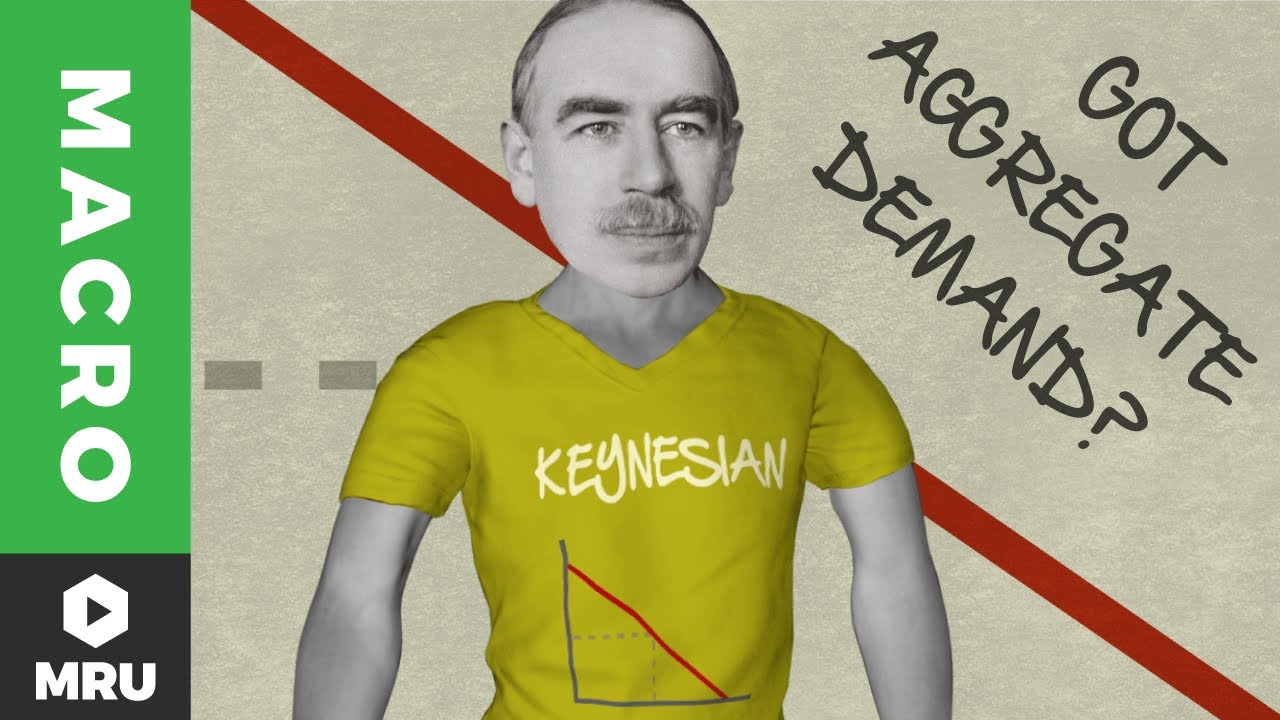

Game of Theories: The Keynesians
Introduction
In the vast landscape of economic thought, few schools of thought have left as profound an impact as Keynesian economics. Originating in the early 20th century, largely thanks to the work of British economist John Maynard Keynes, this framework has sparked significant debates, adaptations, and critiques. This article explores the core principles of Keynesian economics, its historical context, applications, and the ongoing debates surrounding its efficacy in modern economic policy.
Historical Context
The world was still reeling from the aftermath of World War I when Keynes published his major work, The General Theory of Employment, Interest, and Money in 1936. The Great Depression had exposed the limitations of classical economic theories, which upheld the idea that free markets naturally achieve equilibrium. Keynes, however, argued that aggregate demand—total spending in the economy—was the primary driver of economic growth and employment levels.
His revolutionary thinking proposed that during periods of economic downturn, when private sector demand falters, it is the responsibility of the government to intervene. This was a radical departure from the prevailing laissez-faire attitudes of the time, which favored limited government involvement.
Core Principles
Aggregate Demand
At the heart of Keynesian economics is the concept of aggregate demand. Keynes posited that insufficient demand leads to prolonged unemployment and underutilized resources. In contrast to classical theories that assumed full employment, Keynes emphasized the need for active government intervention. He believed that during recessions, governments should increase public spending and lower taxes to stimulate demand and pull the economy out of stagnation.
Fiscal Policy
Keynesians advocate for robust fiscal policy as a tool for managing economic cycles. This includes government spending on infrastructure, education, and welfare programs, particularly during economic downturns. By injecting money into the economy, the government can increase demand, which in turn stimulates production and job creation.
Multiplier Effect
One of the crucial aspects of Keynesian economics is the multiplier effect. When the government spends money, it does not just directly inject funds into the economy; it also generates additional economic activity. For instance, when a government builds a road, it not only creates jobs for construction workers but also stimulates local businesses through increased spending by those workers. This cascading effect is vital for understanding how targeted fiscal policies can lead to broader economic recovery.
Applications of Keynesian Economics
The practical applications of Keynesian economics have varied throughout history, particularly during times of economic crisis. After World War II, many Western governments adopted Keynesian principles, leading to decades of prosperity and growth known as the "Golden Age of Capitalism." The successes of this period reinforced the relevance of Keynesian economics in shaping social welfare policies and stabilizing economies.
However, challenges arose during the 1970s when stagflation—simultaneous high inflation and unemployment—emerged, leading to a decline in the popularity of Keynesianism. Critics, particularly from the Monetarist school led by Milton Friedman, argued that inflation was primarily driven by the money supply rather than aggregate demand. This debate catalyzed a shift towards supply-side economics and a reduced emphasis on government intervention.
Modern Perspectives
In recent years, Keynesian economics has experienced a resurgence, especially following the 2008 financial crisis. Governments worldwide employed Keynesian strategies, including stimulus packages, to address economic downturns. The implementation of programs like the American Recovery and Reinvestment Act of 2009 exemplifies renewed faith in Keynesian principles.
Despite its resurgence, Keynesian economics remains subject to debate. Critics argue that excessive government intervention can lead to inefficiencies and increasing national debt. Moreover, the rise of New Keynesian economics, which incorporates microeconomic foundations into Keynesian principles, has added layers of complexity to the ongoing discussion.
Conclusion
Keynesian economics has profoundly shaped the way economists and policymakers understand and respond to economic fluctuations. Its emphasis on aggregate demand and government intervention provides a critical framework for navigating economic crises. As the global economy continues to evolve, the principles of Keynesian economics remain relevant, inviting renewed discussions and adaptations in response to contemporary challenges. Whether one aligns with it or not, the legacy of Keynes and his school of thought serves as a crucial chapter in the ongoing story of economic theory.
BREAKING: Recession News
REVEALED: Best Investment During Inflation
HOW TO INVEST IN GOLD: Gold IRA Investing




really strong graphics!
You cannot have high inflation and high unemployment in a natural, not manipulated economy. That is the product of the todays destructive banking system, that ended up to be bigger than the economy itself.
Keynesian Medicine: If you're poisoned from drinking poison the solution is drink even more poison until you're not poisoned anymore…(these guys are geniuses)
Brilliant!!⛳
it interests me just how many of these economic problems can be fixed by just paying people more money. workers are your consumers the higher their base pay the more they spend and the more companies make. Corporate greed prevents money from moving to do the social ladder undercutting their consumer's paying power. trying wags to inflation also helps prevent inflation increase on over all because corp greed can not push things too hard or there going to pay out more of what they make.
th true visual llearning
There are many things to not like about Keynesian economics
But what I really don't like much about them is they tend to ignore importance of monetary policy a lot because of Fiscal policy.
What I love about Keynesian economics is no matter how many times the real world proves it to be wrong, it continues. I wish I could have that determination.
Keynesianism kills saving which is the driver of economic growth. Keynesianism is like trying to grow wealth by dividing it
Thank you for this! Wish I started out with these videos as opposed to getting lost in textbook ramblings.
3. According to Keynesian business cycle theory, if consumption and investment fall, what will happen to government spending? *
a. It will fall.
b. It will stay the same.
c. It will rise.
anyone have explanation?
Monetarism is a branch of Keynesian economics not a separate school.
The 1% are the winners Pendejo.
The 99%, not so much.
The FED is broken.
https://www.youtube.com/watch?v=GxSUYDka6jw
Michael Hudson has a very clear explanation.
follow the money
https://www.youtube.com/watch?v=GxSUYDka6jw
demand change
demand democracy
banks are criminal
That tounge dough..
Seems odd to assume that government expenditure would stay proportionate to aggregate demand, when that is clearly not the case. It seems like wages, government expenditure is also sticky.
When do you improve Runcorn?
Keynes met once with FDR and he said he was a nice enough guy but he did not know much about economics.
It easy to understand this video than the explanation in google
Well the Keynesian theory has very much developed since then in Post-Keynesianism
There is this common mistake that even professional economists make.
G is not government spending. G is government expenditure. When we say, government spending it also includes transfers which is not a part of G, rather a part of C in the form of Personal Disposable Income.
So please mend it.
great video,very easy to understand !thank you