
[ad_2]
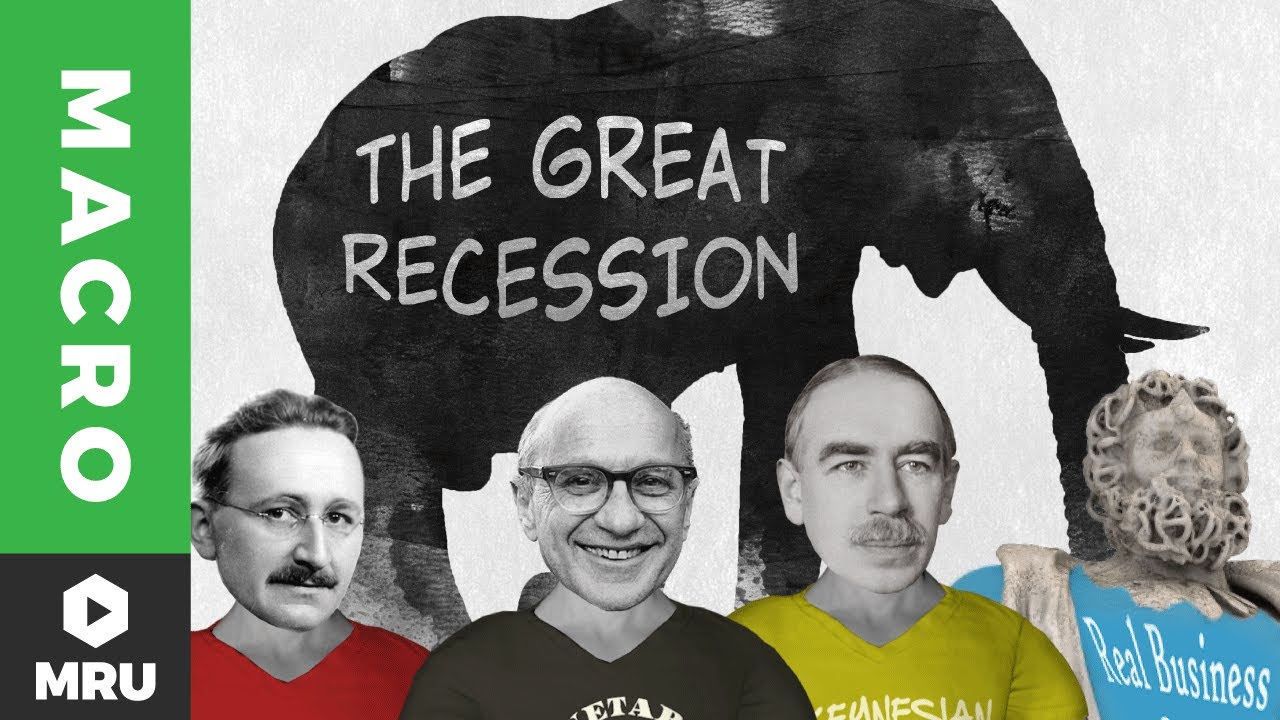
Game of Theories: The Great Recession
Introduction
The Great Recession, which unfolded from late 2007 to mid-2009, was one of the most significant economic downturns in history. Triggered predominantly by the housing market collapse in the United States, its effects rippled across the globe, leading to widespread unemployment, bank failures, and a comprehensive reevaluation of economic theories. Understanding this complex event requires delving into various economic theories, policy responses, and real-world implications.
Background: The Build-Up to the Recession
The seeds of the Great Recession were sown in the early 2000s. A combination of low interest rates, lax lending standards, and a booming housing market fueled a housing bubble. Subprime mortgages—loans offered to borrowers with low credit ratings—became increasingly common. Financial institutions, looking to maximize profits, developed complex financial products like mortgage-backed securities (MBS) and collateralized debt obligations (CDOs) that ultimately linked global economies.
Key Theories and Factors
-
Deregulation and Financial Innovation: The 1980s and 1990s saw significant deregulation in the financial industry, which proponents argued would foster competition and innovation. Critics, however, argue that this led to excessive risk-taking and lacked adequate oversight.
-
Keynesian Economics: Many economists advocated for expansionary fiscal and monetary policies, arguing that government intervention was necessary to stimulate the economy. The Great Recession prompted a renewed focus on Keynesian principles, leading to bailouts and stimulus packages.
- Behavioral Economics: The actions of consumers and investors often contradicted rational expectations. Behavioral economists pointed to cognitive biases, such as overconfidence and herd mentality, which contributed to the housing bubble and subsequent crash.
The Economic Fallout
The consequences of the Great Recession were profound:
- Unemployment Rate: The unemployment rate soared to 10% in the U.S. by October 2009, with millions losing their jobs and homes.
- Bank Failures: Major institutions like Lehman Brothers collapsed, prompting government intervention to stabilize the financial system.
- Global Impact: The recession triggered a worldwide economic downturn, leading to contractions in GDP, increases in public debt, and heightened political instability in several nations.
Policy Responses
In response to the crisis, governments and central banks implemented aggressive measures:
-
Bailouts and Stimulus Packages: The U.S. government allocated hundreds of billions to bail out major financial institutions and launched the American Recovery and Reinvestment Act in 2009 to promote job creation and economic stability.
-
Monetary Easing: The Federal Reserve slashed interest rates and implemented quantitative easing (QE) to inject liquidity into the economy. This strategy aimed to spur lending and investment.
- Regulatory Reforms: In the aftermath, financial regulations were tightened, notably with the Dodd-Frank Wall Street Reform and Consumer Protection Act. The goal was to reduce the risk of systemic failures in the future.
Theoretical Reflections
The Great Recession has led to a reevaluation of mainstream economic theories:
-
Efficiency of Markets: The crisis challenged the notion that markets are self-correcting. The role of government intervention was recognized as crucial during economic downturns.
-
Risk Management: The event highlighted the limitations of risk assessment models used by financial institutions. Many underestimated the potential for correlated risks, leading to catastrophic failures.
- Globalization’s Fragility: As the interconnectedness of the global economy became clear, scholars began to question the resilience of global financial systems and the implications for future crises.
Conclusion
The Great Recession was more than an economic downturn; it was a transformative event that reshaped economic theories and policy approaches worldwide. As the global economy continues to evolve, lessons learned from this period remain relevant, emphasizing the importance of balance between innovation, regulation, and government intervention in fostering a stable economic environment. Understanding these dynamics is essential for economists, policymakers, and society as a whole in mitigating the impacts of future economic crises.
BREAKING: Recession News
REVEALED: Best Investment During Inflation
HOW TO INVEST IN GOLD: Gold IRA Investing

Very bad representation of how Friedman would Have reacted, Milton was one of the best at making economics understandable and yet people don't understand him!
In addressing the remedy, nothing about the mortgages being bad loans??
It seems that the Austrian and Real Business Cycle Theory are looking at the root causes and the monetarists and Keynesians are looking at how to mitigate the problem after its already arisen. The monetarists, and especially the Keynesians, also seem to have too much faith in a non-omniscient government that doesn't at all behave in the idealized way that they wish it would. Overall I found the Austrian school to have the most satisfactorily explanation, even though it's not even a mainstream school.
Hayek was amazing
He said about boom and bust and it did happen in 2008
Now i want to be an economist
Do you guys have a video about this now? Like how the covid crisis compares with the 2008 crisis and how and why the fed is acting like they are acting now?
I loved this video. It was nice to see the business cycle theorists not caricatured.
A way of summarizing: the RBC and the Austrians give the explanation for why the crisis appeared in the first place, thus how he could have avoided it entirely. The monetarists give the explanation of how, despite the situation being bad, things could have been not so worst as it ended up being if only the FED had acted sooner. Finally, once the crisis was already taking shape due to the failures pointed out by the monetarists, the Keynesians bring a solution to how minimize the impact (how the fall of GDP could have been lower), and finally, the Austrians and RBC theory reappears pointing out how the recovery could be faster.
best video
https://www.youtube.com/watch?v=jj8rMwdQf6k&t=2762s
made in 2006 you might think this video was made after the recession
this is the "austrian" school i would rather we start calling then real economics instead but in the mean time
The Austrian explanation is the most comprehensive out of all of them.
I think the fatal flaw of Keynesianism (and I suppose monetarism) is that it conflates currency changing hands with productivity and wealth generation. You can't just pump currency into an economy and expect it to result in wealth being generated as an outcome of this spending.
The Austrian explanation is most accurate
Only the Austrian explanation is a real explanation of both the boom and the recession.
The Keynesian explanation is circular, i.e explaining a recession with a drop in demand is saying nothing really, because the drop in demand is the recession.
Lol, the Nobel Committee got away with this confusion by giving Nobel Prizes to all of them.
I side with the Austrian model. If you keep landing easy money to all people with not enough education and a sense of financial knowledge, they will keep investing money on the things that they heard on the street. In the end all the money will be wasted and the rest of the society will pay their debts…
The Austrians were the most right and the Keynsians were the least. The Austrians look at the disease and cure it, the keynsians and the monetarists just want to treat symptoms endlessly. Too bad their treatments have more negative side effects than positive effects.
Where's the Marxist analysis?
I'd like to know what these professors think about Bill Clinton repealing the Glass-Steagall Act and how that contributed perhaps most significantly to the 2008 financial crisis. It's important to remember that quantitative straining happened long before quantitative easing came into the picture all because of socialists who decided to deregulate the capitalist system for hefty kickbacks.
That said, I'd also like to know what these professors think of Donald J. Trump's idea of using negative interest rates on reserves to flip the script on quantitative easing and repurchase agreements. In effect, changing the bidirectionality through which those things function as expansionary and contractionary tools. I'd like to know all this because I've recently considered a lot of information that the mainstream media doesn't bring to light. I want to know more about how political parties in the United States that oppose Trump can continue to advocate for a quantitative straining approach instead of a quantitative easing approach. Because when interest on reserves is a negative rate, doesn't that flip the way quantitative easing operates around entirely? Of course, right? So, doesn't that mean what people were thinking is quantitative easing has been straining all along in America's context?
In essence, doesn't that mean America has made use of quantitative straining in theory and in practice? In my mind, negative rates of interest on reserves should flip the polarity of open market operations and quantitative 'easing' as contractionary and expansionary policy tools. It's just a thought, but it could very likely be that the socialists who deregulated the Glass-Steagall Act, and the communists who used currency manipulation, were conspiring to steal trillions in social security from America for decades now.
That they've been getting away with it for decades.
If that's true, all those kickbacks paid to double-agents and political insiders to lobby for deregulating free-market property rights, were like bribes to people, undisclosed or materially misstated sources of income, used to siphon trillions into asset protection trusts offshore. I mean, I saw the Clintons' tax returns. How do you earn millions of dollars from one Blind Trust in the Cayman Islands, interest on investment, unless that principal amount is absolutely huge? But that's beside the point of my main question.
All that money owed to America is sitting offshore. How is that the result of quantitative easing? It's not. We all know that.
The professors know it, I'm sure. That offshore money in asset protection trusts that refuse to disclose their interests is also funding custody accounts that provide large sums of equity into a particular political group's media bubble.
We all know that. It's not even a secret anymore, and that's what scares me. That's very troubling to me, especially seeing as wholly foreign-owned enterprises and variable interest entities are benefiting from that stolen money, even today.
The funds that were collateralized without account holders' consent leading up to the crisis was because the investment and commercial banks colluded to bypass credit rating restrictions. The special interest groups who got kickbacks for that betrayed their own country for a quick buck. The sad fact is they got away with it, and now it's taboo to even talk about that?
When a large-scale property fraud was exposed early enough in America to avoid a complete collapse, it still leads to a generational debt spiral, which means something is wrong with the bidirectionality of contractionary and expansionary quantitative easing. That's why negative rates of interest on reserves are needed to flip those two things around.
America's national debt spiral is a sign that those accounts benefiting from the crisis are not being forced to hedge against the same market risk that reduces their profiteering. With a negative rate of interest on reserves, that whole story changes.
Maybe Donald J. Trump isn't as stupid as everyone in the mainstream media is saying?
This is curious, very curious.
The best an introductory series can do is introduce the learner to the different theories. This nails it. MRU is impressive, because it dares to give legitimate attention to theories that are not currently fashionable in most of academia, but theories which nonetheless provide much insight where other theories turn a blind eye, theories which look for causes rather than mere treatment of symptoms.
They are conducting themselves as an ideal professor, encouraging critical analysis of every perspective instead of being a disciple of one and dismissive of the rest.
I can"t stop watching this series, it"s the best about economy
The economy died in 2008, it's been on life support since then with experimental solutions, they will continue until they put this new system together.
I hated economics before, now I LOVE IT. Awesome videos……
These videos are amazing. I love how the theorists characters chip in
Excellent.
I have never enjoyed learning about Economics, or anything for that matter, as much as I do when I watch these videos from MRU. Thank you very much for the effort.
These videos are extremely well-made. The explanations are so thorough and clear. You two are awesome – thank you, and keep making more Econ videos!!
The color of hayek and kayne should switched
Can we discuss World Economy?!
Comparing the different theories to a specific situation is very interesting (and the character voices keep cracking me up!), but ultimately, you seem to be saying that economists don't really know the answer. You're sort of hoping that you can integrate the various theories to put together a more comprehensive, if still incomplete, answer. But, as you note, the different schools of thought call for different solutions, so they can't all be right, and perhaps not even partially right.
TAXATION IS THEFT