
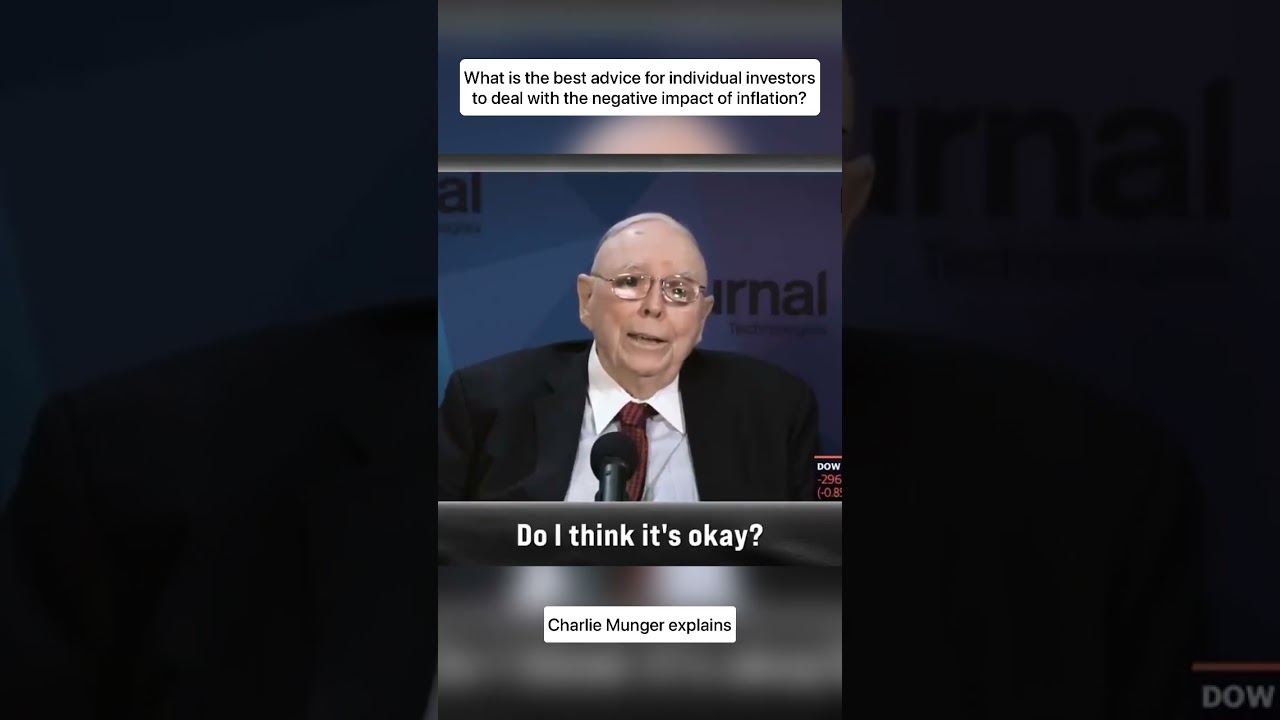

Best Advice for Individual Investors to Deal with Inflation: Insights Inspired by Charlie Munger
In today’s economic landscape, rising inflation has become a pressing concern for individual investors. With prices increasing for goods and services, maintaining the purchasing power of investments has never been more critical. As we navigate these challenging times, we can draw valuable lessons from seasoned investors like Charlie Munger, the vice chairman of Berkshire Hathaway and a long-time business partner of Warren Buffett. Here, we distill the best advice for individual investors looking to effectively combat inflation.
1. Understand the Impact of Inflation on Investments
One of the first steps in addressing inflation is to understand how it affects your portfolio. Inflation erodes the purchasing power of money, meaning that the returns on cash savings or fixed-income investments may not keep pace with rising prices. Munger’s philosophy emphasizes the importance of being informed and aware; hence, investors should continuously educate themselves about macroeconomic factors and their potential impact on investment returns.
2. Focus on Quality Investments
Munger often emphasizes the significance of investing in quality companies with strong fundamentals. Companies that have a history of robust earnings and solid market positions are better positioned to pass increased costs onto consumers without sacrificing profits. Look for businesses with durable competitive advantages, also known as “economic moats,” which can safeguard against inflationary pressures. These typically include strong brand loyalty, proprietary technology, and cost advantages.
3. Consider Real Assets
One effective strategy for hedging against inflation is investing in real assets, such as real estate or commodities. These tangible assets tend to hold their value or appreciate over time, especially during inflationary periods. Real estate not only provides potential rental income but also serves as a hedge against inflation, as property values and rental prices often rise in tandem with increasing costs of living. Similarly, commodities like gold and oil can provide a buffer against inflation due to their inherent value.
4. Diversify Your Portfolio
Diversification is a fundamental principle of investing that becomes even more critical in an inflationary environment. Munger advocates for a well-rounded portfolio that includes a mix of asset classes, such as stocks, bonds, and alternative investments. By diversifying, investors can reduce their risk exposure and increase the likelihood of generating positive returns despite inflation. Consider including inflation-protected securities, such as Treasury Inflation-Protected Securities (TIPS), which are designed to keep pace with inflation.
5. Think Long-Term
Munger is known for his long-term investment horizon, which can be especially beneficial when facing inflation. History shows that, over time, equities tend to outpace inflation. While short-term fluctuations and market volatility may be unsettling, staying focused on long-term growth can help investors weather the pressures of inflation. By adopting a buy-and-hold strategy and resisting the urge to react impulsively to market changes, individual investors can enhance their chances of achieving desirable long-term outcomes.
6. Evaluate Income-Generating Investments
With inflation affecting living costs, generating a steady income stream becomes increasingly important. Munger encourages investors to seek out dividend-paying stocks or income-generating assets that can provide protection against inflation. Companies that consistently increase their dividends often have a strong financial foundation and the capacity to withstand economic challenges, making them attractive for long-term investors.
7. Stay Disciplined and Avoid Panic Selling
Inflation often leads to market volatility. However, Munger’s wisdom reminds us of the importance of maintaining discipline in our investment approach. Emotional reactions to price fluctuations can lead to poor decision-making, such as panic selling during downturns. A disciplined investment strategy, coupled with a focus on long-term goals, can help investors navigate the uncertainties of inflation without succumbing to fear or anxiety.
Conclusion
Dealing with inflation requires a proactive approach and a commitment to informed decision-making. By embracing the principles espoused by Charlie Munger, individual investors can build resilient portfolios designed to withstand economic challenges. By focusing on quality investments, diversifying holdings, and taking a long-term perspective, you can better position yourself to maintain your purchasing power and achieve your investment goals, even in inflationary environments. In adapting these strategies, remember that the road to successful investing is often paved with patience, discipline, and continuous learning.
LEARN ABOUT: Investing During Inflation
REVEALED: Best Investment During Inflation
HOW TO INVEST IN GOLD: Gold IRA Investing
HOW TO INVEST IN SILVER: Silver IRA Investing




0 Comments