

Traditional vs. Roth IRA: Choosing the Right Retirement Path
Saving for retirement is crucial, and Individual Retirement Accounts (IRAs) are powerful tools to help you build a secure future. However, with two main types of IRAs – Traditional and Roth – understanding the nuances of each is essential to make the right choice for your individual circumstances.
This article will break down the key differences between Traditional and Roth IRAs, highlighting their benefits and drawbacks to help you decide which path best aligns with your financial goals.
The Basics: Both Offering Tax Advantages
Before diving into the specifics, it’s important to understand that both Traditional and Roth IRAs offer significant tax advantages designed to encourage retirement savings:
- Tax-Deferred Growth: Both types allow your investments to grow tax-deferred, meaning you won’t pay taxes on the earnings (dividends, interest, and capital gains) until you withdraw the money in retirement.
- Potential for Compounding: This tax-deferred growth allows your investments to compound more effectively over time, potentially leading to a much larger nest egg.
Key Differences: When Taxes Are Paid
The core difference lies in when you pay taxes on the money:
Traditional IRA: Tax-Advantaged Now, Taxable Later
- Contributions: May be tax-deductible in the year you make them, potentially reducing your current taxable income. (Deductibility depends on your income and whether you’re covered by a retirement plan at work).
- Withdrawals in Retirement: Considered taxable income in retirement.
- Good For: Individuals who anticipate being in a lower tax bracket in retirement than they are currently. This is because you’re getting a tax break now when your income is higher and paying taxes later when your income (presumably) is lower.
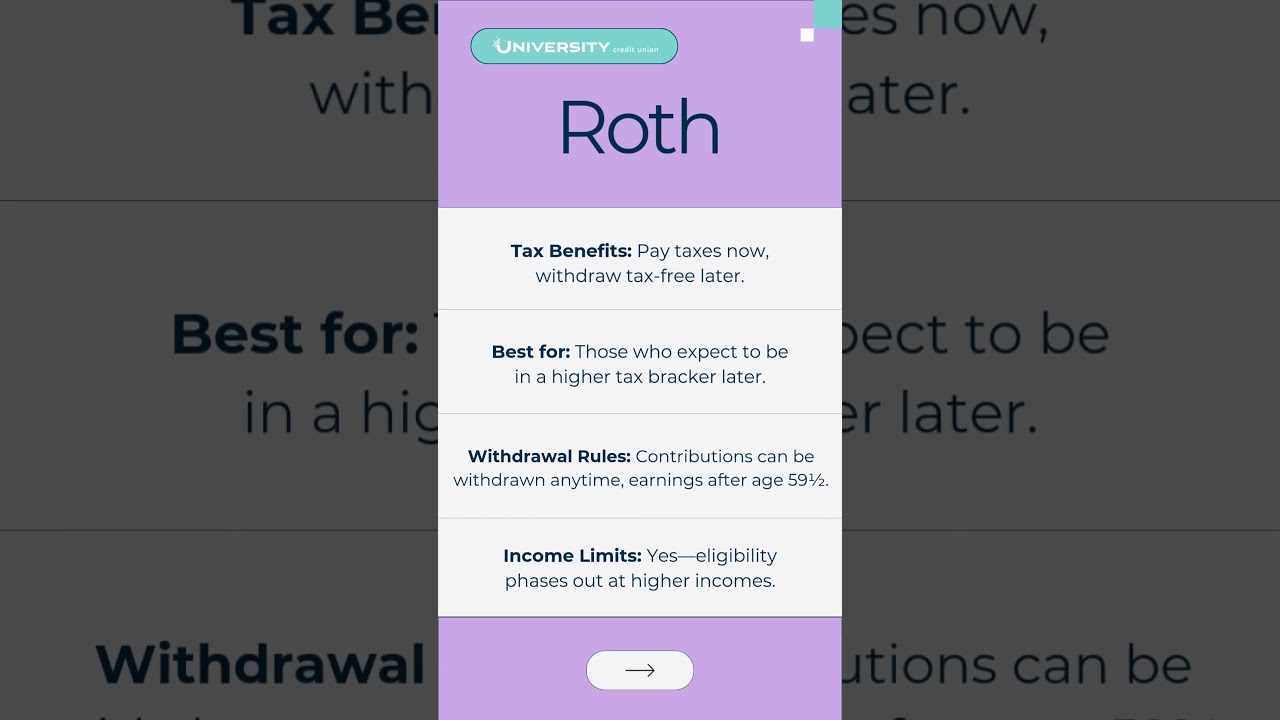
Roth IRA: Tax-Free Later, Taxed Now
- Contributions: Made with after-tax dollars, meaning they are not tax-deductible.
- Withdrawals in Retirement: Qualified withdrawals (after age 59 1/2 and having held the account for at least five years) are completely tax-free.
- Good For: Individuals who anticipate being in a higher tax bracket in retirement than they are currently. This is because you’re paying taxes now when your income might be lower and avoiding taxes altogether in retirement when your income is potentially higher.
A Closer Look: Key Considerations
Let’s delve into some specific considerations that can influence your decision:
- Income Limits: Roth IRAs have income limitations. If your modified adjusted gross income (MAGI) exceeds a certain amount, you won’t be eligible to contribute. Traditional IRAs generally don’t have income limits for contributions, but deductibility can be affected.
- Withdrawal Flexibility: Roth IRAs offer greater flexibility. You can withdraw your contributions at any time, tax-free and penalty-free. Withdrawing earnings from a Roth IRA before age 59 1/2 may be subject to taxes and a 10% penalty. Traditional IRA withdrawals before age 59 1/2 are generally subject to taxes and a 10% penalty.
- Required Minimum Distributions (RMDs): Traditional IRAs are subject to RMDs, meaning you must begin taking withdrawals at age 73 (or 75, depending on your birth year). Roth IRAs are not subject to RMDs during the original owner’s lifetime.
- Estate Planning: Roth IRAs can be advantageous for estate planning purposes, as they can pass to beneficiaries tax-free.
Making the Right Choice: Ask Yourself These Questions
Choosing between a Traditional and Roth IRA is a personal decision based on your individual circumstances and financial goals. Consider these questions:
- What is my current income and tax bracket?
- What do I anticipate my income and tax bracket to be in retirement?
- Do I need a potential tax deduction now?
- Do I prefer the certainty of tax-free withdrawals in retirement?
- Am I concerned about estate planning and leaving a tax-advantaged legacy?
- Do I need flexibility to access my contributions before retirement?
Consult a Financial Advisor
The complexities of retirement planning can be overwhelming. Consulting with a qualified financial advisor can provide personalized guidance based on your unique situation and help you make the best decision for your long-term financial well-being.
In Conclusion:
Both Traditional and Roth IRAs are valuable tools for retirement savings. By understanding their differences and carefully considering your individual circumstances, you can choose the IRA that best aligns with your financial goals and helps you build a secure and comfortable retirement. Remember to stay informed, seek professional advice when needed, and prioritize saving for your future.
LEARN MORE ABOUT: IRA Accounts
INVESTING IN A GOLD IRA: Gold IRA Account
INVESTING IN A SILVER IRA: Silver IRA Account
REVEALED: Best Gold Backed IRA




0 Comments