
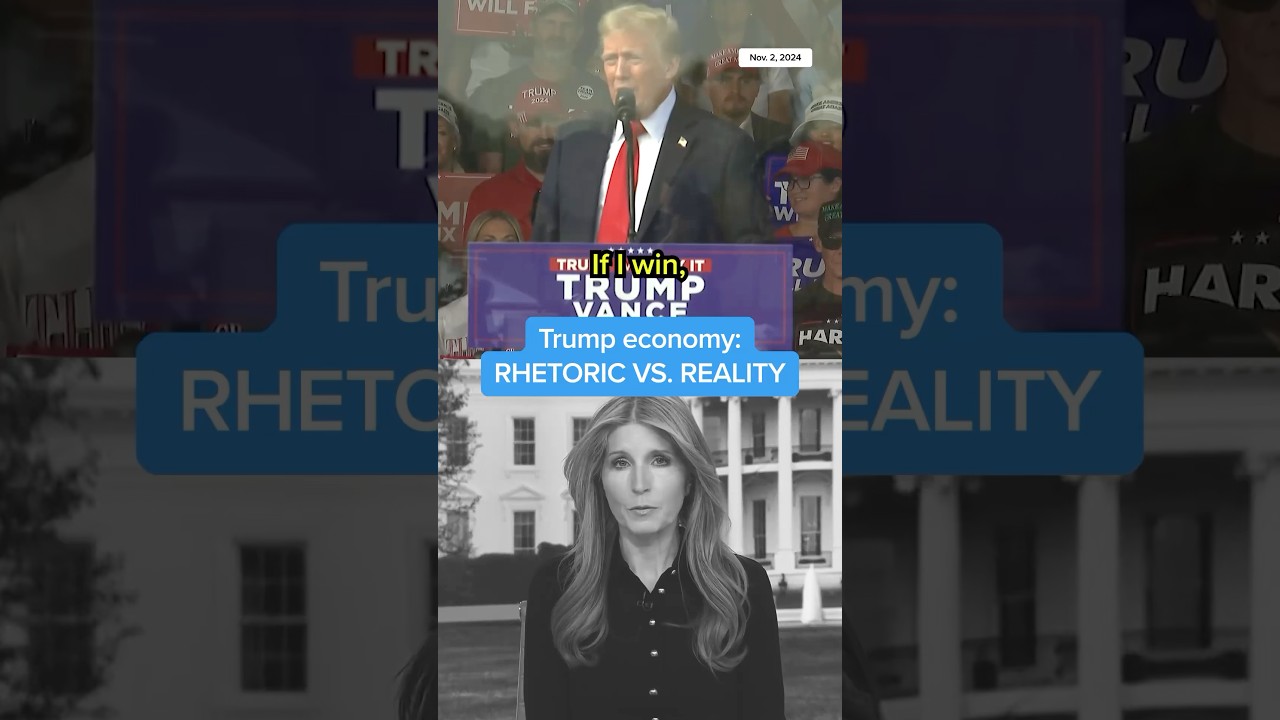

The Trump Economy: Separating the Rhetoric from the Reality
Donald Trump’s presidency was marked by bold claims of economic triumph, often touting the “greatest economy in American history.” But how much of that was genuine success, and how much was carefully crafted rhetoric? Evaluating the Trump economy requires a sober look at the data, separating the achievements from the exaggerations and placing them within the context of pre-existing trends and global economic forces.
The Rhetoric:
Trump frequently boasted about unprecedented economic growth, record-low unemployment, a booming stock market, and a resurgence of American manufacturing. He attributed these successes directly to his policies, including tax cuts, deregulation, and trade negotiations. He promised to bring back jobs, revive industries, and make America economically dominant once again.
The Reality:
While the Trump era did witness some economic successes, painting them as unprecedented or solely attributable to his policies is a stretch. Here’s a closer look:
- Economic Growth: While the economy continued to grow under Trump, the average annual GDP growth rate of around 2.5% was not significantly different from the Obama years. It certainly wasn’t the 4%, 5%, or even 6% he often promised. The economic expansion began well before Trump took office, and while he maintained its momentum, he didn’t fundamentally alter its trajectory.
- Unemployment: The unemployment rate did reach a 50-year low during Trump’s presidency. However, this trend of declining unemployment began under Obama, and the rate continued to drop organically as the economy recovered from the 2008 recession. While Trump benefited from this pre-existing trend, the COVID-19 pandemic dramatically reversed these gains, showcasing the fragility of the labor market.
- Stock Market: The stock market experienced a significant bull run during Trump’s term. However, attributing this solely to his policies ignores the influence of factors like low interest rates, technological innovation, and global economic trends. Furthermore, stock market performance doesn’t always reflect the economic reality of the average American worker.
- Manufacturing: While Trump pledged to bring back manufacturing jobs, the sector experienced modest growth overall. His trade policies, particularly tariffs on imported steel and aluminum, aimed to protect American manufacturers but often resulted in higher costs for consumers and businesses, impacting the overall economy.
- Tax Cuts: The 2017 tax cuts were a cornerstone of Trump’s economic agenda. While they did provide a short-term boost to the economy, their long-term effects are debated. Critics argue they disproportionately benefited corporations and the wealthy, contributing to rising national debt with limited impact on overall economic growth.
- Deregulation: Trump aggressively pursued deregulation across various sectors, arguing it would stimulate economic activity. While some regulations may have been burdensome, critics argue that his deregulation efforts often prioritized short-term gains over long-term environmental protection and consumer safety.
The Impact of COVID-19:
The COVID-19 pandemic drastically altered the economic landscape, disrupting global supply chains, causing mass unemployment, and pushing the US into a recession. While the Trump administration implemented some fiscal measures to mitigate the economic fallout, the pandemic ultimately exposed vulnerabilities in the American economy and significantly impacted his legacy.
Conclusion:
The Trump economy was a complex mix of successes and shortcomings. While the economy experienced continued growth and historically low unemployment rates, these trends were largely a continuation of pre-existing conditions. Attributing these successes solely to Trump’s policies is an oversimplification. His tax cuts, deregulation efforts, and trade policies had both positive and negative consequences, and the long-term impact of these policies remains to be seen.
Ultimately, evaluating the Trump economy requires acknowledging the complexities of economic forces, separating the rhetoric from the reality, and considering the impact of external factors like global economic trends and the COVID-19 pandemic. While Trump undoubtedly left his mark on the American economy, the narrative of unprecedented economic triumph often overstated the reality on the ground. It’s a story of capitalizing on pre-existing trends, enacting controversial policies, and ultimately facing the unprecedented challenge of a global pandemic. Understanding this nuanced picture is crucial for informing future economic policy decisions.
LEARN MORE ABOUT: Investing During Inflation
REVEALED: Best Investment During Inflation
HOW TO INVEST IN GOLD: Gold IRA Investing
HOW TO INVEST IN SILVER: Silver IRA Investing

And all of the mugs in the USA fell for his lies. Most Americans are the dumbest people on the planet. GO Donald.
A s—t peddler with a mouthful of free samples.
Keep celebrating your "pride" msnbc investors.
all Dementia symptoms, delusions, lying, & judgement
A liar will always lie
Trumps promises have nothing to do with reality. And this is not a surprise, it is absolutely obvious to anyone with a brain. He also has no plan except for creating chaos, so he is in the news. Once the chaos takes effect he will claim that it is all part of the plan, which of course only he himself can fix, because he is by far the smartest person on the planet.
Impeachment doesn't work we need something more drastic and permanent.
Pay attention.
He is INTENTIONALLY ruining our economy and our government because it was working. The stock market was making record highs, the rate of inflation had already slowed to the normal roughly 3%, infrastructure was being funded and built, manufacturing jobs that respected the employees and invested in future technologies were being built in America, we were tackling climate change in ways that created jobs, and we were a beacon of hope for democracy in the world.
But, Trump needs the economy to crash and the government to look bad, so he can say that he fixed it and saved us from Biden!
Can't blame Biden anymore!
Make America great again… oops! Make America poor again… so good to see how the American people elected such a noble and intelligent politician! Your fault America. The lack of literacy leads to this! No one in the world feels sorry for you. Your choices, your consequences!
But his cultists still think this is either Bidens fault or part of the great plan of Trumpet
Liar liar pants on Fire
LIAR
Does cnn only have trans news activists?
trump has vd brain
Lies…